Skip to content Loading

Buy any 3 full-price artworks and save 15%

Neptune offrant ses richesses à la France. Allégorie à Louis XIV by Pierre Mignard I
La rencontre d'Alexandre avec les Amazones by Pierre Mignard I
Mademoiselle de Roquelaure by Pierre Mignard I
Portrait de dame de la cour by Pierre Mignard I
Sainte Catherine d'Alexandrie by Pierre Mignard I
Le Mariage mystique de sainte Catherine by Pierre Mignard I
Le Grand Dauphin by Pierre Mignard I
Anne de Bavière, duchesse d’Enghien puis princesse de Condé, avec ses enfants by Pierre Mignard I
Portrait de Madame de Montespan soutenue par les grâces et couronnée par les amours by Pierre Mignard I
Mademoiselle de Soissons (1665–1705) by Pierre Mignard I
Saint Luc peignant la Vierge avec l'Autoportrait de Mignard by Pierre Mignard I
Musée Ingres-Bourdelle - Allégorie de la peinture - Pierre Mignard by Pierre Mignard I
1612–1695 · French

Pierre Mignard I

  • Classicism
  • Baroque painting

Pierre Mignard I was so highly regarded in his time that the playwright Molière wrote a poem to celebrate his work on the Val-de-Grâce dome. While many court painters focused on rigid formality, Mignard often included specific symbols of mortality. In his portraits of children, he used the "homo bulla" motif, where soap bubbles and watches represent the brief nature of life. This intellectual approach allowed him to eventually replace his rival, Charles Le Brun, as the chief painter to King Louis XIV.

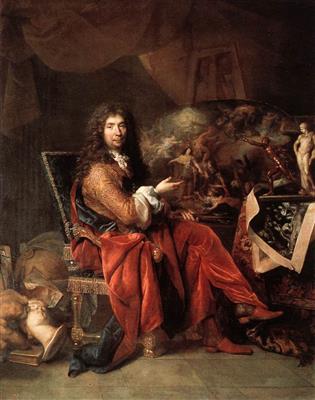
Portrait of Pierre Mignard I

Biography

His style combines the balanced compositions of his teacher, Simon Vouet, with the warm colour palettes he observed while studying in Venice and Rome. Mignard is recognised for his ability to blend Baroque drama with a softer, more approachable Classicism. His religious paintings, such as the Virgin and Child with Grapes, are noted for their sweetness and the graceful gestures of the figures. He introduced Italian fresco techniques to the French court, using foreshortened figures and concentric circles to create a sense of space.

Modern collectors value Mignard for his ability to humanise formal subjects. His portraits of aristocrats in the guise of mythological figures, such as Thetis or Venus, offer a window into seventeenth-century fashion and theatre. These works provide a sense of historical grandeur without the stiff atmosphere found in more traditional state portraits. The clear lines and balanced tones of his compositions make his prints suitable for rooms that require a sense of order and historical character.

Next stop

Browse the movements →

Every movement in the collection, from the Renaissance to Pop art.

Frequently Asked Questions

  • When was Pierre Mignard I born?
    Pierre Mignard I was born in 1612 and died in 1695.
  • What art movement was Pierre Mignard I part of?
    Pierre Mignard I was associated with Classicism and Baroque painting.
  • What is Pierre Mignard I known for?
    Pierre Mignard I is known for pierre Mignard I was a leading French Classicist painter known for his graceful court portraits and religious works that combined Italian warmth with formal French composition.

Keep exploring

Your cart
Rated 4.6 on Judge.me
Your cart is empty
Have an account? Log in to check out faster.
Continue shopping Continue shopping
Cart total $0.00 USD
Product image Product information Quantity Product total