



Pietro Testa
Pietro Testa arrived in Rome as a teenager and spent his days sketching amongst the ruins of the Colosseum and the Palatine Hill. This dedication to ancient forms led to a position with the German artist Joachim von Sandrart. Testa was tasked with documenting the Marchese Vincenzo Giustiniani's collection of ancient statues. These drawings formed the basis of the Galleria Giustiniana engravings. This early immersion in classical sculpture defined his style and his understanding of proportion.

Biography
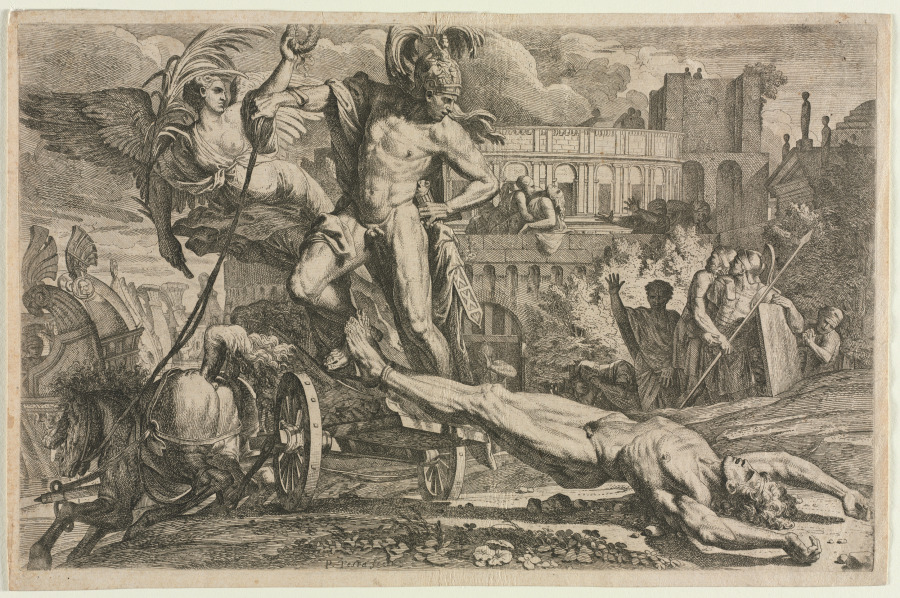
Testa earned the title of "esquesito disegnatore" for his skill as a draughtsman and etcher. His work is distinctive for its intellectual clarity and its connection to the Neoclassical spirit. Some publishers even printed his sketches with his original corrections and changes visible to the eye. This transparency was rare for the seventeenth century. His etchings, such as Achilles Dragging the Body of Hector, use sharp lines to mimic the texture of carved stone. He focused on the logic of the human form and the structure of the composition.
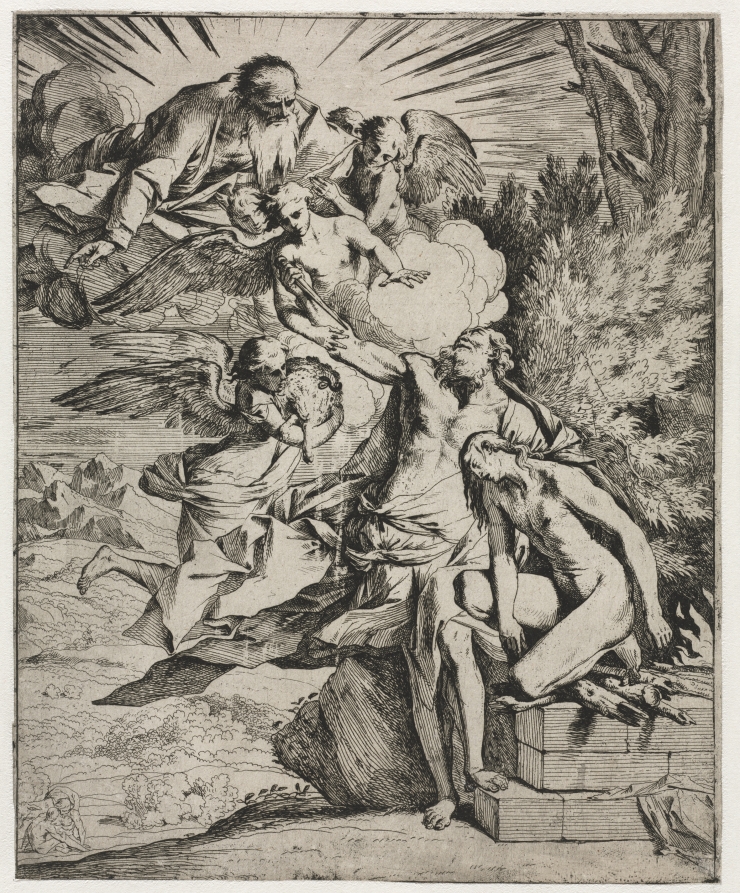
Modern collectors appreciate the crispness and architectural quality of Testa's prints. His works provide a sense of historical weight without the clutter of typical Baroque art. Pieces like Triomf van de schilderkunst op de Parnassus or The Sacrifice of Isaac work well in minimalist or classical spaces. They offer a direct link to the Roman sculpture gardens that inspired him. His prints remain popular for their technical precision and their structured aesthetic.
Notable Works
Tap to view larger.
Next stop
Baroque →
Explore the artists and ideas of Baroque.
Pietro Testa prints
Hand-finished archival prints from Pietro Testa's body of work.

Related Artists


Take Pietro Testa home.
See all Pietro Testa prints →Frequently Asked Questions
When was Pietro Testa born?
Pietro Testa was born in 1611 and died in 1650.What art movement was Pietro Testa part of?
Pietro Testa was associated with Baroque.What is Pietro Testa known for?
Pietro Testa is known for pietro Testa was a seventeenth-century Italian draughtsman and etcher known for his technical precision and his studies of ancient Roman sculpture.