



Stradanus
Stradanus spent the majority of his career in Florence instead of his native Bruges. He worked as a primary assistant to Giorgio Vasari and helped decorate the Palazzo Vecchio. He was a founding member of the Accademia delle Arti del Disegno. This Florentine connection allowed him to combine Northern precision with Italian Mannerist scale. He was one of the few artists from the Netherlands to fully integrate into the Italian art establishment of the sixteenth century.
Biography
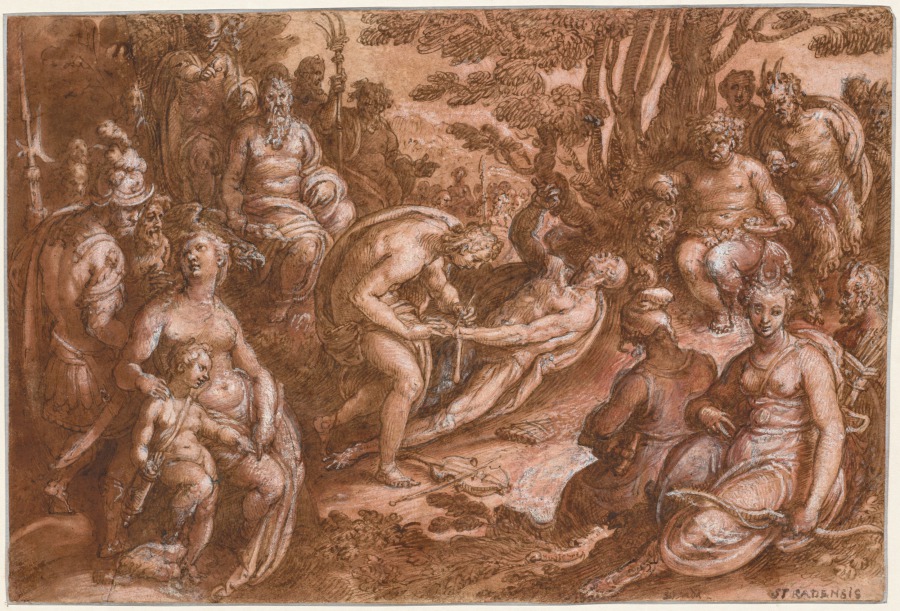
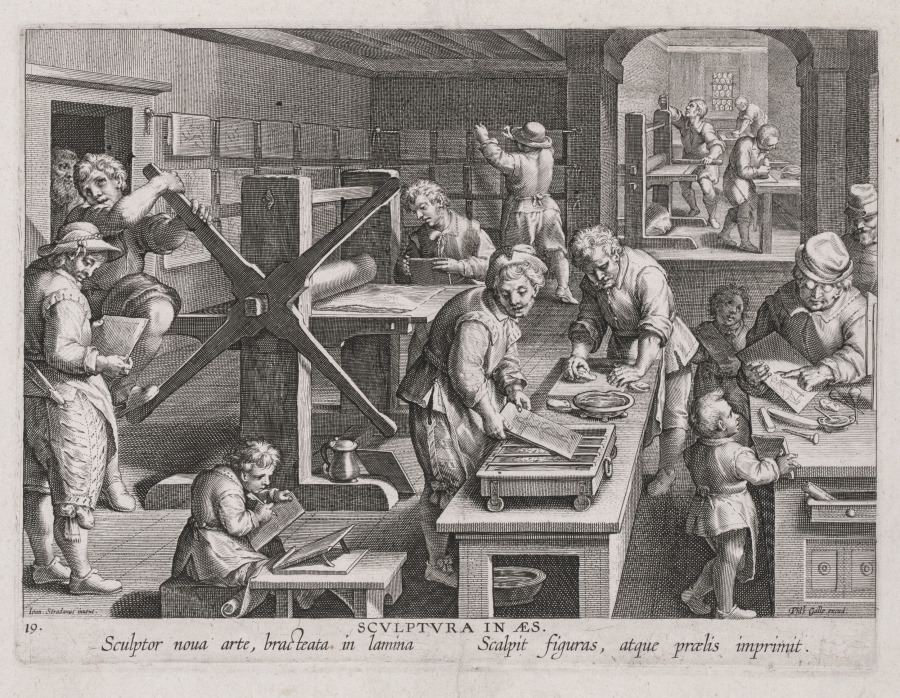
His artistic approach focused on the intersection of nature and human industry. He produced a series titled Nova Reperta which documented recent inventions like the printing press and the compass. His style features the elongated limbs and muscular forms typical of the Mannerist movement. He preferred sharp outlines and structured compositions. These traits developed from his work designing large textile cycles for the Medici family. He rejected the soft sfumato techniques of his contemporaries in favour of graphic clarity.
Modern collectors are drawn to his work for its documentary value and clear aesthetic. His depictions of hunts and scientific progress provide a specific view of sixteenth-century curiosity. The prints have a clean quality that suits contemporary spaces. His compositions are balanced and legible. They provide historical depth without the dense religious symbolism often found in art from this period.
Notable Works
Tap to view larger.
Frequently Asked Questions
When was Stradanus born?
Stradanus was born in 1523 and died in 1605.What art movement was Stradanus part of?
Stradanus was associated with Mannerism.What is Stradanus known for?
Stradanus is known for stradanus was a Flemish artist who became a leading figure in the Medici court, blending Northern detail with Italian Mannerist style in his famous prints and textile works.


