

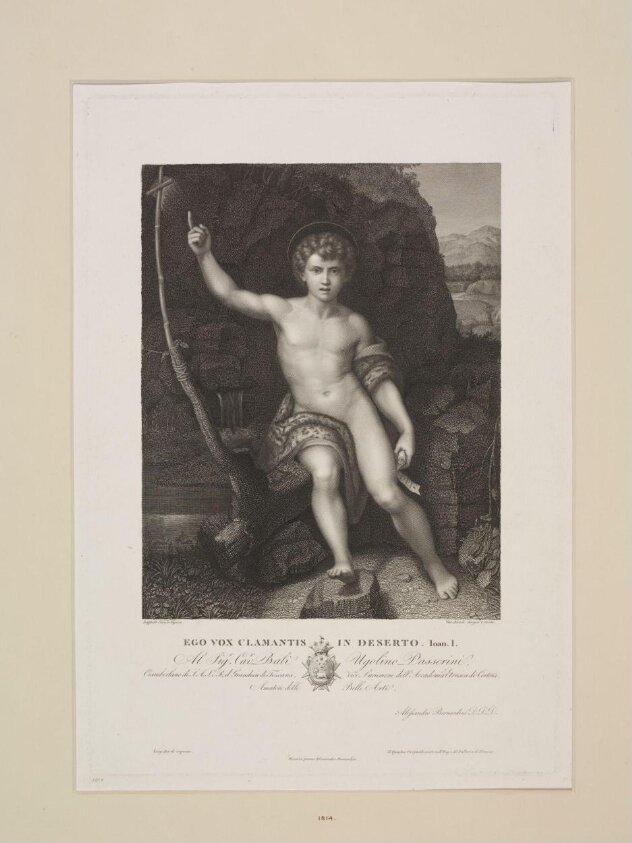
Vincenzo Biondi
Vincenzo Biondi worked during a period when lithography became a primary method for distributing art to the public. He was active in Rome. He focused on translating the works of Renaissance masters into print. Many of his contemporaries sought to innovate with new styles. Biondi instead dedicated his career to the technical precision required to replicate the soft gradations of oil paint through stone and ink. This focus allowed him to create affordable versions of gallery masterpieces.
Biography
His approach involved a careful study of light and shadow. In works like Saint John the Baptist in the Desert and Beatrice Cenci, Biondi used fine hatching to create a sense of volume. He often chose subjects with strong emotional or religious weight. His version of the Madonna of the Canopy shows his ability to maintain the clarity of the original composition. He adapted these works for the monochromatic constraints of the print medium. This required a deep understanding of tonal values.
Collectors today value Biondi for his connection to the classical tradition. His prints provide a way to own interpretations of famous works by Raphael. The starkness of his black and white compositions fits well in modern interiors. These rooms often favour clean lines and historical depth. These prints offer a look at 19th-century Italian craftsmanship. They represent a bridge between the Renaissance and the industrial age of art production.
Notable Works
Tap to view larger.
Next stop
Browse the movements →
Every movement in the collection, from the Renaissance to Pop art.
Vincenzo Biondi prints
Hand-finished archival prints from Vincenzo Biondi's body of work.

Related Artists


Take Vincenzo Biondi home.
See all Vincenzo Biondi prints →Frequently Asked Questions
When was Vincenzo Biondi born?
Vincenzo Biondi was born in 1804 and died in 1870.What is Vincenzo Biondi known for?
Vincenzo Biondi is known for vincenzo Biondi was a 19th-century Italian printmaker who translated Renaissance masterpieces into precise lithographs, making classical art accessible to a wider public.