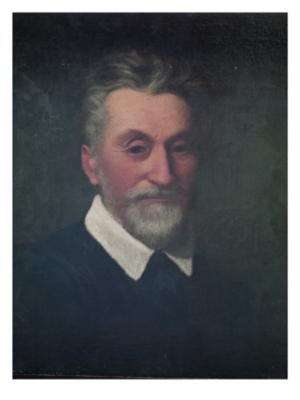
Vincenzo Foppa
- Italian Renaissance
Vincenzo Foppa was the leading painter in Lombardy before Leonardo da Vinci arrived in Milan. While many Renaissance masters are studied through finished panels, Foppa offers a technical perspective through modern scientific analysis. X-radiographs of his works, such as the Madonna and Child, reveal the hidden layers of his process. These scans show how he adjusted compositions on the wood, shifting the positions of hands or folds of a cloak. This evidence provides a look at the physical construction of fifteenth-century devotional art.
Biography
His style is defined by a cool, silvery light and muted tones. Foppa avoided the warm, golden glows common in Venice, choosing instead to use atmospheric grey shadows to create three-dimensional form. In works like The Virgin and Child Enthroned, he used architectural elements to frame his subjects. His figures possess a heavy, sculptural quality that makes them appear solid within their environment.
Modern collectors value Foppa for his restrained aesthetic and structural clarity. His paintings do not rely on excessive ornamentation. Instead, they offer a calm, architectural order that fits well in contemporary interiors. The subtle colour palette makes his work versatile for home display, providing a sophisticated alternative to saturated Renaissance prints. His ability to balance human emotion with geometric precision remains effective for those seeking art with a quiet presence.
Notable Works
Tap to view larger.
Next stop
Browse the movements →
Every movement in the collection, from the Renaissance to Pop art.
Frequently Asked Questions
When was Vincenzo Foppa born?
Vincenzo Foppa was born in 1427 and died in 1515.What art movement was Vincenzo Foppa part of?
Vincenzo Foppa was associated with Italian Renaissance.What is Vincenzo Foppa known for?
Vincenzo Foppa is known for vincenzo Foppa was the master of the Lombard Renaissance. He is known for his sculptural figures and a cool-toned silvery light.