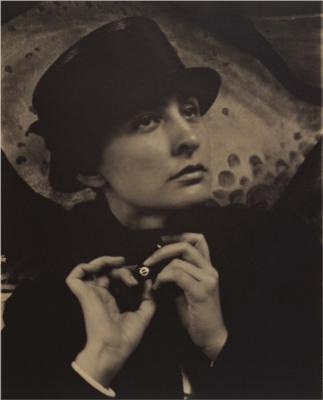
Wanda Gág
Wanda Gág was the eldest of seven children. She grew up in a German-Bohemian family in Minnesota. When her father died, he told her to finish what he started in art. She supported her entire family by selling illustrations while she was still a teenager. This responsibility shaped her practical approach to making art. She eventually moved to New York and became a successful printmaker during the 1920s. Her career flourished as she balanced commercial assignments with her personal printmaking practice.

Biography
Her lithographs often feature a rhythmic, pulsing energy. She believed that even inanimate objects possessed a spirit. In Cats at a Window and Grandma's Parlour, the furniture and curtains seem to sway. She used a technique called all-over composition where every part of the paper contains movement. Her work in the American Realist movement focused on the domestic sphere rather than grand outdoor scenes.
Modern collectors value her prints for their graphic clarity. Pieces like Blackwell Island or Philodendron in raamkozijn use strong contrasts between light and shadow. Her style bridges the gap between traditional illustration and fine art printmaking. These prints provide a calm but active presence on a wall. They offer a window into a world where the everyday is full of character.
Notable Works
Tap to view larger.
Next stop
Browse the movements →
Every movement in the collection, from the Renaissance to Pop art.
Frequently Asked Questions
When was Wanda Gág born?
Wanda Gág was born in 1893 and died in 1946.What is Wanda Gág known for?
Wanda Gág is known for wanda Gág was a master lithographer known for her rhythmic depictions of domestic life and her contributions to early twentieth-century American printmaking.


_%E2%80%93_LOC.jpg)