



William Glackens
In 1912, Albert Barnes sent Glackens to Paris with twenty thousand dollars and instructions to buy paintings. Glackens returned with works by Renoir, Cezanne, Matisse, Picasso and others that became the nucleus of the Barnes Foundation, one of the most important collections of modern art in America. He had been Barnes's classmate at Central High School in Philadelphia. The old friendship produced better art buying than any dealer could have managed.
Biography
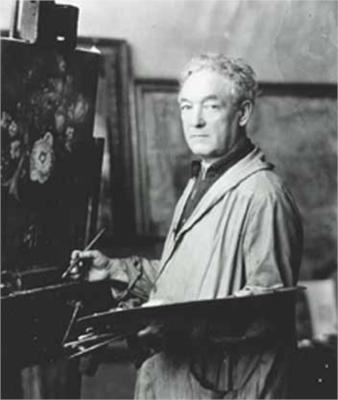
Glackens was born in Philadelphia in 1870. After graduating from Central High (where John Sloan was also a classmate), he worked as an artist-reporter for the Philadelphia Record and the Philadelphia Press. In 1895 he travelled to Paris with Robert Henri, renting a shared studio, and absorbed Impressionism and Post-Impressionism firsthand. In 1898 he covered the Spanish-American War in Cuba for McClure's Magazine, producing reportorial sketches under field conditions.
Back in New York, he became one of the founders of the Ashcan School, painting street scenes and middle-class urban life with a matter-of-fact realism that rejected academic convention. He was among The Eight, the group that exhibited together in 1908 in deliberate opposition to the National Academy of Design. But by 1910 his style was shifting: the dark urban tonalities gave way to bright, sensuous colour and Impressionist light that drew open comparisons to Renoir.
In 1904 he married Edith Dimock, an artist from a wealthy Connecticut family. They raised two children in a Greenwich Village townhouse. Glackens died in 1938, at sixty-eight, while visiting Charles Prendergast in Westport, Connecticut.
Timeline
- 1903Painted "Portrait Of Charles Fitzgerald".
- 1906Painted "Under the Trees, Luxembourg Gardens".
- 1912Painted "Italo-American Celebration, Washington Square".
- 1918Painted "Lenna, the Artist's Daughter, in a Chinese Costume".
- 1926Painted "Nude in green chair".
- 1930Painted "Flowers in a Quimper Pitcher".
Notable Works
Tap to view larger.
Next stop
Realism →
Explore the artists and ideas of Realism.
Related Artists


Frequently Asked Questions
What is William Glackens known for?
William Glackens is known for painting street scenes and middle-class urban life with a matter-of-fact realism that rejected academic convention. He was one of the founders of the Ashcan School. By 1910, his style shifted to bright colour and Impressionist light, drawing comparisons to Renoir.Who was William Glackens?
William Glackens was born in Philadelphia in 1870 and worked as an artist-reporter for the Philadelphia Record and the Philadelphia Press. He was a founder of the Ashcan School and part of The Eight, a group that exhibited in opposition to the National Academy of Design. In 1912, he purchased paintings by Renoir, Cezanne, Matisse, and Picasso for Albert Barnes, which formed the basis of the Barnes Foundation collection.What was William Glackens's art style?
William Glackens began his career painting with a matter-of-fact realism, rejecting academic convention. By 1910, his style shifted, and he began using bright colour and Impressionist light.
Sources
Editorial draws on the following primary and tertiary references for William Glackens.
- [1] book Jesse Bryant Wilder, Art History For Dummies Used for: stylistic analysis.
- [2] book Fred S. Kleiner, Gardner's Art through the Ages Used for: biography, stylistic analysis.
- [3] book Carol Strickland and John Boswell, The Annotated Mona Lisa Used for: biography.
- [4] book Carol Strickland and John Boswell, The Annotated Mona Lisa Used for: biography.
- [5] book Carol Strickland and John Boswell, The Annotated Mona Lisa Used for: biography.
- [6] book Landauer, Susan, The not-so-still life : a century of California painting and sculpture Used for: biography.
Editorial overseen by Solis Prints. Sources verified 2026-10-07. Click a source for details, or hover over [N] in the page above to preview.
Editorial standardsMethodologyCorrectionsAI disclosureAbout the editorial team