



About Albert Namatjira
Australian · 1902–1959
- landscape painting
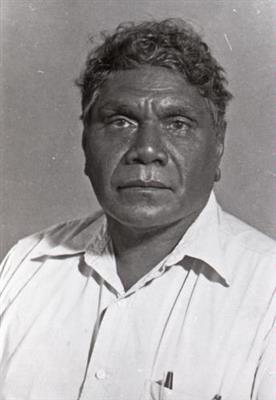
Western Arrernte watercolourist who founded the Hermannsburg School and was the first Aboriginal Australian[1] artist to gain broad national recognition.
Museums2
Countries1
Largest reported holdingArt Gallery of South Australia, Adelaide · 2 recorded works
Loading map…
Where to see Albert Namatjira
Collection holdings are reported here; current display varies. Check with each museum before visiting.
-
2 recorded works
Art Gallery of South Australia
Adelaide, Australia
-
1 recorded work
National Gallery of Victoria
Melbourne, Australia


Frequently Asked Questions
Where can I see Albert Namatjira's work?
To view paintings by Albert Namatjira, a good starting point is the Araluen Arts Centre in Alice Springs. The Araluen Art Centre's collection includes a number of works associated with the Western Desert art movement. Other institutions with relevant holdings include the National Gallery of Victoria in Melbourne, the Newcastle Art Gallery in New South Wales, and the Queensland Art Gallery and the Gallery of Modern Art (also in Brisbane). Additionally, many art centres throughout the Northern Territory support and promote Indigenous artists; these include the Aboriginal Art Association of Australia, ANKA (Arnhem, Northern and Kimberley Artists), and Desart (Association of Central Australian[1] Aboriginal Art and Craft Centres). Outstation Gallery in Darwin also works directly with art centres in the presentation and promotion of Indigenous art from the Tiwi Islands, Arnhem Land, the Western Desert, the Kimberley and Central and South Australia.What should I know about Albert Namatjira's prints?
Albert Namatjira (1902[1]-1959[1]) was an Aboriginal artist, famous for his watercolour paintings of the Australian[1] outback. He was born at Hermannsburg Mission, near Alice Springs. Namatjira began painting in a Western style after contact with the artist Rex Battarbee in the 1930s. His works often depict the landscapes of Central Australia, using a distinctive colour palette to capture the region's light and atmosphere. The paintings gained popularity during the 1940s and 1950s, and Namatjira became a household name in Australia. Prints of Namatjira's paintings made his art accessible to a wider audience. Commercially produced prints allowed people to own reproductions of his iconic images. These prints contributed to the popularisation of his art and the romantic vision of the Australian interior. It is worth noting that copyright issues have surrounded Namatjira's work. After his death, the copyright to his paintings was acquired by a company, which limited the Aboriginal community's ability to reproduce and profit from his art. This situation has generated considerable debate and legal challenges over the years.Why are Albert Namatjira's works important today?
Albert Namatjira (1902[1]-1959[1]) was an Arrernte artist known for his watercolour paintings. He met Rex Battarbee, a Melbourne watercolourist, in 1934[1]. This meeting is considered important in revisionist histories because it changed cultural ideas, acknowledging Aboriginal art's modernity and authority of place. Namatjira's expansive watercolour depictions of the Australian[1] interior were very popular. He is often cited as an icon of Aboriginal self-determination and the first Aboriginal artist celebrity. At the same time, he is seen as a tragic figure who unsuccessfully straddled two worlds, caught in the postcolonial ambivalence of cross-cultural exchange. His work is significant because he trained in Western art techniques and his art gained recognition at a time when Aboriginal art was not widely appreciated. Some indigenous artists trained in Western art, such as Albert Namatjira. His expansive watercolour paintings showed Australia’s baked interior and proved very popular. He is an important figure in the history of Australian art.What techniques or materials did Albert Namatjira use?
Albert Namatjira (1902[1]-1959[1]) was an Indigenous Australian[1] artist, known for his watercolour paintings. His great granddaughter, Joanne Napangardi Wheeler, born in 1969, continues the family tradition, using acrylic paint on linen with brushes and punu (sticks). She combines traditional techniques with personal historical narratives. Before using oil paints, J.M.W. Turner (1775-1851[1]) spent at least ten years as a watercolourist, developing techniques he later used in oils. In his earlier watercolours, transparent washes overlay the white paper, except where he reserved highlights. He mixed greens by overlaying washes of brown and blue, sometimes physically mixing with his fingers. Turner produced over 20,000 pencil sketches and watercolours. He utilised new application techniques and pigments in both media at about the same time. His early work in watercolour gave him an understanding of light-toned, absorbent surfaces, and honed his skills in the application of optical greens and blacks.Who did Albert Namatjira influence?
Albert Namatjira's influence can be seen in the work of later Indigenous Australian[1] artists. His meeting with Rex Battarbee, a Melbourne watercolourist, in 1934[1] is regarded as important in changing cultural ideas and acknowledging Aboriginal art's modernity. Namatjira is seen as an icon of Aboriginal self-determination, and as the first Aboriginal artist celebrity. However, he also existed as a tragic figure, unsuccessfully straddling two worlds. His cross-cultural vision has been eclipsed by that of his contemporary, the Arrernte man Albert Namatjira. Twelve years after Namatjira's death, Geoffrey Bardon moved to Papunya. He went down in history as a central figure in the Western Desert/Papunya Tula painting movement for encouraging Aboriginal men to translate narratives onto boards for an outside audience. In the 1970s, traditional Aboriginal art began to be painted on canvases and exported. There was concern that the Dreaming would be weakened by sharing its stories in this way, but many artists created new permanent works.Who influenced Albert Namatjira?
The question of artistic influence on Albert Namatjira is complex. It is known that Namatjira gained technical skills and knowledge of Western painting techniques from the Australian[1] artist Rex Battarbee. Battarbee taught Namatjira watercolour painting, which became his signature medium. Namatjira learned about perspective, colour mixing, and composition from Battarbee, adapting these techniques to depict the Australian outback. However, Namatjira's artistic vision was also shaped by his own cultural background and connection to the land. His paintings reflect his deep understanding of the landscape, its colours, and its forms, interpreted through his own unique lens. While Battarbee provided the technical foundation, Namatjira's individual style and artistic expression were rooted in his Aboriginal heritage and his personal relationship with the environment he portrayed.What is Albert Namatjira's most famous work?
Albert Namatjira (1902[1]-1959[1]) was an Aboriginal artist, Western Arrernte speaker, and watercolour painter. Although it is difficult to name one single work as his 'most famous', Namatjira is celebrated for his many watercolour paintings depicting the Australian[1] outback. He is today considered one of Australia's most significant artists. Namatjira's paintings typically feature depictions of the natural environment around his home territory of Hermannsburg, near Alice Springs, Northern Territory. His style combines Western painting techniques with his own cultural perspective and deep connection to the land. He is known for his skill in capturing the colours and textures of the Australian desert, as well as his ability to convey a sense of depth and distance in his compositions. His relatives, including his great-granddaughter Joanne Napangardi Wheeler, continue to paint in similar styles, often depicting the same locations.What style or movement did Albert Namatjira belong to?
Albert Namatjira (1902[1]-1959[1]) was an Australian[1] artist of the Arrernte people, known for his watercolour paintings. His work is often associated with the Hermannsburg School, an Australian movement that blended Western-style painting techniques with Indigenous perspectives. Namatjira developed a style that captured the distinctive colours and forms of the Australian outback. His paintings typically feature depictions of the MacDonnell Ranges, ghost gums, and desert landscapes, rendered with a strong sense of light and atmosphere. He employed techniques such as layering and glazing to create depth and texture in his watercolours. Although his style was representational, Namatjira's unique vision and connection to his subject matter set him apart. His art gained popularity during his lifetime, and he is recognised as a significant figure in Australian art history.
Sources
Where to See guide aggregates verified holdings of Albert Namatjira's works across the following collections.
- [1] wikipedia Wikipedia: Albert Namatjira Used for: biography.
- [2] book Charlotte Mullins, A Little History of Art Used for: biography.
- [3] book McLean, Ian; , Double Desire Used for: biography.
- [4] book downmagaz.net, downmagaz.net Used for: biography.
Editorial overseen by Solis Prints. Sources verified 2026-09-30. Click a source for details, or hover over [N] in the page above to preview.
Editorial standardsMethodologyCorrectionsAI disclosureAbout the editorial team