

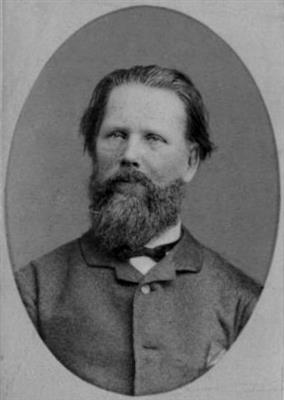
About Alexei Korzukhin
Russian · 1835–1894
- genre painting
- portrait
Russian[1] realist and Peredvizhniki member, known for domestic genre scenes and major cathedral commissions across Russia.
Museums4
Countries1
Most worksRussian Museum, Saint Petersburg · 7 works
Loading map…
Where to see Alexei Korzukhin
Ranked by works you can see in person.
-
7 works
Russian Museum
Saint Petersburg, Russia
-
4 works
Tretyakov Gallery
Moscow, Russia


-
1 works
Hermitage Museum
Saint Petersburg, Russia
-
1 works
Radishchev Art Museum
Saratov, Russia


Frequently Asked Questions
Where can I see Alexei Korzukhin's work?
Alexei Korzukhin's paintings are held by several museums in Russia, including the State Russian[1] Museum in St Petersburg, and the State Tret'iakov Gallery in Moscow. Others are held further afield. Several museums share similar names, so double-check locations when planning a visit. Many Russian museums, such as the State Art Museum in Nizhnii Novgorod, the State Art Museum in Samara, and the State Lunacharskii Museum of Fine Arts in Krasnodar, were founded or expanded in the early Soviet era using artworks acquired by the State Museum Fund. These museums sometimes lost artworks in the 1920s, so be aware that not all works are permanently on display. Some works are held in private collections in Europe and the United States, and may occasionally appear in commercial gallery exhibitions.What should I know about Alexei Korzukhin's prints?
Alexei Korzukhin (1835[1]-1894[1]) was a Russian[1] painter, mainly of genre scenes and portraits; he was also associated with the Peredvizhniki movement. Prints of his work are likely to be reproductions, since he is not primarily known as a printmaker. When assessing a Korzukhin print, consider several factors. "Original prints" are conceived as prints, and each one is individually inked and pulled from the matrix. A reproduction, however, is a copy of a work in another medium, often made photomechanically. Numbering or signing a reproduction does not make it an original print. The price of prints varies depending on factors like the artist’s reputation, the image's popularity, and the quality of materials. Limited edition prints command higher prices than unlimited editions because the number of prints is restricted, sometimes to as few as 250 to 500. The terminology around prints can be confusing; a "vintage print" is made around the time the negative was taken, while a "period print" is made within 10 to 15 years. A "modern print" is a recent photograph from the original negative.Why are Alexei Korzukhin's works important today?
Alexei Korzukhin (1835[1]-1894[1]) was a Russian[1] painter working in the academic realist style. He is remembered today for his representations of peasant life and for his contribution to Russian genre painting[1]. Korzukhin emerged during a period of social reform and intellectual ferment in Russia. His paintings often depicted scenes from everyday life, reflecting the growing interest in the lives of ordinary people. These works provide valuable insights into the social conditions and customs of the Russian peasantry during the 19th century. Although he also produced religious art and portraits, Korzukhin's genre scenes are considered his most important contribution. His attention to detail and his ability to capture the character of his subjects made him a popular and influential artist in his time. Today, his paintings are valued as historical documents and as examples of Russian realist painting.What techniques or materials did Alexei Korzukhin use?
Alexei Korzukhin's techniques involved a range of materials, aligning with the practices of his time. Traditional painting employed diverse materials such as natural pigments, and later chemical ones, within media like fresco, egg tempera, watercolour, and oil. Contemporary approaches expanded this palette to include acrylics, household emulsions, and 'mixed media', combining various materials in a single artwork. The application of paint itself varied, from thin glazes to thick impasto, influencing the artwork's texture and appearance. Brushwork could be fine and concealed, or bold, applied with a palette knife, each method contributing to the surface quality. Some artists sought refined binders for colour pigments, experimenting to achieve unique effects like a porcelain-like finish. The layering of different materials and finishes, such as glazes, resins, and varnishes, could alter colours, creating unexpected results. The choice of materials and techniques significantly influenced the final appearance and texture of the artwork.Who did Alexei Korzukhin influence?
It is difficult to say exactly who Alexei Korzukhin influenced. Soviet art history is complex, because many artists worked in both official and unofficial capacities. Some artists were better known in the Soviet Union, while others had more exposure to American and European art. Artists encountered the avant-garde in different ways and at different times. Some artists had access to the reserves of the Tretyakov Gallery, while others visited the home of Petr Sokolov, a student of Malevich. Still others frequented the collection of George Costakis, which contained a huge number of works by virtually every figure within the avant-garde. Lydia Masterkova, for example, cited the photographer Evgenii Nutovich. Vladimir Nemukhin referred to his visits to the home of Petr Sokolov. Francisco Infante-Arana and others frequently mentioned the collection of George Costakis.Who influenced Alexei Korzukhin?
It is difficult to identify specific influences on Alexei Korzukhin. However, some context can be provided by examining the influences on other Russian[1] artists of the period. For example, Mikhail Larionov, a painter and theatrical designer, studied under Isaac Levitan, Valentin Serov, and Konstantin Korovin at the Moscow School of Painting, Sculpture, and Architecture. Larionov's brother, Ivan, became an artist under Mikhail's direct influence; his paintings reflect aspects of Primitive and Naive art. Kazimir Malevich, a painter and art theorist, studied at the Kiev School of Art and in Moscow under Fyodor Roehrberg. Other artists who studied under masters include Alexander Shevchenko, who studied under Konstantin Korovin and Mikhail Vrubel at the Stroganov Central School of Technical Drawing in Moscow, and under Valentin Serov at the Moscow School of Painting, Sculpture, and Architecture. These examples show the importance of formal artistic training in Russia at the time.What is Alexei Korzukhin's most famous work?
Without further information, it is difficult to determine Alexei Korzukhin's single most famous work. His paintings covered a range of genres, including genre painting[1] and portraits. He was active in the second half of the 19th century. His subject matter included scenes of peasant life, religious subjects, and historical events. Some of his well-known works include *The Return of the Prodigal Son*, which exists in multiple versions, and *Departure of the Bride from the Parental Home*. These paintings reflect his interest in everyday life and moral themes. He also created portraits of notable figures, though these are less widely known. Without specific data on reception or reproductions, singling out one work as his 'most famous' is not possible.What style or movement did Alexei Korzukhin belong to?
Alexei Korzukhin (1835[1]-1894[1]) was a Russian[1] genre painter. Genre painting, scenes from everyday life, was not always considered worthy by the Russian Academy of Arts. In the 1770s, the Academy offered a class of "domestic exercises", but these scenes did not enjoy the same prestige as portraits or historical paintings. The interest of Alexei Venetsianov (1780-1847[1]) in peasant life contributed to genre painting[1] being viewed as a separate artistic discipline. Venetsianov's genre pictures focus on the activities, surroundings, identity, and lifestyle of the men, women, and children depicted. Many of his genre paintings capture a "frozen" moment in time. Other artists, such as Yevgraf Krendovsky (1810-1853[1]), also worked within this style. Korzukhin's paintings often depicted scenes from the lives of ordinary people, reflecting an interest in realism and social commentary that was growing in Russia during the 19th century.
Sources
Where to See guide aggregates verified holdings of Alexei Korzukhin's works across the following collections.
- [1] wikipedia Wikipedia: Alexei Korzukhin Used for: biography.
- [2] book Yevgenia Petrova (editor), Origins of the Russian avant-garde_ celebrating the 300th anniversary of St. Petersburg_ the Walters Art Museum, Baltimore (13 February-25 May 2003), Fine Arts Museums of San Francisco (29 June-21 September 2003) Used for: biography.
- [3] book Peter. Leek, Russian Painting Used for: biography.
Editorial overseen by Solis Prints. Sources verified 2026-09-16. Click a source for details, or hover over [N] in the page above to preview.
Editorial standardsMethodologyCorrectionsAI disclosureAbout the editorial team