



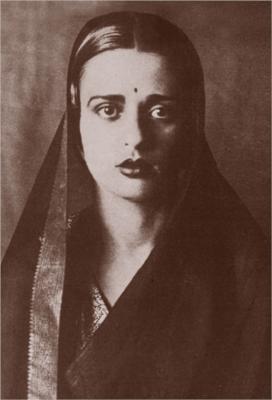
About Amrita Sher-Gil
British Raj · 1913–1941
Indian modernist who won a gold medal at the Société Nationale des Beaux-Arts in Paris aged nineteen, before returning to India to paint its rural poor.
Museums1
Countries1
Most worksNational Gallery of Modern Art, New Delhi · 101 works
Loading map…
Where to see Amrita Sher-Gil
Ranked by works you can see in person.
-
 101 works
National Gallery of Modern Art
New Delhi, India
Also here (6)
Frequently Asked Questions
Where can I see Amrita Sher-Gil's work?
Unfortunately, the provided references do not contain specific information about where to view works by Amrita Sher-Gil. However, many major museums around the world feature collections of modern and contemporary art. You may find examples of her work in institutions such as: Art Gallery of New South Wales (Sydney) Los Angeles County Museum of Art (LACMA) Metropolitan Museum of Art (New York) Museum of Modern Art (New York) Royal Ontario Museum (Toronto) Victoria & Albert Museum (London) Checking the online collections catalogues of major museums may be a useful way to discover where Sher-Gil's works are held. Please note that museum collections are subject to change, and works may not always be on display.What should I know about Amrita Sher-Gil's prints?
Amrita Sher-Gil (1913[2]-1941[2]) was an important Indian painter. Although she died at only 28, her work is recognised today. Sher-Gil combined European and Indian styles. Sher-Gil's paintings are not widely available as prints. The scarcity is due to copyright restrictions and the limited number of original works. Much of her work is held in museums or private collections. Prints of Sher-Gil's work are often giclée reproductions. These use high-resolution digital scans of original paintings. The giclée method provides accurate colour and detail. Authorised prints are produced with the permission of rights holders, often museums or Sher-Gil's estate. These reproductions aim to offer access to her art for a wider audience, while maintaining quality. When acquiring a Sher-Gil print, verify its source. Look for authentication from a reputable publisher or institution. This ensures you are purchasing a legitimate reproduction, not an unauthorised copy. The value of a print depends on its quality, rarity, and provenance.Why are Amrita Sher-Gil's works important today?
Amrita Sher-Gil (1913[2]-1941[2]) was an important figure in 20th-century Indian art. Her paintings are significant for their synthesis of European and Indian artistic traditions. Sher-Gil trained in Paris during the 1930s; she was influenced by Post-Impressionist painters such as Paul Cézanne and Paul Gauguin. After returning to India in 1934[2], Sher-Gil sought to represent Indian subjects and themes in her work. She moved away from purely Western styles, developing a distinctive approach that combined elements of both. Her paintings often depict the daily lives of women in rural India, portraying them with sensitivity and empathy. Sher-Gil's work is important because it challenged prevailing artistic norms in India. She rejected academic realism and idealised representations, instead embracing a more modern and expressive style. Her paintings also addressed social issues, such as the status of women and the impact of colonialism. She has become an icon of modern Indian art, inspiring generations of artists. Her early death at the age of 28 cut short a promising career, but her artistic contributions continue to be celebrated.What techniques or materials did Amrita Sher-Gil use?
Artists have always used a variety of materials in their work. Traditional painting materials include natural pigments, chemical pigments, fresco, egg tempera, watercolour, and oil. More contemporary materials include acrylics, household emulsions, and mixed media. Mixed media describes the use of a range of different materials all in one work. Oil paint can be applied thickly in impasto or thinly in glazes. Brushwork may be fine, disguised, or thickly applied with a palette knife. When using pencils, artists can employ hatching, crosshatching, dark shading, gradating, blending, and shading with texture. Hatching involves filling an area with a series of parallel strokes; the closer the strokes, the darker the tone. For darker shading, layers of parallel strokes can be placed on top of one another at varying angles. Acrylic paint can be diluted with water to create a flat wash, using light, overlapping, horizontal strokes.Who influenced Amrita Sher-Gil?
Amrita Sher-Gil's artistic development involved several influences, both Western and Indian. During her time in Paris (from 1929[2]), she was exposed to Post-Impressionism. Artists like Paul Cézanne and Paul Gauguin impacted her early style. Their use of colour and form is apparent in her paintings from this period. Her return to India in 1934 marked a shift in her artistic direction. She sought inspiration in Indian art history, particularly the Mughal and Pahari schools of painting. The colours and compositions of these traditions began to appear in her work. She was also interested in the lives of ordinary people in India. This is evident in paintings such as "Village Scene" (1937) and "The Bride's Toilet" (1937). Sher-Gil admired the Bengal School of Art, but she also critiqued what she viewed as its sentimentality. Instead, she aimed to create a more authentic and modern representation of Indian subjects. Her engagement with both European modernism and Indian artistic traditions shaped her unique style.What is Amrita Sher-Gil's most famous work?
Amrita Sher-Gil (1913[2]-1941[2]) is known as a creator of modern Indian art. Born in Budapest to a Sikh father and a Hungarian-Jewish mother, she moved to India at age nine. She studied art in Florence and Paris, where she was inspired by Postimpressionist painters such as Paul Cézanne and Paul Gauguin. In 1933[2], Sher-Gil's painting *Young Girls* (also known as *Group of Three Girls*) won a gold medal at the Société Nationale des Beaux-Arts. She was the youngest student, and the only Asian artist, to receive this award. The painting features her sister Indira and a friend. Some have interpreted the work as representing different sides of Sher-Gil’s personality. After returning to India in 1934, Sher-Gil sought to blend Western painting methods with Indian subjects and colours. Her painting *Young Girls* was awarded a Gold Medal at the annual exhibition of the Bombay Art Society three years later. This helped to establish her as one of India’s most celebrated modern artists.What style or movement did Amrita Sher-Gil belong to?
Amrita Sher-Gil, who died in 1941[2], is regarded as an important influence on the development of modernism within India. Although the Progressive Artists’ Group (PAG) in Bombay, founded in 1947, fully embraced modernism, Sher-Gil's earlier work in the 1930s was certainly influential for them. The PAG included artists such as Maqbool Fida Husain, Francis Newton Souza, and Tyeb Mehta. The PAG's use of the concept of "progressive" came a full decade after the founding of the Progressive Writers Association. The PAG is characterised above all by its engagement with transnational modernism rather than with concern for programmatic social consciousness. Shakir Ali, after seeing an exhibition of Sher-Gil's in Delhi, decided to become an artist. Zubeida Agha was also deeply inspired by the paintings of Sher-Gil, whose unconventional life and art had become the stuff of legend upon her early death.What was Amrita Sher-Gil known for?
Amrita Sher-Gil (born 1913[2]; died 1941[2]) is known for her fusion of Western and Indian artistic styles. Educated in Paris, she was exposed to European painting techniques and modern art movements. However, she chose to return to India to find her artistic voice. Sher-Gil sought to depict Indian life and culture through her paintings. She moved away from Western academic styles, developing a unique style that combined elements of post-Impressionism and Indian artistic traditions. Her work often featured portraits of women, village scenes, and depictions of everyday life in India. Although her career was short, due to her early death at age 28, Sher-Gil is considered an important figure in the history of modern Indian art. Her paintings are recognised for their bold use of colour and their sensitive portrayal of Indian subjects. She aimed to represent India and its people with authenticity.
Sources
Where to See guide aggregates verified holdings of Amrita Sher-Gil's works across the following collections.
- [1] museum National Gallery of Modern Art Used for: museum holdings.
- [2] wikipedia Wikipedia: Amrita Sher-Gil Used for: biography.
- [3] book Dorling Kindersley, Artists: Inspiring Stories of the World's Most Creative Minds Used for: biography, stylistic analysis.
- [4] book Susie Hodge, I Know an Artist Used for: biography, stylistic analysis.
- [5] book Hodge, Susie, 1960- author, The short story of women artists : a pocket guide to movements, works, breakthroughs, & themes Used for: biography.
Editorial overseen by Solis Prints. Sources verified 2026-08-29. Click a source for details, or hover over [N] in the page above to preview.
Editorial standardsMethodologyCorrectionsAI disclosureAbout the editorial team