



About Anna Palm de Rosa
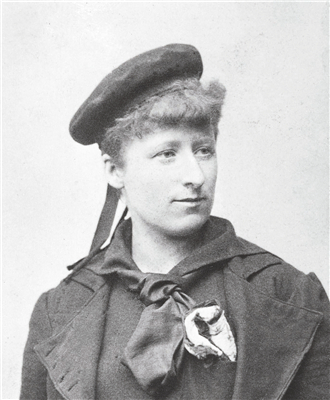
Museums2
Countries2
Largest reported holdingNationalmuseum, Stockholm · 7 recorded works
Loading map…
Where to see Anna Palm de Rosa
Collection holdings are reported here; current display varies. Check with each museum before visiting.
-
7 recorded works
Nationalmuseum
Stockholm, Sweden
-
1 recorded work
Finnish National Gallery
Helsinki, Finland
Also here (6)


Frequently Asked Questions
Where can I see Anna Palm de Rosa's work?
It is difficult to provide a comprehensive list of places where one might view works by Anna Palm de Rosa. However, several museums hold collections that may include her work. These include institutions in both Europe and North America. In the United States, you might check the collections of the Metropolitan Museum of Art (New York), the Los Angeles County Museum of Art (LACMA), the Minneapolis Institute of Arts, the Museum of Modern Art (New York), the Virginia Museum of Fine Arts (Richmond), and the Charles Hosmer Morse Museum of American Art (Winter Park, Florida). In Canada, the Royal Ontario Museum (Toronto) may hold relevant pieces. In the UK, possible locations are the Brighton Museum & Art Gallery, the Manchester Art Gallery, the National Museums of Scotland (Royal Museum, Edinburgh), and the Victoria & Albert Museum (London).What should I know about Anna Palm de Rosa's prints?
Anna Palm de Rosa (1859[1]-1924[1]) was a Swedish[1] artist known for her watercolours and paintings. She spent much of her career in Italy. Palm de Rosa is best known for her depictions of urban scenes and architecture. Born in Stockholm, she was the daughter of the painter August Palm and received instruction from him. She also studied at the Academy of Fine Arts in Stockholm during the 1880s. Her early work includes Swedish subjects. In 1895[1], she moved to Italy, where she would live for the rest of her life. She married Alfredo de Rosa, an Italian infantry officer, in 1900. Her Italian paintings often feature views of Naples, Venice and other popular tourist destinations. She produced many paintings of harbours and canals. Palm de Rosa's works were popular with tourists and were sold through art dealers. Her paintings and watercolours are characterised by their detailed depictions of buildings and city life. Many of her works are relatively small in size and were intended as souvenirs. She exhibited at the Royal Academy in London in 1893, as well as in Berlin and Paris.Why are Anna Palm de Rosa's works important today?
Anna Palm de Rosa (1859[1]-1924[1]) was a Swedish[1] artist known for her watercolours and oil paintings. She specialised in scenes of everyday life, often featuring coastal views and urban settings. Her depictions of Stockholm and other European cities offer a glimpse into the social and architectural character of the late 19th and early 20th centuries. Palm de Rosa's art provides a valuable record of a bygone era. Her paintings capture the atmosphere of specific locations and moments in time, preserving details of fashion, transportation, and urban design. These works appeal to those interested in social history, as well as art collectors. Although she was not a central figure in the art world of her time, Palm de Rosa achieved recognition during her lifetime. She exhibited her work in Sweden and abroad, gaining a following for her skill in capturing light and atmosphere. Today, her paintings are held in public and private collections, appreciated for their documentary value and artistic merit. They offer a window into the past, allowing viewers to connect with a specific time and place through the artist's perceptive eye.What techniques or materials did Anna Palm de Rosa use?
Anna Palm de Rosa (1859[1]-1924[1]) was a Swedish[1] artist known for her paintings, particularly watercolours. She often depicted coastal scenes and landscapes. Palm de Rosa's preferred medium was watercolour, which allowed her to capture the subtle atmospheric effects of light and water. Her works often feature detailed depictions of architecture and figures within the broader vista. She employed traditional watercolour techniques, such as washes and layering, to create depth and luminosity. While watercolour was her primary focus, she also produced paintings in other media. These included oil paintings, although they are less common than her watercolours. Her artistic training at the Academy of Fine Arts in Stockholm provided her with a solid foundation in both watercolour and oil painting techniques. She also studied in Paris, further broadening her artistic skills and exposing her to different approaches.Who did Anna Palm de Rosa influence?
Anna Palm de Rosa (1859[1]-1924[1]) was a Swedish[1] artist, best known for her watercolours depicting scenes of everyday life. While it is difficult to identify specific artists who were directly influenced by her, we can consider her impact in a broader context. Palm de Rosa's work fits into a tradition of female artists who focused on domestic and genre scenes, offering a glimpse into the lives of women and families during the late 19th and early 20th centuries. Artists such as Berthe Morisot and Mary Cassatt, who were part of the Impressionist movement, also explored similar themes. Palm de Rosa's detailed watercolours and her focus on capturing the atmosphere of social gatherings align with the artistic interests of her time. Her work may have resonated with other artists who sought to portray the beauty and significance of ordinary moments, contributing to a wider appreciation for genre painting and watercolour techniques.Who influenced Anna Palm de Rosa?
It is difficult to say with certainty who influenced Anna Palm de Rosa. However, Anni Albers (born Annelise Fleischmann) provides an example of artistic development. Albers's first art teacher, a Miss Violet, taught her around the age of ten. Albers painted "some good naturalistic watercolours of little autumn leaves" for her. When Albers was fourteen, her parents hired Toni Mayer, a private art teacher, who came weekly with a nude model for her to draw. Albers felt very professional and excited by the progressive Mayer, who gave her a first look at the world beyond bourgeois Berlin. Later, Albers studied with the Postimpressionist Martin Brandenburg, from whose strict discipline she felt she benefited, even if she questioned the specifics of his training. She made representational paintings about half life-size. She saw a beautiful Lucas Cranach Eve painted against a black background and began to put black in her paintings, violating Brandenburg's recommended technique. Brandenburg said that if she did not abandon this use of black, she could not return to his classes.What style or movement did Anna Palm de Rosa belong to?
It is difficult to assign Anna Palm de Rosa to a single artistic movement. Born in Sweden in 1859[1], she spent much of her career in Italy, where she died in 1924[1]. This puts her active period as an artist squarely in the late 19th and early 20th century. Without specific references to her training, exhibition history, or critical reception, it is hard to make a definitive claim about her artistic style. However, it is reasonable to assume that she was exposed to academic painting styles, and possibly also to early impressionistic approaches. Further research into Swedish[1] and Italian art circles of the time would be needed to place her work more precisely.
Sources
Where to See guide aggregates verified holdings of Anna Palm de Rosa's works across the following collections.
- [1] wikipedia Wikipedia: Anna Palm de Rosa Used for: biography.
- [2] book Penny Olsen, Collecting Ladies: Ferdinand Von Mueller and Women Botanical Artists Used for: biography.
- [3] book Jed Rasula, Destruction Was My Beatrice Used for: biography, stylistic analysis.
- [4] book Masterpieces of western art : a history of art in 900 individual studies from the Gothic to the present day Used for: biography.
- [5] book Landauer, Susan, The not-so-still life : a century of California painting and sculpture Used for: biography.
Editorial overseen by Solis Prints. Sources verified 2026-09-30. Click a source for details, or hover over [N] in the page above to preview.
Editorial standardsMethodologyCorrectionsAI disclosureAbout the editorial team