

About Apollinary Goravsky
Russian · 1833–1900
- painting
- portrait
Belarusian landscape painter and Imperial Academy Academician who documented rural folk life in Belarus and Ukraine for the Russian[1] Academy of Arts.
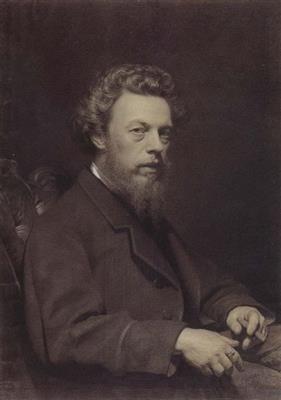
Museums3
Countries2
Most worksTretyakov Gallery, Moscow · 3 works
Loading map…
Where to see Apollinary Goravsky
Ranked by works you can see in person.
-
3 works
Tretyakov Gallery
Moscow, Russia
-
3 works
Hermitage Museum
Saint Petersburg, Russia


-
1 works
National Museum in Warsaw
Warsaw, Poland

Frequently Asked Questions
Where can I see Apollinary Goravsky's work?
Apollinary Goravsky's work can be viewed in several locations. The State Tret'iakov Gallery in Moscow holds works such as *Girls Holding Balls* (1929) and *Study for poster. New Workers' Settlements; Slogan: We Are Building* (1929). Another painting[1], *On the Balcony* (1930), is located at the Museum Ludwig (Collection Ludwig, Cologne). Other museums that hold his work include the State Art Museum in Samara, the Irkutsk Regional Art Museum, and the State Russian[1] Museum, St Petersburg. Additionally, works are held in private collections in England, Germany, Italy, Russia, Switzerland, and the United States. These distributions occurred from 1922-1929[1], when artworks were granted to regional museums. For instance, certificate No 415 of 1 September 1925 granted works to the Belorussian State Museum.What should I know about Apollinary Goravsky's prints?
Printmaking has ancient origins, with early examples on paper appearing in China. The practice became widespread in Europe in the late fourteenth century, with woodcuts serving various purposes, from book illustration to religious icons. By the late nineteenth century, prints gained recognition as a significant artistic medium. Artists started signing prints to distinguish original works from reproductions. They also began to limit edition sizes and use high-quality papers, increasing the aesthetic value and controlling the market. Prints allowed artists to reach a broader audience due to their greater availability and lower cost compared to other art forms. Dealers such as Julius Meier-Graefe, Ambroise Vollard, and Daniel-Henry Kahnweiler recognised the potential of prints as a popular art form and encouraged painters and sculptors to create them. Illustrative prints became an ideal medium for artists interested in exploring the relationship between visual and written elements.Why are Apollinary Goravsky's works important today?
Apollinary Goravsky's work is relevant because it contributes to the larger narrative of Ukrainian art history, which is still being written. For many years, Ukrainian artists were not recognised as such; instead, they were often labelled 'Russian[1]'. This skewed perception is now being addressed by galleries and museums in Ukraine, which are actively working to incorporate 'native' artists into the broader European story. Figures such as Archipenko, Burliuk, Malevich, Exter, and Hryshchenko are now understood as part of both 'European' and 'Ukrainian' art. This reconstruction of art history has sometimes been contentious, coinciding with debates over cultural memory and identity. The avant-garde in Ukraine has often been described as an 'interrupted project' because its achievements were denied recognition and deliberately obscured from public view after the early 1930s. Only since the 1990s has full disclosure become possible, and public awareness of the 'historic' avant-garde has inspired many contemporary artists.What techniques or materials did Apollinary Goravsky use?
Apollinary Goravsky was a Russian[1] painter, known for genre, portrait, and especially, watercolour works. Watercolour painting[1] involves specific techniques to achieve desired effects. The artist typically applies thin, translucent washes of colour to white paper, layering them to build up depth and tone. The white of the paper is often incorporated into the painting as a highlight, and mistakes are difficult to correct. Goravsky's choice of watercolour allowed for a certain lightness and luminosity in his works. This medium is well-suited to capturing fleeting moments and atmospheric effects. He was active during a period when watercolour painting was gaining recognition as a significant art form in its own right, distinct from its earlier role as a preparatory medium. The appeal of watercolour lies in its portability, its capacity for capturing subtle gradations of tone, and the unique character that the white paper lends to the finished work.Who did Apollinary Goravsky influence?
Mikhail Vrubel, a painter and sculptor, had a notable effect on many later artists. In the early 1900s, several budding avant-garde artists encountered Vrubel’s work in Kiev; these included Natalia Goncharova, Mikhail Larionov, Alexandra Ekster, Alexander Archipenko, David Burliuk, and Kazimir Malevich. Liubov Popova claimed she was left 'vanquished' by Vrubel’s talent. Alexander Rodchenko asserted that in the early 1910s he 'painted like Vrubel,' while Vladimir Tatlin prized and avidly collected Vrubel’s artwork. Naum Gabo summarised Vrubel’s influence on his generation, stating that Vrubel freed painting[1] and sculpture from academic schemata. Gabo felt Vrubel's impact on visual consciousness was as decisive as Cézanne’s, and equivalent to the latter’s on painting in western Europe. John Bowlt attributes Gabo’s, Rodchenko’s, and Tatlin’s interest in Vrubel’s art to his unique constructive method.Who influenced Apollinary Goravsky?
It is difficult to identify specific influences on Apollinary Goravsky from the reference texts provided. However, the passages do discuss the artistic influences on a number of Goravsky's contemporaries in the Russian[1] avant-garde. Mikhail Vrubel is mentioned as an important figure for many artists of the period. His approach to form, with its geometric patterns and constructive effect, was admired by artists such as Naum Gabo, Alexander Rodchenko, and Vladimir Tatlin. Larionov, who worked as Vrubel's assistant in 1899[1], found inspiration in Vrubel's paintings. Natalia Goncharova, another contemporary, was a designer of Futurist books. Other artists of the time include Kazimir Malevich, Alexandra Ekster, Alexander Archipenko and David Burliuk. The references suggest a web of influences and shared ideas within the Russian art world of the early 20th century.What is Apollinary Goravsky's most famous work?
Without more information, it is difficult to identify Apollinary Goravsky's single most famous work. Indexes and exhibition catalogues of Russian[1] paintings do not consistently identify one piece as his best known. Lists of works by other Russian artists, such as Natalia Goncharova and Kuzma Petrov-Vodkin, include paintings like "Electric Lamp", "Sabbath", "The Mother of God of Tenderness towards Evil Hearts", and "Mother". These lists give the titles, dates, dimensions, current locations, provenance, and exhibition history. A similar catalogue raisonné would be required to determine Goravsky's most recognised painting[1] with certainty. It is possible that Goravsky is best known for a work not included in the available indexes. Further research in specialist collections and auction records may be needed to determine his most prominent work.What style or movement did Apollinary Goravsky belong to?
It is difficult to assign Apollinary Goravsky to one specific movement. Goravsky was active during a time of considerable stylistic change in Russian[1] art, and his work shows the influence of several trends. Early Russian painting[1] was heavily influenced by portraiture, with artists such as Vladimir Borovikovsky adopting a classical style at the start of the 19th century. This classicism then led to Romanticism, which saw painters express themselves more freely. Later, movements such as Cubism and Futurism became influential. Cubism aimed to expose the third dimension through form, while Futurism promoted dynamism and movement in painting. These movements overlapped and influenced each other, with a "transitory cubism of futurist character" emerging. Given this context, it is most accurate to consider Goravsky as an artist working within a changing environment, potentially drawing from Romanticism and the emerging avant-garde movements of his time. Further research into his specific works would be needed for a more definitive categorisation.
Sources
Where to See guide aggregates verified holdings of Apollinary Goravsky's works across the following collections.
- [1] wikipedia Wikipedia: Apollinary Goravsky Used for: biography.
- [2] book Natalya Strizhkova Andrei Sarabyanov, Art and Power_ The Russian Avant-garde under Soviet Rule, 1917–1928 Used for: biography, stylistic analysis.
- [3] book guggenheim-artofavantgardei00rowe Used for: biography.
- [4] book guggenheim-chagallj00chag Used for: biography, stylistic analysis.
- [5] book guggenheim-grerussi00schi Used for: stylistic analysis.
- [6] book Yevgenia Petrova (editor), Origins of the Russian avant-garde_ celebrating the 300th anniversary of St. Petersburg_ the Walters Art Museum, Baltimore (13 February-25 May 2003), Fine Arts Museums of San Francisco (29 June-21 September 2003) Used for: biography.
- [7] book Russian art of the avant-garde : theory and criticism, 1902-1934, with 105 illustrations Used for: biography.
- [8] book Peter. Leek, Russian Painting Used for: biography.
Editorial overseen by Solis Prints. Sources verified 2026-09-16. Click a source for details, or hover over [N] in the page above to preview.
Editorial standardsMethodologyCorrectionsAI disclosureAbout the editorial team