



About Ara Shiraz
Armenian · 1944–2014
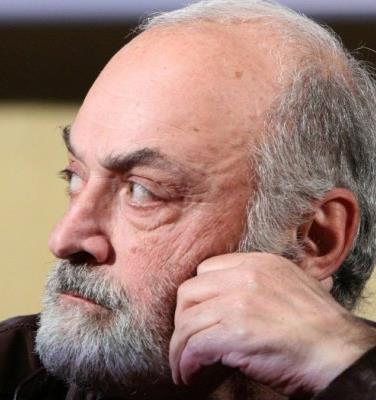
Armenian[1] sculptor and son of poets Silva Kaputikyan and Hovhannes Shiraz, celebrated for public monuments and architectural commissions across Yerevan.
Museums1
Countries1
Largest reported holdingNational Gallery of Armenia, Yerevan · 6 recorded works
Loading map…
Where to see Ara Shiraz
Collection holdings are reported here; current display varies. Check with each museum before visiting.
-
6 recorded works
National Gallery of Armenia
Yerevan, Armenia
Also here (6)

Frequently Asked Questions
Where can I see Ara Shiraz's work?
Ara Shiraz's artwork can be found in numerous public and private collections. These include institutions such as the British Museum in London, the Musée du Louvre in Paris, and the Metropolitan Museum of Art in New York. Other locations include the Royal Ontario Museum in Toronto, the Rijksmuseum in Amsterdam, and the Los Angeles County Museum of Art. Shiraz's pieces also appear in the collections of the Middle East Culture Centre, Tokyo, and the Victoria and Albert Museum, London. Private collections that hold Shiraz's work include the Keir Collection in London and the Minassian Collection, formerly located in New York. The Victoria and Albert Museum's collection was largely assembled between 1873 and 1885 by Sir Robert Murdoch Smith. Smith acquired pieces from Jules Richard, a French resident of Tehran, who had been collecting for 30 years.What should I know about Ara Shiraz's prints?
Ara Shiraz (1941-2014[1]) was an Armenian[1] sculptor. Although he is best known for his large-scale public sculptures, prints of his drawings are also available. Shiraz was born in Yerevan, Armenia. He was the son of poets Hovhannes Shiraz and Silva Kaputikyan. He graduated from the Yerevan Institute of Fine Arts in 1966[1]. Shiraz became a member of the Artists' Union of Armenia in 1967. From 1968 to 1986, he was the chairman of the Sculptors Section of the Union. His sculptures use bronze, copper, and stone. His work includes portrait busts of William Saroyan, Yeghishe Charents, and Paruyr Sevak. Other sculptures include "Anush" (1967), "Khachkar" (1970), "My City" (1974), and "David of Sasun" (1976). Shiraz's sculptures are installed in Yerevan and other cities. His work can be found in the National Gallery of Armenia, the Tretyakov Gallery in Moscow, and other collections. Prints offer an accessible way to engage with Shiraz's artistic vision, providing insight into the preliminary sketches and studies that informed his sculptural work.Why are Ara Shiraz's works important today?
Ara Shiraz's art is important because of its engagement with perception and the mind. His works invite viewers to question how they see and understand the world. Shiraz, who arrived in the United States from Japan in 1961[1], distinguished himself from both traditional and contemporary practices. He saw painting as an exercise, rather than an end in itself. While his works from the 1960s might superficially recall Jasper Johns or Robert Morris, Shiraz resisted easy categorisation, especially Minimalism. Shiraz's approach has affinities with Marcel Duchamp; both artists prioritised the role of the mind in experiencing art. For Shiraz, the process a painting sets in motion within the viewer is more significant than the object itself. The painting acts as a stimulus for a process of perceiving that is only partly visible. This process begins when the viewer confronts the work, jettisoning assumptions to engage in intense questioning. His art encourages a deeper understanding of ourselves and our capabilities.Who did Ara Shiraz influence?
Ara Shiraz's influence is difficult to pin down to specific artists or movements. One source notes a general trend in the 1970s where artists selected elements of past art and applied them to their own work. They avoided clean surfaces, favouring roughness and spontaneity. This approach relates some artists to Abstract Expressionism; however, they differed in their aims. They wished to convey private feelings in a more intimate manner, through involvement with the object, rather than grand statements. Another passage mentions artists drawing inspiration from varied sources such as Cubism and Abstract Expressionism. Some artists consciously distorted these influences. This suggests a broader environment of artistic experimentation and reinterpretation, rather than a direct line of influence from Shiraz to particular artists. It is more of a shared sensibility among artists of that time.Who influenced Ara Shiraz?
It is difficult to identify specific influences on Ara Shiraz from the reference texts provided. One passage does mention Roberto Clemente, who cultivated friendships with Alighiero Boetti, Joseph Beuys, Andy Warhol, and Cy Twombly. Boetti, Beuys, Warhol and Twombly may have served as mentors and inspirations to Clemente. Boetti met Clemente in Rome in 1972[1], and they shared an interest in Eastern philosophy. In 1974, they travelled together to Afghanistan. Boetti's openness to collaboration and chance encounters influenced Clemente's artistic approach. Another passage discusses Shirazeh Houshiary, an Iranian installation artist and sculptor living in London since 1974. Houshiary draws inspiration from Sufi mystical teachings and the poetry of Jalal ad-Din Muhammad Rumi. This may or may not relate to Ara Shiraz's influences.What is Ara Shiraz's most famous work?
Ara Shiraz (1941-2014[1]) was an Armenian[1] sculptor, known for his monumental public sculptures and portrait busts. While it is difficult to single out one definitive "most famous" work, several pieces are particularly well known and representative of his style. Many recognise Shiraz's statue of the Armenian national poet Hovhannes Tumanyan. It is located in Yerevan, Armenia. The statue is a bronze figure, seated and contemplative. It captures the poet's intellectual spirit. Another notable work is the statue of Paruyr Sevak, also a celebrated Armenian poet. This sculpture presents Sevak in a dynamic pose, seemingly reciting his poetry. It is located at the Komitas Pantheon in Yerevan. Shiraz created numerous other significant sculptures, including the statue of composer Komitas, and the memorial to William Saroyan in Yerevan. His works often focus on prominent Armenian cultural figures. They are characterised by a realism that aims to capture the essence of the subject. Shiraz's contributions have secured his place in Armenian art history.What style or movement did Ara Shiraz belong to?
Ara Shiraz (1941-2014[1]) was an Armenian[1] sculptor, whose career began in the Soviet era and continued after Armenian independence. His work is best understood in relation to the development of modern Armenian sculpture; it is not easily categorised within Western art movements. Shiraz's sculptures often feature abstracted human forms. These monumental works, cast in bronze or carved from stone, display a concern with mass and volume. While some see the influence of Constantin Brâncuși in his simplification of form, Shiraz's aesthetic also incorporates elements of Armenian artistic traditions. This includes the influence of early Christian stone carving found at sites like Geghard monastery. Shiraz's sculptures are prominent features in the urban environment of Yerevan. Examples include the statue of the writer Paruyr Sevak and the statue of composer Komitas Vardapet, both erected in Yerevan. His work aimed to create a distinctly Armenian modernism.What was Ara Shiraz known for?
Ara Shiraz (1941-2014[1]) was a Soviet-Armenian[1] sculptor. His early works of the 1960s were stone carvings, and he worked in bronze, wood, and plaster. Shiraz is known for his portrait busts of noted Armenian figures, such as poet Yeghishe Charents (1965[1]), composer Komitas (1969), and artist Hakob Kojoyan (1973). His sculptures are installed in Yerevan, Armenia, and other public collections. These include the statue of Paruyr Sevak (1978) in Yerevan, and the memorial to his father, the poet Hovhannes Shiraz, at the Komitas Pantheon (2016). Shiraz taught at the Yerevan State Institute of Fine Arts. He was named an Honoured Artist of Armenia (1977) and a National Artist of Armenia (1979).
Sources
Where to See guide aggregates verified holdings of Ara Shiraz's works across the following collections.
- [1] wikipedia Wikipedia: Ara Shiraz Used for: biography.
- [2] book Beard, Lee, 1973- author, Butler, Adam, author; Van Cleave, Claire, author; Fortenberry, Diane, author; Stirling, Susan, author, Beard, Lee, 1973- author, Butler, Adam, author; Van Cleave, Claire, author; Fortenberry, Diane, author; Stirling, Susan, author - The Art Book_ New Edition, Mini Format Used for: biography.
- [3] book guggenheim-destin00arak Used for: biography.
- [4] book guggenheim-twopri00weis Used for: biography.
- [5] book Iftikhar Dadi, Modernism and the Art of Muslim South Asia (Islamic Civilization & Muslim Networks) Used for: stylistic analysis.
Editorial overseen by Solis Prints. Sources verified 2026-09-30. Click a source for details, or hover over [N] in the page above to preview.
Editorial standardsMethodologyCorrectionsAI disclosureAbout the editorial team