



About Armand Vaillancourt
Canadian · 1929–present
- public art
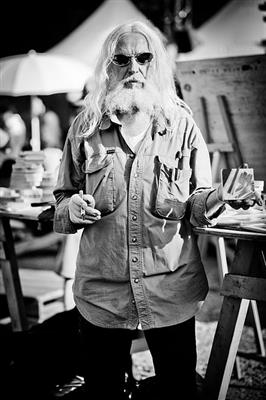
Quebec sculptor whose 1971 San Francisco fountain remains one of the most debated public artworks in North America.
Museums1
Countries1
Largest reported holdingMusée national des beaux-arts du Québec, Quebec City · 1 recorded work
Loading map…
Where to see Armand Vaillancourt
Collection holdings are reported here; current display varies. Check with each museum before visiting.
-
1 recorded work
Musée national des beaux-arts du Québec
Quebec City, Canada

Frequently Asked Questions
Where can I see Armand Vaillancourt's work?
I am unable to provide a comprehensive list of locations that hold works by Armand Vaillancourt. However, many major museums include collections of modern art that may include his work. Some of these are the Metropolitan Museum of Art (New York); the Museum of Modern Art (New York); the Los Angeles County Museum of Art; the Minneapolis Institute of Arts; the Royal Ontario Museum (Toronto); and the Virginia Museum of Fine Arts (Richmond). In the UK, you could try the Victoria & Albert Museum (London); the National Museums of Scotland (Edinburgh); the Manchester Art Gallery; or the Brighton Museum & Art Gallery. In France, museums with modern art collections include the Musée National Fernand Léger (Biot); the Musée d’Art Moderne de la Ville de Paris; the Musée d’Orsay (Paris); and the Musée du Louvre (Paris).Why are Armand Vaillancourt's works important today?
Armand Vaillancourt is a Québécois sculptor whose works often provoke strong reactions. His art is important because it engages with issues of public space, political expression, and environmentalism. Vaillancourt is known for large-scale public sculptures, often made from concrete or metal. These works are intended to be accessible and interactive, encouraging people to engage with art in their everyday lives. His fountain sculpture, *Vaillancourt Fountain*, in Embarcadero Plaza, San Francisco, is one example. Vaillancourt's art often carries a political message, reflecting his activism and social concerns. He has used his art to protest against war, injustice, and environmental destruction. This willingness to use art as a form of social commentary makes his work relevant in contemporary society, where artists continue to address pressing social and political issues. His focus on environmental themes is particularly relevant today. As environmental concerns become more urgent, Vaillancourt's art reminds us of the importance of protecting the planet and advocating for change. His work encourages dialogue about the role of art in promoting social and environmental awareness.Who was Armand Vaillancourt?
Armand Vaillancourt, born in Black Lake, Quebec in 1929[1], trained at the École des beaux-arts de Montréal and became known as a politically engaged artist. His sculptures reflected his views on Quebec sovereignty, environmental issues, and Indigenous rights.Who did Armand Vaillancourt influence?
It is difficult to identify specific artists directly influenced by Armand Vaillancourt from the reference texts provided. The texts largely discuss the influence of Henri Matisse on various artists. Matisse's impact is noted on figures like Max Weber and John Marin in America, as well as Audrey Skaling, a Canadian[1] artist working in New York. European artists such as Andre Lhote also absorbed Matisse's colour theories, which contributed to the development of synthetic cubism. In the 1970s, some American artists, including Roy Lichtenstein and Andy Warhol, admired Matisse's surface-oriented work. Ellsworth Kelly's artistic relationship with Matisse is also explored, noting similarities in their approaches. Furthermore, Matisse influenced abstract painters like Morris Louis, particularly in the use of colour and the arrangement of shapes. Richard Diebenkorn's "Ocean Park" paintings also show the impact of Matisse's works from 1912-1917[1].What is Armand Vaillancourt's most famous work?
Without more information, it is difficult to name Armand Vaillancourt's most famous work with certainty. However, some sources indicate that Vaillancourt is best known for his sculpture. He had his artistic education first in Florence, then at the Academy of Fine Art in Naples, and continued his education in Milan until 1965. After much travelling throughout Europe and North America, he settled in Toronto, Ontario. He worked as a graphic artist in Toronto for the next two and a half decades. De Curtis resumed his independent artistic activities full-time in the late eighties. De Curtis artwork can be found gracing walls of galleries and prestigious private collections within Canada, The United States, Europe, and around the globe.What style or movement did Armand Vaillancourt belong to?
Armand Vaillancourt is best known for large-scale public sculptures, and his work relates to several artistic tendencies of the mid-20th century. One such tendency is an interest in site-specific art, where the location informs the work. Vaillancourt's sculptures often engage with their surroundings, altering or challenging the viewer's perception of the space. This approach raises questions about the role of art in public spaces, and the artist's responsibility to the public. Another relevant movement is the use of industrial materials and processes. Vaillancourt often employs concrete and steel in his sculptures, reflecting the influence of modern architecture and engineering. These materials lend his works a monumental quality, suitable for outdoor settings. While Vaillancourt's sculptures are abstract, they often suggest organic forms or human figures. This combination of abstraction and figuration aligns with trends seen in the work of sculptors like Henry Moore. Vaillancourt's art shares an interest in simplified forms and the relationship between humans and their environment.What was Armand Vaillancourt known for?
Armand Vaillancourt is best known for his large-scale public sculptures, often created from concrete. These works frequently engage with social and political themes. Vaillancourt's pieces are site-specific, designed to interact with their surroundings and challenge viewers. His sculptures often spark public discussion due to their scale and unconventional forms. One example of such discussion occurred with Richard Serra's *Tilted Arc*, a large steel sculpture installed in New York City in 1981. The public reacted with criticism, citing its appearance, attraction of graffiti, and obstruction of the plaza. The General Services Administration eventually removed it, raising questions about public art[1], censorship, and the artist's rights. Like Serra, Vaillancourt's work can generate similar debates about art's role in public spaces.What is Armand Vaillancourt known for?
Armand Vaillancourt is known as one of Quebec's most politically committed artists. His sculptures consistently reflected his convictions regarding Quebec sovereignty, environmental destruction, and Indigenous rights.
Sources
Where to See guide aggregates verified holdings of Armand Vaillancourt's works across the following collections.
- [1] wikipedia Wikipedia: Armand Vaillancourt Used for: biography.
- [2] book Beard, Lee, 1973- author, Butler, Adam, author; Van Cleave, Claire, author; Fortenberry, Diane, author; Stirling, Susan, author, Beard, Lee, 1973- author, Butler, Adam, author; Van Cleave, Claire, author; Fortenberry, Diane, author; Stirling, Susan, author - The Art Book_ New Edition, Mini Format Used for: biography.
- [3] book guggenheim-guggenheimintern1964allo Used for: biography.
- [4] book Masterpieces of western art : a history of art in 900 individual studies from the Gothic to the present day Used for: biography.
Editorial overseen by Solis Prints. Sources verified 2026-09-30. Click a source for details, or hover over [N] in the page above to preview.
Editorial standardsMethodologyCorrectionsAI disclosureAbout the editorial team