

About Banksy
British · 1974–present
- Street Art
- Contemporary
Anonymous British street artist whose shredded painting made headlines.
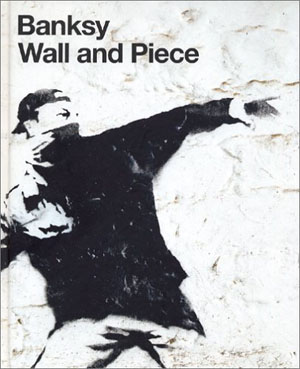
Where to see Banksy
Collection holdings are reported here; current display varies. Check with each museum before visiting.
Frequently Asked Questions
Where can I see Banksy's work?
Banksy's works appear in many locations, often unannounced. Because his pieces frequently appear in public spaces, specific locations can be difficult to predict or guarantee. Some museums and galleries, however, do include street art or urban art in their collections. In the UK, you might see examples of this genre at the Brighton Museum & Art Gallery, the Geffrye Museum in London, the Manchester Art Gallery, the National Museums of Scotland (Royal Museum) in Edinburgh, or the Victoria & Albert Museum, also in London. Outside the UK, museums such as the Los Angeles County Museum of Art (LACMA), the Metropolitan Museum of Art in New York, and the Minneapolis Institute of Arts sometimes include similar works. Always check the museum's current exhibitions to confirm what is on display.What should I know about Banksy's prints?
Banksy's prints, like those of other artists, are often produced in limited editions. The artist determines the size of the edition, not the medium itself. A limited edition is defined by a stated limit to the number of prints made. Each print in an edition is typically numbered. The edition number appears on the bottom left margin of the print, written in pencil as a fraction: the print number above a short line, and the edition size below. The print's title is written in the centre of the bottom margin, and the artist's signature (or chop mark) appears on the bottom right. These conventions, while informal, are widely respected among printmakers. Besides numbered editions, other designations may appear, such as "A/P" for artist's proof (identical to the edition, up to 10% of the edition size), "T/P" for early proofs, "V2" (or similar) for a variant edition with colour changes or block alterations, "V/E" for a variable edition with hand colouring, or "Hors de Commerce" for a non-commercial print identical to the edition.Why are Banksy's works important today?
Banksy's importance stems from his engagement with contemporary issues and his challenge to traditional art-world norms. Active since the 1990s, he gained recognition for his graffiti art in Bristol, employing stencils to create satirical and often humorous images in public spaces. His work frequently addresses serious subjects, such as war and social inequality. Banksy's art is accessible, in part because of its location on public buildings. The use of spray paint, a medium associated with anti-art rebellion, reinforces his anti-establishment stance. Banksy's art exists in a space between Art with a capital 'A' and other forms of imagery. His interventions engage with the politics of picture-making, and question the nature of art and its relationship to commerce. This is seen in his artwork *Girl with Balloon*, where he built a shredder into the frame and partially destroyed the work as the hammer fell at auction. The rise of social media has amplified the reach and impact of street art, including Banksy's. His anonymity, combined with a recognisable style, has contributed to his fame and market value, attracting the attention of collectors and institutions alike.What techniques or materials did Banksy use?
Banksy is known for using stencils and spray paint to create graffiti art. Spray paint became popular among street artists because it is portable and quick to apply. Banksy turned to stencils to speed up his process, create more precise images, and repeat designs. The artist saw a stencilled serial number while hiding from the police, which inspired this technique. This method also allows for accuracy and realism. Banksy's materials are fitting for the anti-establishment statements conveyed in the works. The location of the works, often on public buildings, reinforces the intention of creating art accessible to all. One example is *Girl With Balloon*, which first appeared on a stairway to Waterloo Bridge in London in 2002. The image has crossed boundaries, and in 2017, it was voted Britain’s favourite work of art. Banksy's identity remains unconfirmed, which is central to the artist's activity, as graffiti is illegal.Who did Banksy influence?
Banksy's influence is complex and contested. As a street artist working since the early 1990s, Banksy gained recognition for stencil art that combines humour with serious subjects, such as war. Early in his career, Banksy was influenced by the French graffiti artist Blek le Rat, often called the "father of stencil graffiti". Banksy's rise coincided with street art's increasing commercial success from the mid-2000s. Social media allowed street art to be shared globally, which drove artists to seek praise and fame. Banksy combined anonymity with a signature style, achieving celebrity and market value. His simple messages and familiar advertising techniques have been both praised and criticised. Some critics on the right view graffiti as vandalism, while some on the left consider Banksy's anarchy as too tame. Despite debates about Banksy's artistic merit, his work appears in prestigious collections. Artists such as George Condo, JR, Shepard Fairey, and KAWS have followed a similar path.Who influenced Banksy?
Banksy began creating public art in Bristol in the early 1990s, where a street-art subculture already existed. His early work suggests the influence of Blek le Rat, a French graffiti artist often called "the father of stencil graffiti". Banksy's artworks are often created with stencils, which allow him to work quickly. His pieces combine humour with serious subjects, such as war. Conceptual art may also have had an impact. Artists belonging to the British Art & Language group, with its core of art faculty and students from Coventry, England, engaged with pedagogy and polemics in the late 1960s. Their work included enumeration, diagrams, data sheets, and manifestos. Joseph Kosuth, an American editor of the group, created Information Room (The Third Investigation) (1969), a philosophical study centre.What is Banksy's most famous work?
Banksy's Girl With Balloon, first appearing in 2002, is one of his best-known pieces. The stencilled image depicts a girl in the wind, losing hold of her heart-shaped red balloon. The work was executed in several locations around London. By 2007, the original paintings had been painted over; however, one version was carefully removed from a shop wall and preserved. It sold for £500,000 in 2015. In 2017, Girl With Balloon was voted Britain’s favourite artwork. Banksy's graffiti is often political. To maintain anonymity, he uses stencils, which allow him to work quickly and accurately. His anonymity is central to his work, as graffiti is illegal. Banksy's work often features rats, apes, police officers, members of the royal family, and children. In 2018, a framed Girl With Balloon sold at auction. After the sale, the artwork passed through a hidden shredder that Banksy had secretly installed. The shredding stopped halfway.What style or movement did Banksy belong to?
Banksy is a British graffiti artist whose work contains political and social commentary. His pieces often take the form of satirical, realistic images on walls and bridges in cities internationally. It is difficult to assign Banksy to one specific artistic style. His work has elements of abstract art, but with an added dimension of social critique. From around 1970, art movements emerged and dissolved quickly. Artists used a broader range of materials and approaches, including video, performance, computers, the internet, and traditional materials. Pluralism, incorporating a variety of styles, ideas, and cultural trends, seemed the most appropriate way of describing it all. Postmodernism is another term for art movements that sought to challenge aspects of Modernism. Postmodern art is often quirky, absurd, irreverent, or meaningless. Postmodernists often work with new technologies, including television, video, smartphones, and computers, sourcing, manipulating, and processing imagery.
Sources
Where to See guide aggregates verified holdings of Banksy's works across the following collections.
- [1] book Dorling Kindersley, Artists: Inspiring Stories of the World's Most Creative Minds Used for: biography.
Editorial overseen by Solis Prints. Sources verified 2026-10-14. Click a source for details, or hover over [N] in the page above to preview.
Editorial standardsMethodologyCorrectionsAI disclosureAbout the editorial team