



About Carl Rungius
German · 1869–1959
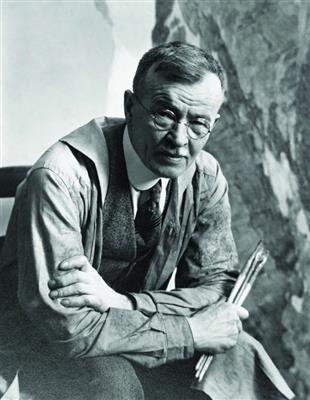
Wildlife painter who left Berlin for the American West and spent fifty years capturing North American big game in the Canadian Rockies.
Museums2
Countries2
Largest reported holdingNational Gallery of Canada, Ottawa · 1 recorded work
Loading map…
Where to see Carl Rungius
Collection holdings are reported here; current display varies. Check with each museum before visiting.
-
1 recorded work
National Gallery of Canada
Ottawa, Canada
-
1 recorded work
Yale University Art Gallery
New Haven, United States


Frequently Asked Questions
Where can I see Carl Rungius's work?
To view paintings and sculptures, several museums have collections that include Carl Rungius. In the United States, these include the Metropolitan Museum of Art (New York), the Los Angeles County Museum of Art (California), the Minneapolis Institute of Arts (Minnesota), the National Museum of American Art (Washington, DC), and the Virginia Museum of Fine Arts (Richmond). Outside the US, the Royal Ontario Museum (Toronto) also holds works. Other museums such as the Charles Hosmer Morse Museum of American Art (Winter Park, Florida), the Museum of Modern Art (New York), the Wolfsonian at Florida International University (Miami Beach), the Yale University Art Gallery (New Haven, CT), the Pennsylvania Academy of the Fine Arts (Philadelphia), the Philadelphia Museum of Art, and the Carnegie Museum of Art (Pittsburgh) may also hold work by Rungius.What should I know about Carl Rungius's prints?
Carl Rungius (1869[1]-1959[1]) was a painter of North American big game animals. Although he is best known for his oil paintings, he also produced drypoint etchings. Around 1924[1], Rungius was encouraged to explore drypoint etching as a way to reach a wider audience. In this method, the artist scratches a drawing in reverse onto a copper plate. The plate is immersed in acid to deepen the lines; this process is repeated to create lines of different depths. The plate is inked, wiped, and then run through a press onto damp paper. Tools, including drypoint needles that leave a burr of metal alongside the groove, are used to create different effects. Rungius adapted modernist ideas of mass and shape to build an image in his prints. Some see the influence of Dynamic Symmetry, a mathematical approach to composition, in his etchings. The National Museum of Wildlife Art has a complete collection of Rungius's drypoints, including "Over the Pass".What techniques or materials did Carl Rungius use?
Carl Rungius worked primarily in oil paint, often starting with sketches. For sketching, he used a sketch pad with pencils. His preferred surface was Fredrix Red Label medium-textured canvas. He may also have used 1/8" (3mm) hardboard panels, prepared with two coats of acrylic gesso. Canvas-textured paper pads were an economical option for experiments. To adjust the consistency of his paints, Rungius employed both mediums and thinners. Thinners, such as turpentine or mineral spirits, evaporate quickly and do not alter the paint's chemical composition. Mediums, on the other hand, contain oils or varnishes that modify the paint's chemical makeup. A common medium can be created by combining linseed oil, damar varnish, and turpentine or mineral spirits. He used straight turpentine. Rungius used brushes and knives. Cleaning brushes with soap and water after each painting session will keep them clean and limber. A brush washer containing a roller and brush cleaner can be used for pre-cleaning brushes in the field.Who did Carl Rungius influence?
It is difficult to identify direct artistic influence from Carl Rungius on later artists. Some scholars have noted similarities between the Group of Seven, a Canadian art movement, and Scandinavian painting. F.B. Housser noted this resemblance in *A Canadian Art Movement* (1926[1]), suggesting the "story of the rise of the Scandinavian native school of painting sounds like an echo of the story of our own." Housser also said that the Canadians turned freely to the native country for direction, and that the essential difference between the Canadian movement and art movements in other lands was that its inspiration was one of the country. He admits that Scandinavians have similarly drawn their inspiration from the North; however, scarcely any Scandinavian works had been seen by the Canadians.Who influenced Carl Rungius?
Carl Rungius's artistic development was shaped by several influences. The curriculum at the Berlin Academy, where he studied, instilled in him the importance of anatomical precision. His teacher, Paul Meyerheim, specialised in animal painting and likely provided a foundation for Rungius's later focus. Meyerheim's influence can be seen in Rungius's early works, which often featured domestic animals. Rungius also studied with Wilhelm Simmler, who further refined his skills in depicting animals in their natural settings. These academic experiences provided Rungius with a solid technical base. Later in his career, Rungius was exposed to Impressionism, which affected his use of light and colour. However, he never fully embraced the movement, preferring a more realistic style. His travels in North America and his direct observation of wildlife also played a significant role in shaping his artistic vision.What is Carl Rungius's most famous work?
It is difficult to identify one single "most famous work" by Carl Rungius, as popularity can be subjective and change over time. However, he is best known for his wildlife paintings, particularly those depicting big game animals in their natural habitats. Rungius's paintings often feature animals such as moose, elk, bears, and mountain sheep, set against the backdrop of the North American wilderness. His work captures the anatomical accuracy of the animals, as well as the beauty and drama of their surroundings. He spent a lot of time in the field, studying his subjects and making sketches and oil studies that he would later use to create his finished paintings in his studio. Without specific sales figures or survey data, it is impossible to state definitively which work is the "most famous". However, his overall body of work has secured his place as one of the most important wildlife artists of the 20th century.What style or movement did Carl Rungius belong to?
Carl Rungius (1869[1]-1959[1]) was a painter of North American wildlife. Although it is difficult to place him neatly in one category, his work has elements of both Realism and Impressionism. Realism is apparent in his accurate depictions of animals in their natural environments. He studied animal anatomy, and his paintings aimed to capture the true appearance of his subjects. At the same time, Impressionistic qualities appear in his use of light and colour to create atmosphere and a sense of movement. His brushwork is often loose, and he focused on capturing fleeting moments in nature. Some consider him an early proponent of wildlife art, influencing later generations of artists in this genre. He combined accurate observation with artistic interpretation.What was Carl Rungius known for?
Carl Rungius (1869[1]-1959[1]) was an artist known for his paintings of North American big game animals in their natural settings. He was born in Germany but emigrated to the United States, where he became a leading wildlife artist. Rungius studied at the Berlin Art Academy. However, his interest in wildlife art developed from his own hunting experiences and observations of animals in the wild. He made frequent trips to locations such as Wyoming, the Canadian Rockies, and Alaska to sketch and paint animals including moose, elk, bears, and bighorn sheep. Rungius's work is characterised by its anatomical accuracy, attention to detail, and dramatic compositions. His paintings often show animals in action, such as a bull moose charging or a pack of wolves hunting. He aimed to capture the spirit and energy of wildlife in its natural habitat. Rungius's paintings were popular during his lifetime, and remain highly valued by collectors of wildlife art.
Sources
Where to See guide aggregates verified holdings of Carl Rungius's works across the following collections.
- [1] wikipedia Wikipedia: Carl Rungius Used for: biography.
- [2] book 2019-05-01 Western Art Collector Used for: biography.
- [3] book Susie Hodge, Artists and Their Pets Used for: stylistic analysis.
- [4] book Edvard Munch, Delphi Complete Paintings of Edvard Munch Used for: stylistic analysis.
- [5] book downmagaz.net, downmagaz.net Used for: biography.
- [6] book 英文杂志全球首发QQ群: 702250665 Used for: biography.
Editorial overseen by Solis Prints. Sources verified 2026-09-30. Click a source for details, or hover over [N] in the page above to preview.
Editorial standardsMethodologyCorrectionsAI disclosureAbout the editorial team