



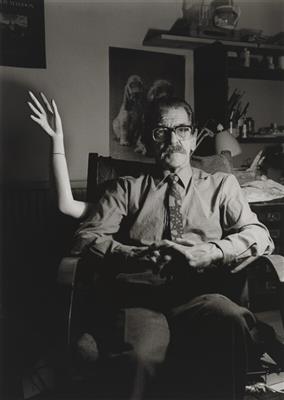
About Conroy Maddox
Museums3
Countries2
Largest reported holdingIsrael Museum, Jerusalem · 2 recorded works
Loading map…
Where to see Conroy Maddox
Collection holdings are reported here; current display varies. Check with each museum before visiting.
-
2 recorded works
Israel Museum
Jerusalem, Israel
-
1 recorded work
Ferens Art Gallery
Kingston upon Hull, United Kingdom


-
1 recorded work
Tate
London, United Kingdom

Frequently Asked Questions
Where can I see Conroy Maddox's work?
Conroy Maddox's artwork can be viewed in several public and private collections. Some of these collections were assembled by private individuals, such as the Rothschild Collection at Waddesdon Manor, built for Baron Ferdinand Rothschild in the late nineteenth century; the Gulbenkian Museum in Lisbon; the Burrell Collection in Glasgow, which incorporates a modern cloister for the display of stained glass; and the J. Paul Getty Center in Los Angeles. These collections demonstrate how public benefaction on the part of collectors has led to the endowment of important museums and has enabled the preservation of collections. Many major museums and libraries now have websites where at least some of their treasures can be viewed. Looking at an object in a glass case offers a valuable encounter with the original, but can be frustrating, especially when the object in turn is a book of which only one opening of many can be displayed at one time. Gallery interactives have been developed in order to allow objects to be viewed on screen, sometimes as three-dimensional images which can be virtually rotated and examined from all angles.What should I know about Conroy Maddox's prints?
Conroy Maddox was a surrealist artist; his prints are often original prints, produced by hand. These may be woodcuts, engravings, linocuts, mezzotints, etchings, lithographs, or serigraphs. Each print is considered an original because the artist creates the artwork directly on the plate, woodblock, etching stone, or screen. Original prints are often sold in limited editions. The number of prints is limited by the number of impressions that can be made before the plate wears out. Some publishers impose their own limits on the number of impressions to increase a print’s value. The edition claim is written as a pair of numbers on the left bottom margin of the print itself: it consists of a print number and an edition number written as a group with a short separating line between them. The print number is written above or to the left; the edition size is written below or to the right. The title of the print is written in the middle of the bottom margin of the print. The signature is on the right of the bottom margin of the print. Edition descriptions are always signed in pencil.What techniques or materials did Conroy Maddox use?
Conroy Maddox was a surrealist artist who worked primarily in painting and collage. He favoured oil paint, often employing techniques to create dreamlike and unsettling imagery. Maddox's painting technique involved layering and juxtaposition, building up compositions through careful arrangement of forms and colours. His approach to collage was similarly meticulous, combining found images and textures to create unexpected relationships and visual puns. Although details about his specific materials are scarce, it is likely Maddox used traditional painting supports such as canvas or board. He would have prepared these surfaces with gesso or a similar primer to provide a suitable ground for his oil paints. Maddox's surrealist aesthetic valued the element of chance and the exploration of the unconscious, so his techniques likely involved a degree of experimentation and improvisation.Who did Conroy Maddox influence?
Conroy Maddox was part of the surrealist movement. It is difficult to identify specific individuals directly influenced by him; however, some general connections can be made to movements and artists with similar sensibilities. Abstraction gained traction in France from the 1940s onward, and some artists working in this mode, such as those connected to the "Support I surface" group, drew inspiration from Henri Matisse and American colour-field painters. The American artist Ellsworth Kelly also had a rapport with Matisse, using similar elements and approaches. Within bookbinding, Georges Leroux exploited the liberties opened to the practice in his time. He referred without prejudice to Dubuffet, Max Ernst, Joan Miró, and many others, inventing decors that can be called types of "Cubist" or "Surrealist" assemblages, similar to Maddox's style. The development of American abstraction in the 1970s also saw a resurgence of geometric pure form, although in a vastly different expression.Who influenced Conroy Maddox?
Conroy Maddox, a British[1] Surrealist artist, was born in 1912[1] and died in 2005[1]. His artistic development owes much to Surrealism[1]'s leading figures, particularly Salvador Dalí and René Magritte. Maddox encountered Surrealism in the 1930s and became absorbed by its emphasis on dreams, the unconscious, and irrationality. Exposure to Dalí's work had a strong effect on Maddox. He adopted Dalí's meticulous technique and bizarre imagery, creating unsettling juxtapositions. Magritte's influence is visible in Maddox's exploration of paradox and illusion. Like Magritte, Maddox often combined ordinary objects in unexpected ways, challenging the viewer's perception of reality. While Dalí and Magritte were major influences, Maddox also drew inspiration from Max Ernst and Giorgio de Chirico. Ernst's collage techniques and use of found objects resonated with Maddox's own experimental approach. De Chirico's dreamlike cityscapes and melancholic atmosphere also appear in Maddox's paintings. Maddox's work extended Surrealism, adding his own unique vision.What is Conroy Maddox's most famous work?
Conroy Maddox is best known for surrealist paintings and collages, though he also produced photographs and objects. While pinpointing a single "most famous" work is subjective, several pieces recur in discussions of his art. "The Lesson" (1938[1]) is an oil on canvas that demonstrates his early surrealist style. It is a composition with dreamlike imagery and unexpected juxtapositions, typical of surrealism. Maddox explored themes of the subconscious and irrationality, and this work is a good example of those interests. Another notable piece is "She Eats a Flower" (1945), which uses collage. This work combines found images to create a surprising and unsettling effect. Maddox used collage extensively, manipulating scale and context to challenge perception. His later work continued to explore similar themes. However, Maddox never achieved the same level of public recognition as some of his surrealist contemporaries, such as Salvador Dalí or René Magritte. Nevertheless, his distinctive approach to surrealism has secured his place in the history of British[1] art.What style or movement did Conroy Maddox belong to?
Conroy Maddox belonged to the Surrealist movement. This movement, formally launched in 1924[1] by André Breton's Surrealist Manifesto, aimed to express thought without the control of reason, moving beyond Dada nihilism to explore the unconscious mind. Surrealism[1] valued dreamlike imagery and the unexpected juxtaposition of objects, creating a sense of the marvellous. Breton's manifesto suggested using dream images, stream-of-consciousness writing, and chance encounters to unlock the unconscious. Visual artists played "Exquisite Corpse", where participants drew on a paper in segments without seeing the others' contributions, resulting in strange forms. Maddox, a multifaceted artist and writer, engaged in painting, collage, book illustration, and design. Surrealism isn't defined by shared visual qualities, but by a method of combining conscious and unconscious visual references. The goal was to reach a point where contradictions, such as life and death or the real and imagined, dissolve.What was Conroy Maddox known for?
Conroy Maddox was a British[1] artist and writer known for his committed involvement with Surrealism[1]. He worked across painting, collage, book illustration, and design. During the mid-1930s, Maddox was active in Paris. In 1936[1], he declined to participate in the International Surrealist Exhibition in London because he felt that some participants were not truly Surrealist. He co-signed a letter of protest with John and Robert Melville. Despite this, he joined the British Surrealist Group in 1937. In 1938, Maddox participated in the "Exhibition of Collages, Papiers-collés and Photo-montages", organised by Roland Penrose at Guggenheim Jeune in London. He contributed to periodicals such as London Bulletin and Arson, and designed the cover for the manifesto Free Unions/Unions Libres in 1946. Maddox also participated in "Le Surréalisme en 1947" at the Galerie Maeght in Paris and was a signatory of the declaration "Rupture Inaugurale". He maintained his dedication to the Surrealist movement throughout his career.
Sources
Where to See guide aggregates verified holdings of Conroy Maddox's works across the following collections.
- [1] wikipedia Wikipedia: Conroy Maddox Used for: biography.
- [2] book guggenheim-twopri00weis Used for: biography.
- [3] book guggenheim-youngeramericanp00swee Used for: biography.
- [4] book Masterpieces of western art : a history of art in 900 individual studies from the Gothic to the present day Used for: biography.
Editorial overseen by Solis Prints. Sources verified 2026-09-30. Click a source for details, or hover over [N] in the page above to preview.
Editorial standardsMethodologyCorrectionsAI disclosureAbout the editorial team