

About Diogène Maillart
French · 1840–1926
- portrait
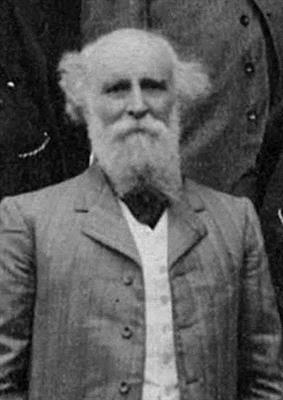
French[1] academic painter who won the Prix de Rome at 23 and spent fifty years teaching at the Gobelins while decorating public buildings across Paris.
Museums3
Countries1
Largest reported holdingMusée des Beaux-Arts de la ville de Paris, Paris · 7 recorded works
Loading map…
Where to see Diogène Maillart
Collection holdings are reported here; current display varies. Check with each museum before visiting.
-
7 recorded works
Musée des Beaux-Arts de la ville de Paris
Paris, France
-
1 recorded work
Condé Museum
Chantilly, France


-
1 recorded work
Musée d'Orsay
Paris, France

Frequently Asked Questions
Where can I see Diogène Maillart's work?
While a comprehensive list of locations holding Diogène Maillart's work is unavailable, several museums exhibit art from the same period and style. These institutions may hold pieces by Maillart or artists working in similar veins. In France, consider visiting the Musée des Arts Décoratifs in Paris, or the Musée des Beaux-Arts in Nancy. Belgium offers the Brangwyn Museum in Brugge and the Clockarium Museum in Brussels. Other European options include the Museo Art Nouveau y Art Deco in Salamanca, Spain, and the Museu Calouste Gulbenkian in Lisbon, Portugal. For those in North America, museums such as the Los Angeles County Museum of Art (LACMA), the Metropolitan Museum of Art in New York, and the Royal Ontario Museum in Toronto may also be of interest. These museums provide opportunities to view art from the Art Deco movement and related styles.What should I know about Diogène Maillart's prints?
Diogène Maillart (1840[1]-1926[1]) was a French[1] painter known for academic portraits and allegorical scenes. He studied with Léon Cogniet, and later taught at the École des Beaux-Arts. Maillart won the Prix du Salon in 1864[1]. He is associated with the academic art of the French Third Republic. Maillart also produced a number of prints, including lithographs. Lithography is a printmaking process using a flat stone or metal plate. The artist applies an image to the surface using a greasy medium, then treats it to hold ink in the image areas while repelling ink elsewhere. The printmaker then transfers the image to paper. Like his paintings, Maillart's prints reflect his academic style and interest in historical and allegorical subjects. They offer a more accessible way to engage with his artistic vision. Examples of lithographs include illustrations in limited-edition books.Why are Diogène Maillart's works important today?
Diogène Maillart (1840[1]-1926[1]) was a French[1] academic painter known for historical and allegorical scenes, portraits, and decorative works. While not a household name today, his art offers insights into the artistic and cultural values of late 19th-century France. Maillart's large-scale paintings, often found in public buildings, reflect the official artistic tastes of the Third Republic. They provide visual documents of the period's interest in history, patriotism, and the glorification of national identity. His work can be analysed for its representation of historical events, its use of symbolism, and its adherence to academic artistic conventions. Beyond their historical value, Maillart's paintings demonstrate the technical skill and artistic training valued in the French academy. His mastery of composition, colour, and figurative representation offers a glimpse into the artistic processes and standards of the time. Although his style may not appeal to all modern tastes, his paintings remain important examples of academic art and provide valuable insights into the cultural and artistic climate of his era.Who influenced Diogène Maillart?
Diogène Maillart (1840[1]-1926[1]) was a French[1] academic painter known for portraits and large-scale decorative works. He studied at the École des Beaux-Arts. There, he was a pupil of Léon Cogniet, a painter of historical and biblical subjects. Maillart also studied with Robert-Fleury, who specialised in historical scenes and genre painting. Cogniet's emphasis on precise drawing and academic technique likely shaped Maillart's early artistic development. Robert-Fleury's influence may have encouraged Maillart's interest in narrative and historical themes, evident in some of his later compositions. These two instructors provided Maillart with a solid foundation in the established artistic traditions of the time. He successfully integrated these influences into his own style. This allowed him to achieve recognition within the French art world.What is Diogène Maillart's most famous work?
Diogène Maillart is best known for his large-scale academic paintings, particularly those decorating significant Parisian buildings. Among these, his work at the Sorbonne stands out. Maillart contributed four major paintings to the Sorbonne's décor. These are located in the Grand Amphitheatre. The most celebrated of these is "Science, Literature, and Art Homage to the Intellect". It is a large allegorical composition. It celebrates intellectual achievement. Another notable work by Maillart is his decoration of the ceiling of the Opéra-Comique. This commission further cemented his reputation as a leading decorative painter in France. While he produced numerous portraits and genre scenes throughout his career, his large public works remain his most visible and recognised achievements. These paintings demonstrate his skill in composition and his adherence to academic traditions. They continue to be viewed by visitors to Paris.What style or movement did Diogène Maillart belong to?
Diogène Maillart (1840[1]-1926[1]) was a French[1] academic painter. He is best known for historical and allegorical scenes, and for portraits. The drive to represent movement in art has a long history. Even before photography, artists explored ways to depict dynamism in static forms. Leonardo da Vinci, for instance, considered static sculptures "doubly dead" because they lacked implied motion. Renaissance paintings often used closed lines to emphasise stability, while Baroque paintings used diagonals and open forms to create dynamic effects. In the early 20th century, the Futurist movement made the representation of movement a central artistic concern. Futurists aimed to capture the speed and dynamism of the modern world. They experimented with techniques such as stroboscopic images to convey motion. Photodynamism, developed by Anton Giulio Bragaglia, used long exposure to create spectral blurs, capturing energy and rhythm.What was Diogène Maillart known for?
Diogène Maillart was a French[1] artist. He is known for his contributions to tomb sculpture. Maillart's work can be seen in various locations, including the tomb of Charles VIII, formerly in Saint-Denis Collection. He also worked on the tomb of Philibert of Savoy, in Chapell Brou (Brou Royal Monastery). Additionally, Maillart contributed to the tomb of Louis de Brézé in Rouen Cathedral; as well as the tomb of Nicolas du Châtelet (died 1616), formerly at Vauvillars. He is also noted for the equestrian statue of Louis XII at Blois Castle. Maillart's artistic endeavours also include work on the tomb of Bartolommeo Colleoni in the Colleoni Chapel, Bergamo. He collaborated with Michel Colombe and Girolamo da Fiesoli on the tomb of Francis II, Duke of Brittany, in Nantes Cathedral.What is Diogène Maillart known for?
Diogène Maillart is known for his civic mural work and ornamental commissions. These included murals for the Church of Saint-Augustin, decorations at the Town Hall of the 3rd arrondissement, and ornamental work at the Bon Marché department store.
Sources
Where to See guide aggregates verified holdings of Diogène Maillart's works across the following collections.
- [1] wikipedia Wikipedia: Diogène Maillart Used for: biography.
- [2] book guggenheim-pierrealechinsky00alec Used for: biography, stylistic analysis.
- [3] book Masterpieces of western art : a history of art in 900 individual studies from the Gothic to the present day Used for: biography.
- [4] book Percheron, Rene?, Matisse, from color to architecture Used for: biography, stylistic analysis.
- [5] book Post-impressionism : cross-currents in European painting Used for: biography.
- [6] book Post-impressionism : cross-currents in European painting Used for: biography.
- [7] book 1892-1968, Panofsky, Erwin,, Tomb sculpture: four lectures on its changing aspects from ancient Egypt to Bernini Used for: biography, stylistic analysis.
Editorial overseen by Solis Prints. Sources verified 2026-09-30. Click a source for details, or hover over [N] in the page above to preview.
Editorial standardsMethodologyCorrectionsAI disclosureAbout the editorial team