

Fine Art Poster
From $29
A giclée print on 200gsm matte fine art paper, using a twelve-colour process for accurate, fade-resistant colour. Supplied unframed, delivered flat or rolled.



Archival giclée
Frames arrive ready to hang
Secure checkout
Made to order
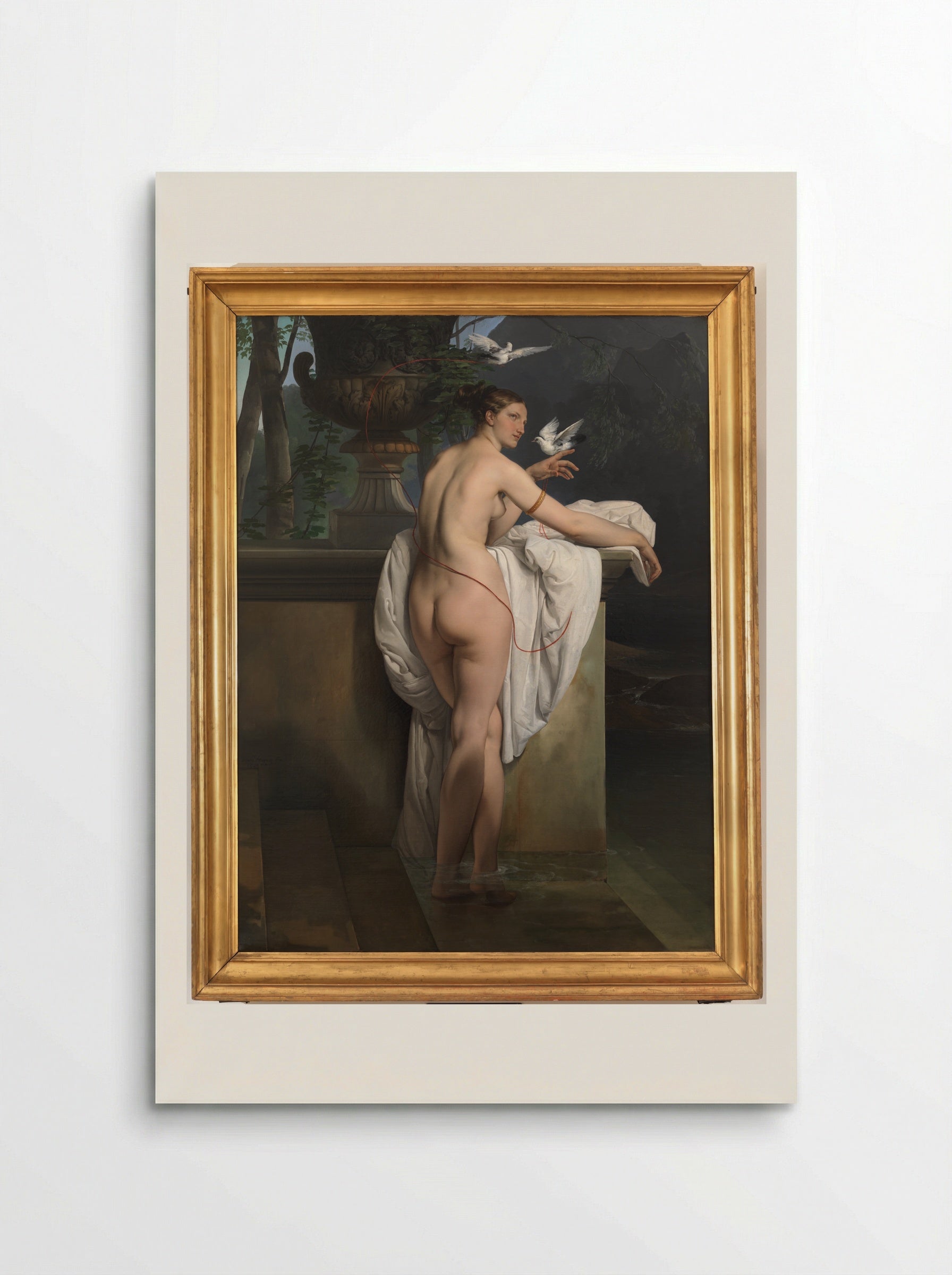
A 1830 oil painting by Francesco Hayez depicting ballerina Carlotta Chabert as the goddess Venus, rendered with classical precision and soft, naturalistic lighting.
Francesco Hayez, a leading figure in nineteenth-century Italian painting, produced this work in 1830. It depicts the ballerina Carlotta Chabert in the guise of Venus. The composition draws upon classical iconography, placing the figure in a serene, outdoor setting beside a stone plinth and a large decorative urn. The subject stands with her back to the viewer, her posture echoing the classical contrapposto stance often found in antique sculpture. A thin red thread connects her hand to a white dove, a symbolic reference to the goddess of love. Hayez demonstrates his technical precision through the rendering of the figure, particularly the soft transitions of light and shadow across the skin. The drapery, a stark white fabric, provides a sharp contrast to the darker, atmospheric background. The artist balances the mythological subject with the specific features of the sitter, creating a blend of idealised beauty and individual portraiture. This approach was characteristic of his work, which often bridged the gap between historical narrative and contemporary observation. As a master of the Italian Romantic style, Hayez moved away from the rigid constraints of Neoclassicism, favouring a more emotive and naturalistic treatment of his subjects. The painting reflects the period's fascination with classical themes, yet it remains grounded in the theatricality of the stage. The muted palette, dominated by earthy tones and the cool white of the fabric, directs the viewer's attention to the central figure. The work is currently held in the collection of the Museo Civico in Vicenza, where it remains an example of the artist's ability to synthesise classical tradition with the sensibilities of his own time.
Because every print is made to order, we don't offer change-of-mind returns, refunds or exchanges. If your order arrives faulty, damaged or incorrect, we'll replace it free of charge — just contact us within 48 hours of delivery. See our refunds page for full details.
We ship worldwide, printing at the production hub nearest to your delivery address. Delivery times and costs vary by destination — you'll see the options available to you at checkout.
Each print is produced to order using 12-colour giclée printing on FSC-certified archival paper. Designed in Britain and printed at your nearest production hub to reduce waste and speed up delivery.

Artist Biography
Our Features
Designed for Lasting Impact
Every Solis piece is made to order with archival, gallery-quality materials built to last.
To keep your artwork looking its best:
Museum-grade giclée on FSC-certified archival matte paper, with framed and canvas options.
Made to order
Every piece is printed to order. These are the five finishes, and what makes each one different.
From $29
A giclée print on 200gsm matte fine art paper, using a twelve-colour process for accurate, fade-resistant colour. Supplied unframed, delivered flat or rolled.

From $89
The same fine art print in a solid wood frame with UV-protective acrylic glaze and rigid backing. Five frame colours. Arrives ready to hang.

From $169
A deeper solid wood frame: 33mm deep with a 20mm face and Perspex glaze. The print sits unmounted for a clean gallery presentation. Black, white or natural.

From $59
Hand-stretched canvas with neat gallery-wrapped edges, giving the artwork surface texture and depth. Arrives ready to hang.

From $175
Stretched canvas set in a floating wood frame, our most substantial finish. Arrives ready to hang.
Why Choose Us ?
Damage-free delivery guarantee
Fast Shipping
Museum-Quality Materials
Artist Biography
Francesco Hayez
You May Also Like
Cookies show us which prints people love, so we hang the right art. Help us fill it?
Essential cookies only if you prefer · Privacy Policy