

Fine Art Poster
From $39
A giclée print on 200gsm matte fine art paper, using a twelve-colour process for accurate, fade-resistant colour. Supplied unframed, delivered flat or rolled.



Archival giclée
Frames arrive ready to hang
Secure checkout
Made to order
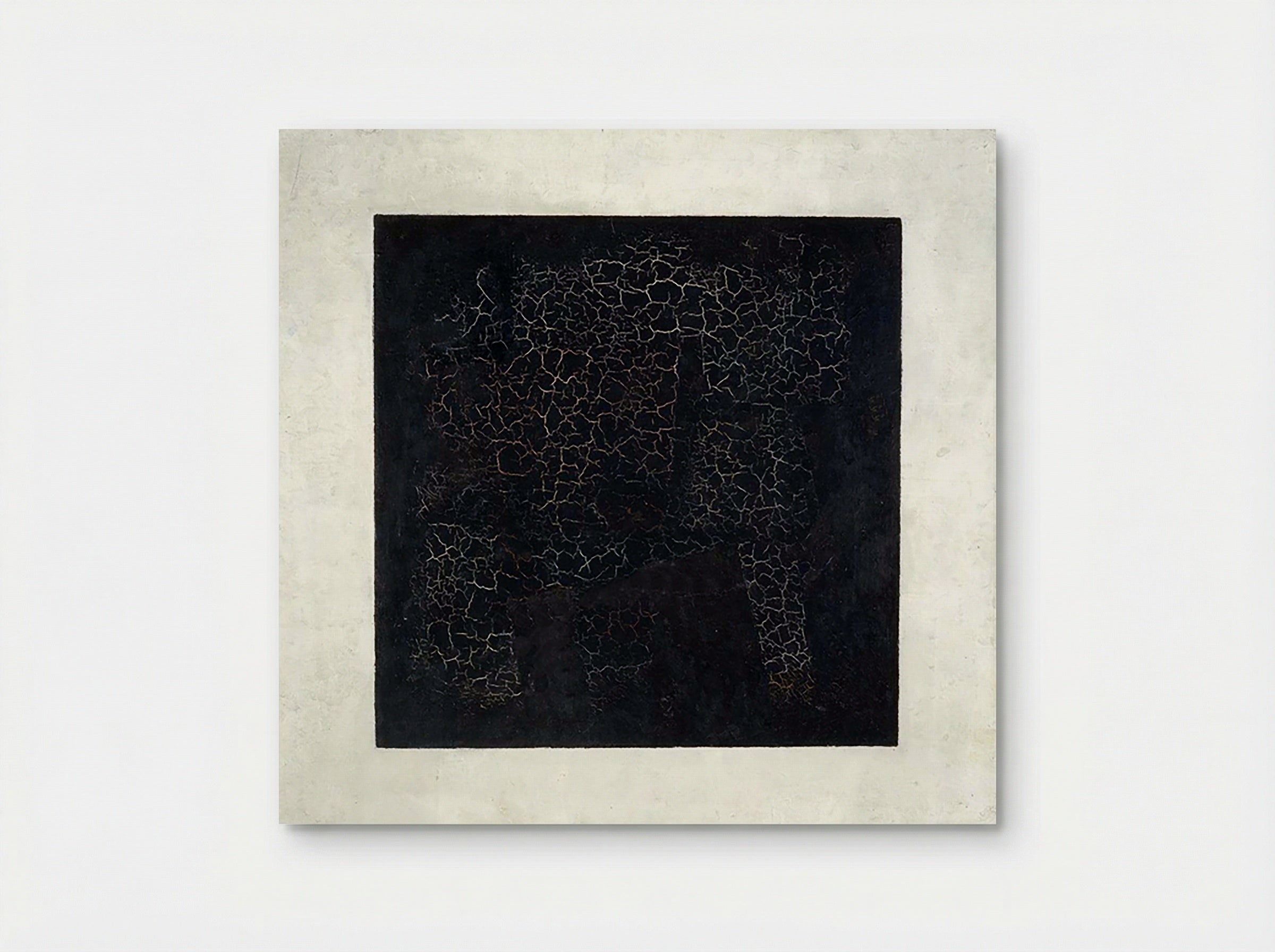
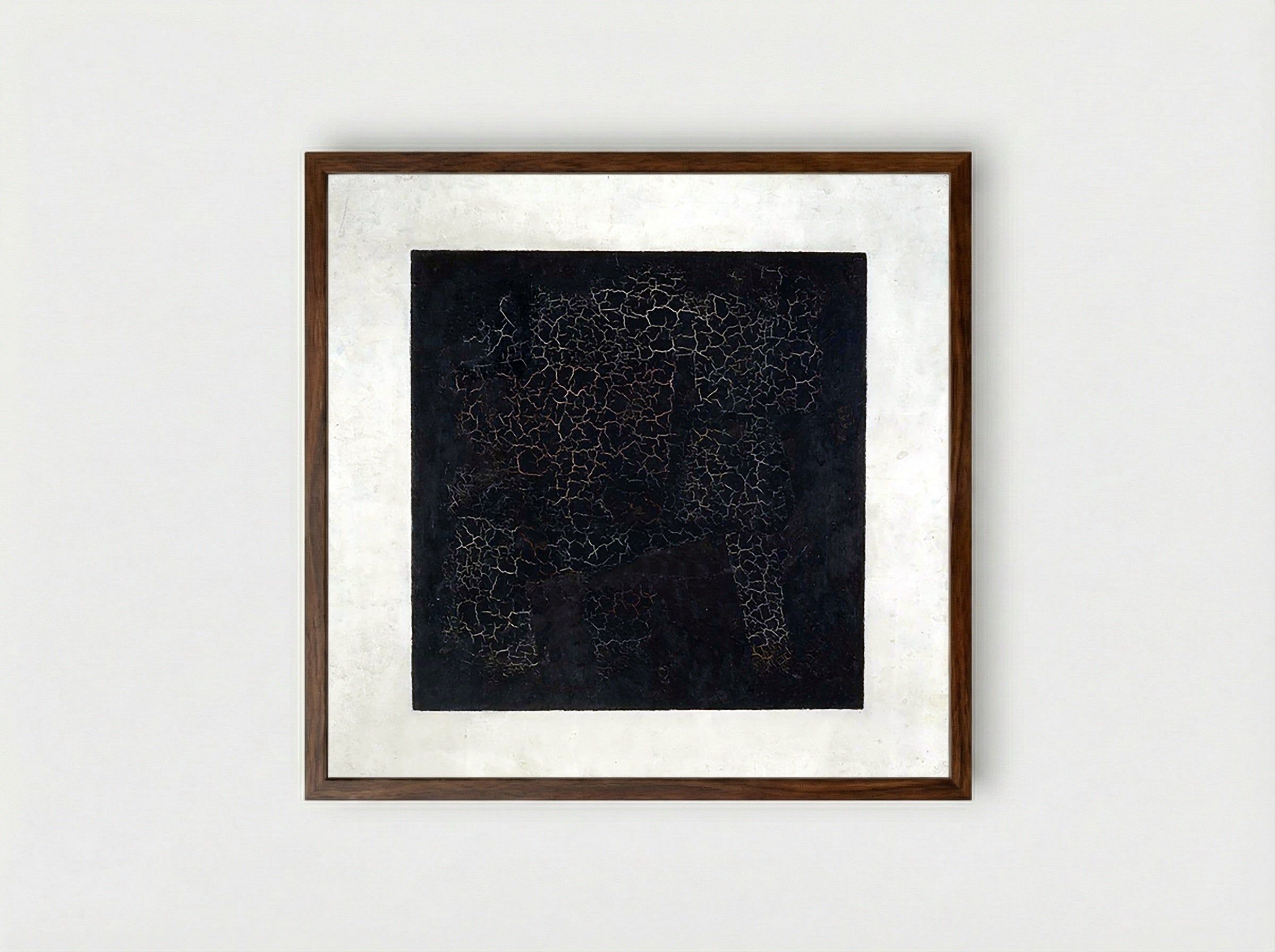
Kazimir Malevich's *Black Square*, painted in 1915, is a foundational work of abstract art and the Suprematist movement. The painting's simple geometric form represents a radical departure from representational art.
Kazimir Malevich's *Black Square* is a seminal work of abstract art, painted in 1915. It is more than just a simple geometric shape; it represents a radical break from representational art and a move towards pure abstraction. Malevich conceived of Suprematism as a new art movement focused on basic geometric forms, such as squares and circles, which he believed could convey a spiritual purity beyond the material world. The painting itself is deceptively simple. A black square is set against a white background. Close inspection reveals the black is not a uniform shade, but composed of subtly varying tones and textures. The surface is cracked, revealing the history of the painting and adding to its visual complexity. The square is not perfectly rendered, with slight irregularities in its edges, giving it a human quality. This imperfection is part of the work's appeal, suggesting a handmade object rather than a mechanically produced one. *Black Square* was first exhibited in the *Last Futurist Exhibition 0,10* in Petrograd. It was hung high in a corner of the room, a placement that echoed the traditional placement of religious icons in Russian homes. This positioning reinforced the idea that the painting was meant to be seen as a new kind of icon, one that represented the end of traditional art and the beginning of a new artistic era.
Because every print is made to order, we don't offer change-of-mind returns, refunds or exchanges. If your order arrives faulty, damaged or incorrect, we'll replace it free of charge — just contact us within 48 hours of delivery. See our refunds page for full details.
We ship worldwide, printing at the production hub nearest to your delivery address. Delivery times and costs vary by destination — you'll see the options available to you at checkout.
Each print is produced to order using 12-colour giclée printing on FSC-certified archival paper. Designed in Britain and printed at your nearest production hub to reduce waste and speed up delivery.
Specific Features
Every Solis piece is made to order with archival, gallery-quality materials built to last.
Care & Cleaning
To keep your artwork looking its best:
Materials & Sizing
Museum-grade giclée on FSC-certified archival matte paper, with framed and canvas options.

Artist Biography
Made to order
Every piece is printed to order. These are the five finishes, and what makes each one different.
From $39
A giclée print on 200gsm matte fine art paper, using a twelve-colour process for accurate, fade-resistant colour. Supplied unframed, delivered flat or rolled.

From $119
The same fine art print in a solid wood frame with UV-protective acrylic glaze and rigid backing. Five frame colours. Arrives ready to hang.
Why Choose Us ?
Damage-free delivery guarantee
Fast Shipping
Museum-Quality Materials
You May Also Like
We use cookies to measure our marketing and see which prints people love.We use cookies to measure our marketing.
By continuing to browse, you agree · Privacy Policy