

Fine Art Poster
From $29
A giclée print on 200gsm matte fine art paper, using a twelve-colour process for accurate, fade-resistant colour. Supplied unframed, delivered flat or rolled.



Archival giclée
Frames arrive ready to hang
Secure checkout
Made to order
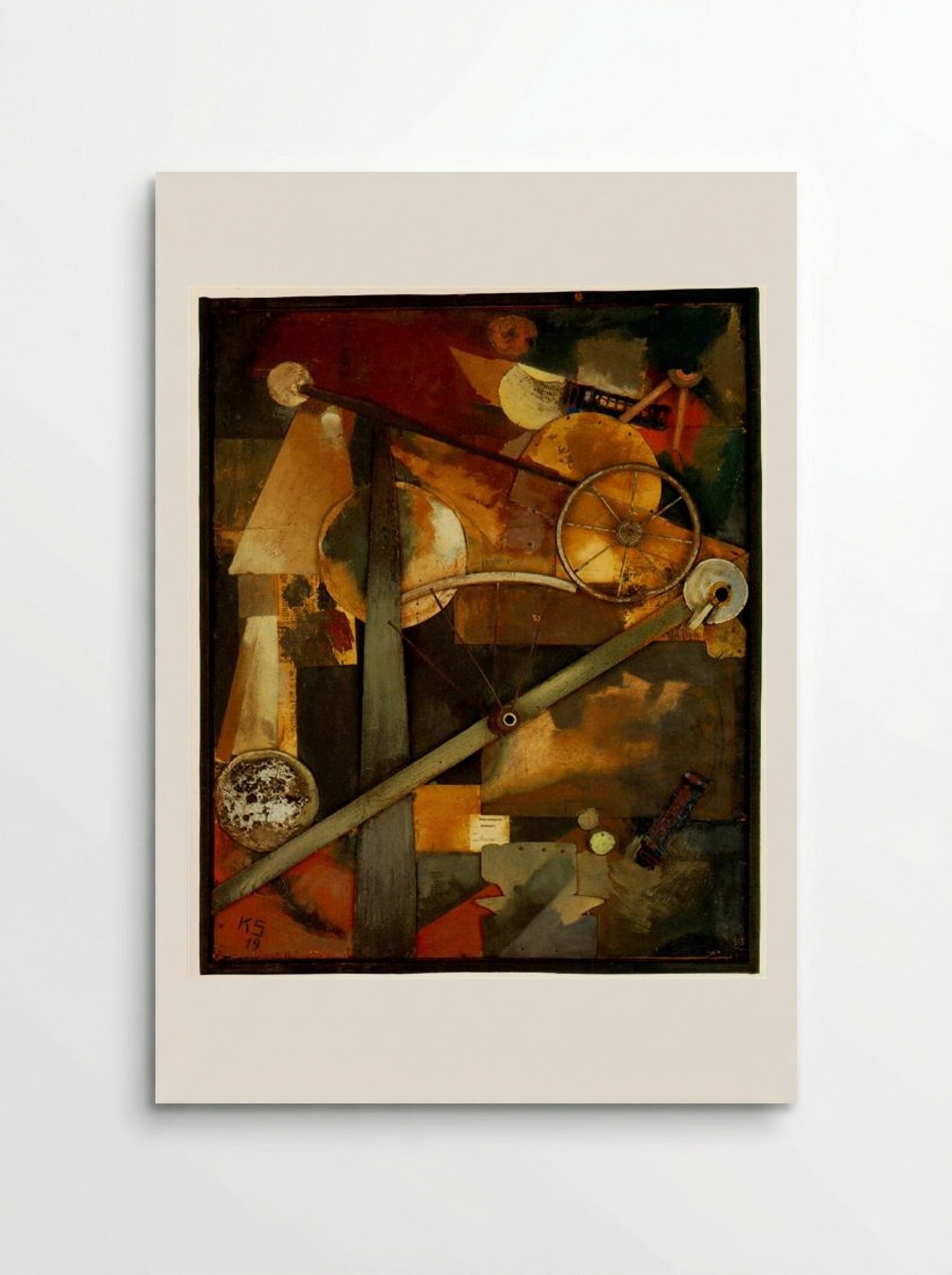
A 1919 Dada assemblage by Kurt Schwitters, featuring a composition of wood, metal, and found objects that redefines the boundaries of fine art.
Construction for Noble Ladies is a seminal work by the German artist Kurt Schwitters, created in 1919. This piece belongs to the artist's Merz period, a term he coined to describe his unique approach to art-making. Schwitters utilised discarded objects, scraps of wood, metal components, and fragments of printed paper to build compositions that rejected traditional artistic hierarchies. By incorporating industrial detritus into his work, he transformed mundane refuse into a structured, visual language. The composition features a diagonal arrangement of found elements, including a wheel and various geometric wooden forms. The surface is layered with oil paint, which serves to unify the disparate materials into a cohesive whole. The colour palette is dominated by earthy tones, ochres, and deep shadows, providing a sense of weight and history to the objects. Schwitters' practice was deeply influenced by the chaotic aftermath of the First World War, and his work reflects a desire to find order within the wreckage of society. The title itself, Construction for Noble Ladies, introduces an ironic juxtaposition between the refined, aristocratic connotations of the phrase and the rough, scavenged nature of the materials used. This work demonstrates the artist's ability to manipulate texture and form. The inclusion of a small, printed label and the visible grain of the wood add layers of detail that invite close inspection. Schwitters did not seek to represent reality in a traditional sense, but rather to construct a new reality from the remnants of the old. The piece remains a clear example of the Dadaist impulse to dismantle established aesthetic norms through the use of non-art materials. It is a study in balance, tension, and the aesthetic potential of the discarded.
Because every print is made to order, we don't offer change-of-mind returns, refunds or exchanges. If your order arrives faulty, damaged or incorrect, we'll replace it free of charge — just contact us within 48 hours of delivery. See our refunds page for full details.
We ship worldwide, printing at the production hub nearest to your delivery address. Delivery times and costs vary by destination — you'll see the options available to you at checkout.
Each print is produced to order using 12-colour giclée printing on FSC-certified archival paper. Designed in Britain and printed at your nearest production hub to reduce waste and speed up delivery.
Specific Features
Every Solis piece is made to order with archival, gallery-quality materials built to last.
Care & Cleaning
To keep your artwork looking its best:
Materials & Sizing
Museum-grade giclée on FSC-certified archival matte paper, with framed and canvas options.

Artist Biography
Made to order
Every piece is printed to order. These are the five finishes, and what makes each one different.
From $29
A giclée print on 200gsm matte fine art paper, using a twelve-colour process for accurate, fade-resistant colour. Supplied unframed, delivered flat or rolled.

From $89
The same fine art print in a solid wood frame with UV-protective acrylic glaze and rigid backing. Five frame colours. Arrives ready to hang.

From $169
A deeper solid wood frame: 33mm deep with a 20mm face and Perspex glaze. The print sits unmounted for a clean gallery presentation. Black, white or natural.

From $59
Hand-stretched canvas with neat gallery-wrapped edges, giving the artwork surface texture and depth. Arrives ready to hang.

From $175
Stretched canvas set in a floating wood frame, our most substantial finish. Arrives ready to hang.
Why Choose Us ?
Damage-free delivery guarantee
Fast Shipping
Museum-Quality Materials
You May Also Like
We use cookies to measure our marketing and see which prints people love.We use cookies to measure our marketing.
By continuing to browse, you agree · Privacy Policy