

Fine Art Poster
From $39
A giclée print on 200gsm matte fine art paper, using a twelve-colour process for accurate, fade-resistant colour. Supplied unframed, delivered flat or rolled.



Archival giclée
Frames arrive ready to hang
Secure checkout
Made to order
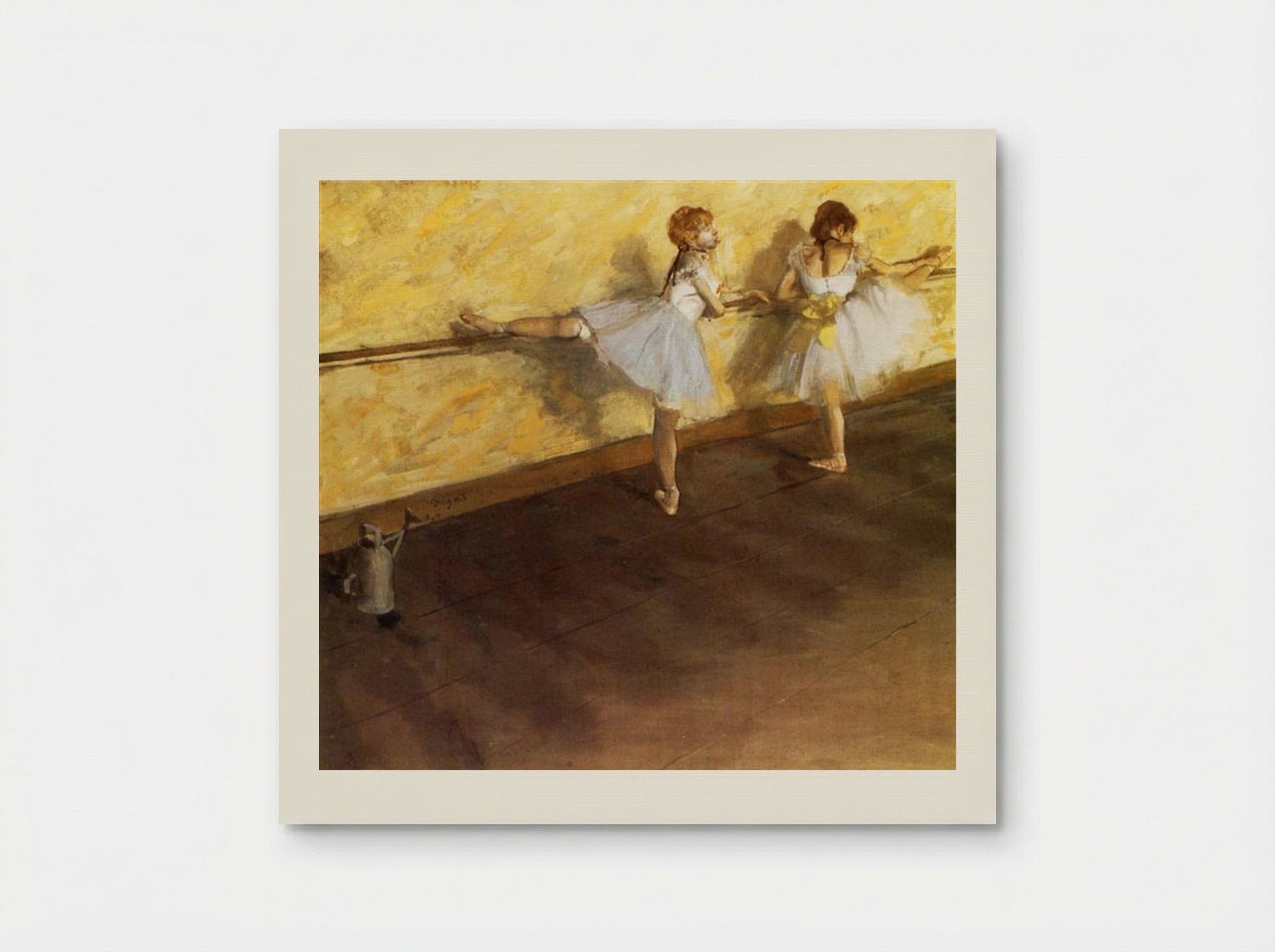
A candid depiction of ballet dancers rehearsing at the barre, capturing the physical discipline and studio atmosphere of the late nineteenth century.
Edgar Degas produced this work during a period when he was deeply occupied with the daily routines of ballet dancers. Unlike the polished performances seen on stage, this composition captures the repetitive, often mundane nature of rehearsal. The dancers are positioned at the barre, their bodies angled to demonstrate the physical strain and discipline required for their craft. Degas employs a high vantage point, which flattens the perspective and draws the viewer into the studio space. The colour palette is dominated by warm ochres and yellows on the wall, contrasting with the cool white and blue tones of the dancers' tutus. A notable detail is the watering can placed in the lower left corner, a common studio tool used to dampen the floorboards to prevent dust from rising during practice. This inclusion provides a sense of authenticity to the environment. Degas was known for his interest in movement and the candid, unposed nature of his subjects. He frequently experimented with cropping and asymmetrical compositions, influenced by his interest in photography and Japanese prints. This work avoids the idealised depictions of dancers common in the nineteenth century, opting instead for a focus on the mechanics of the body and the atmosphere of the rehearsal room. The brushwork is loose and expressive, particularly in the rendering of the wall and the floor, which creates a sense of immediacy. The lighting, cast from an unseen source, creates distinct shadows that define the figures against the wall, adding a sense of volume to the scene.
Because every print is made to order, we don't offer change-of-mind returns, refunds or exchanges. If your order arrives faulty, damaged or incorrect, we'll replace it free of charge — just contact us within 48 hours of delivery. See our refunds page for full details.
We ship worldwide, printing at the production hub nearest to your delivery address. Delivery times and costs vary by destination — you'll see the options available to you at checkout.
Each print is produced to order using 12-colour giclée printing on FSC-certified archival paper. Designed in Britain and printed at your nearest production hub to reduce waste and speed up delivery.

Artist Biography
Our Features
Designed for Lasting Impact
Every Solis piece is made to order with archival, gallery-quality materials built to last.
To keep your artwork looking its best:
Museum-grade giclée on FSC-certified archival matte paper, with framed and canvas options.
Made to order
Every piece is printed to order. These are the five finishes, and what makes each one different.
From $39
A giclée print on 200gsm matte fine art paper, using a twelve-colour process for accurate, fade-resistant colour. Supplied unframed, delivered flat or rolled.

From $119
The same fine art print in a solid wood frame with UV-protective acrylic glaze and rigid backing. Five frame colours. Arrives ready to hang.

From $189
A deeper solid wood frame: 33mm deep with a 20mm face and Perspex glaze. The print sits unmounted for a clean gallery presentation. Black, white or natural.

From $59
Hand-stretched canvas with neat gallery-wrapped edges, giving the artwork surface texture and depth. Arrives ready to hang.

From $175
Stretched canvas set in a floating wood frame, our most substantial finish. Arrives ready to hang.
Why Choose Us ?
Damage-free delivery guarantee
Fast Shipping
Museum-Quality Materials
Artist Biography
Edgar Degas
You May Also Like
Cookies show us which prints people love, so we hang the right art. Help us fill it?
Essential cookies only if you prefer · Privacy Policy