

Fine Art Poster
From $29
A giclée print on 200gsm matte fine art paper, using a twelve-colour process for accurate, fade-resistant colour. Supplied unframed, delivered flat or rolled.




Archival giclée
Frames arrive ready to hang
Secure checkout
Made to order
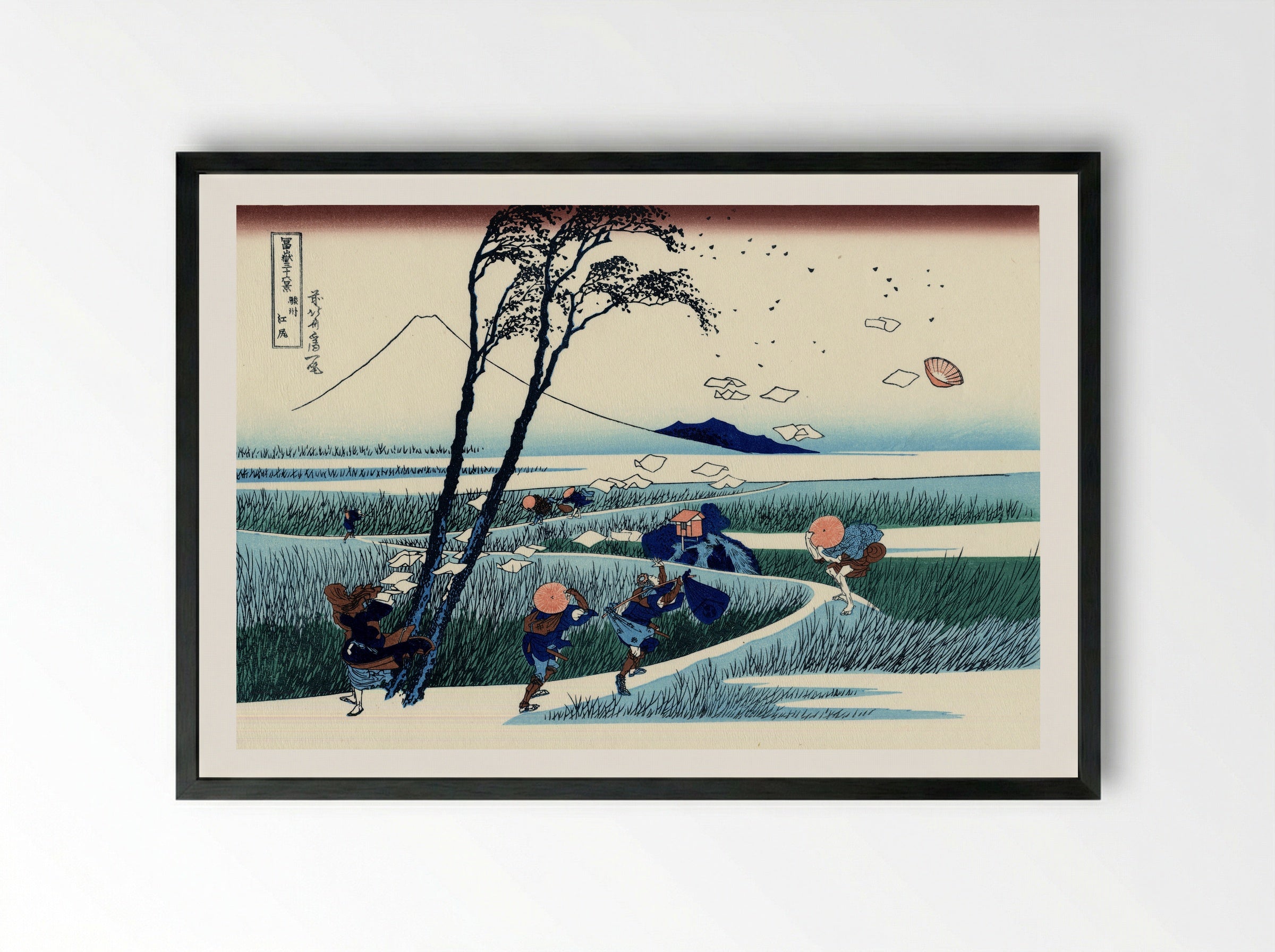
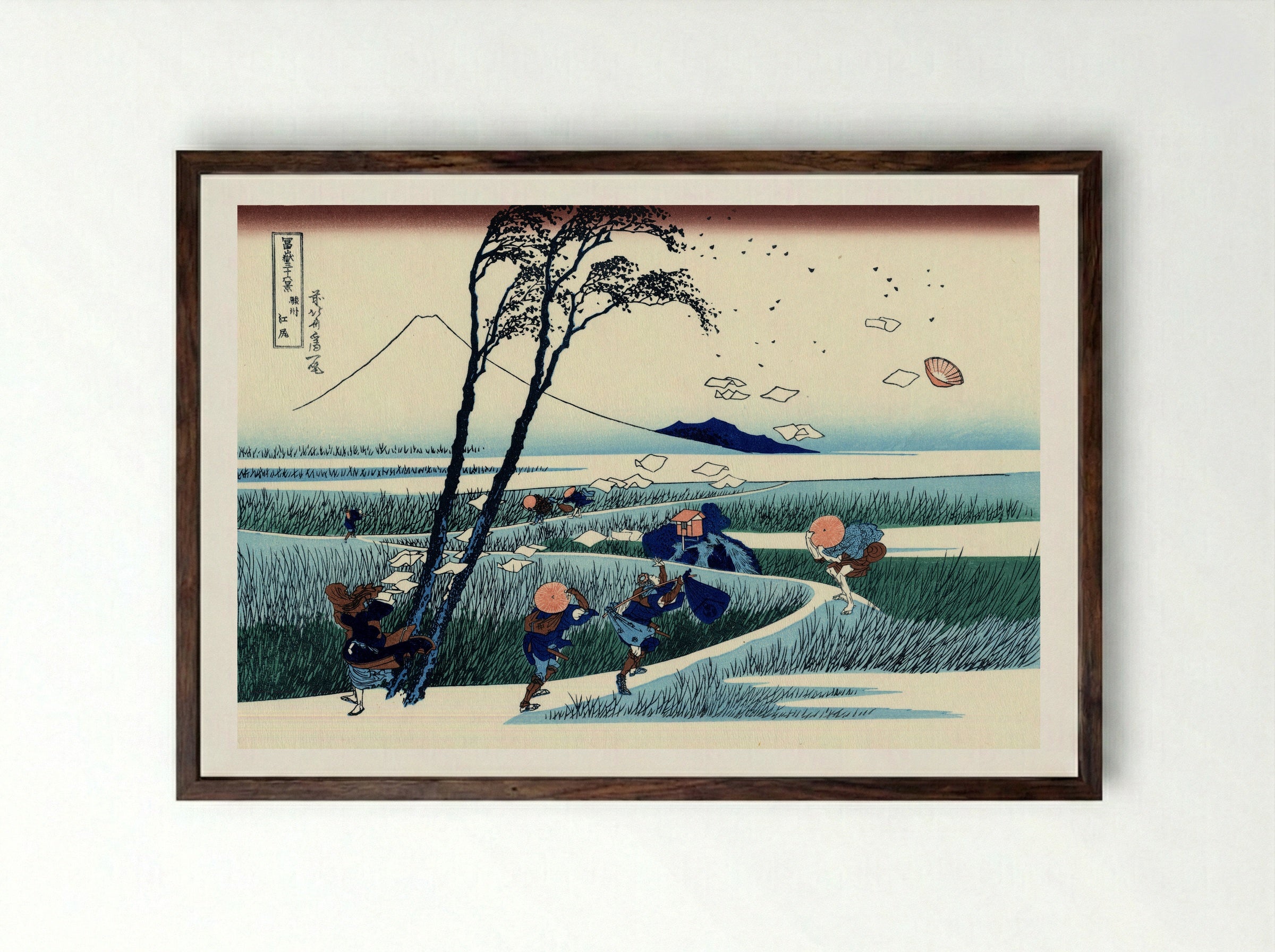
Katsushika Hokusai's 'Ejiri in Suruga Province' captures a windy day with Mount Fuji in the background. This Ukiyo-e woodblock print showcases the artist's skill in blending natural elements with human activity.
This woodblock print, titled 'Ejiri in Suruga Province', is part of Katsushika Hokusai's series 'Thirty-six Views of Mount Fuji'. Created around 1830-1832, it exemplifies the Ukiyo-e tradition of Japanese art, which flourished during the Edo period. Hokusai, a master of this genre, skillfully captures the essence of Japanese scenery and daily life. The print depicts travellers along a road near Ejiri, a post station in Suruga Province. A strong wind scatters their belongings and hats, creating a dynamic scene. The bent trees on the left side further emphasise the wind's force. Mount Fuji is visible in the background, rendered in soft blues and whites, providing a serene counterpoint to the turbulent foreground. The composition uses a limited colour palette, dominated by blues, whites, and browns, which is typical of Japanese woodblock prints of this era. The flat perspective and simplified forms are characteristic of Ukiyo-e, focusing on capturing the mood and atmosphere of the scene rather than precise realism. 'Ejiri in Suruga Province' showcases Hokusai's ability to blend natural elements with human activity, creating a cohesive and visually engaging artwork. The print is not only a depiction of a specific location but also a representation of the relationship between people and their environment.
Because every print is made to order, we don't offer change-of-mind returns, refunds or exchanges. If your order arrives faulty, damaged or incorrect, we'll replace it free of charge — just contact us within 48 hours of delivery. See our refunds page for full details.
We ship worldwide, printing at the production hub nearest to your delivery address. Delivery times and costs vary by destination — you'll see the options available to you at checkout.
Each print is produced to order using 12-colour giclée printing on FSC-certified archival paper. Designed in Britain and printed at your nearest production hub to reduce waste and speed up delivery.
Specific Features
Every Solis piece is made to order with archival, gallery-quality materials built to last.
Care & Cleaning
To keep your artwork looking its best:
Materials & Sizing
Museum-grade giclée on FSC-certified archival matte paper, with framed and canvas options.

Artist Biography
Made to order
Every piece is printed to order. These are the five finishes, and what makes each one different.
From $29
A giclée print on 200gsm matte fine art paper, using a twelve-colour process for accurate, fade-resistant colour. Supplied unframed, delivered flat or rolled.

From $89
The same fine art print in a solid wood frame with UV-protective acrylic glaze and rigid backing. Five frame colours. Arrives ready to hang.
Why Choose Us ?
Damage-free delivery guarantee
Fast Shipping
Museum-Quality Materials
You May Also Like
We use cookies to measure our marketing and see which prints people love.We use cookies to measure our marketing.
By continuing to browse, you agree · Privacy Policy