

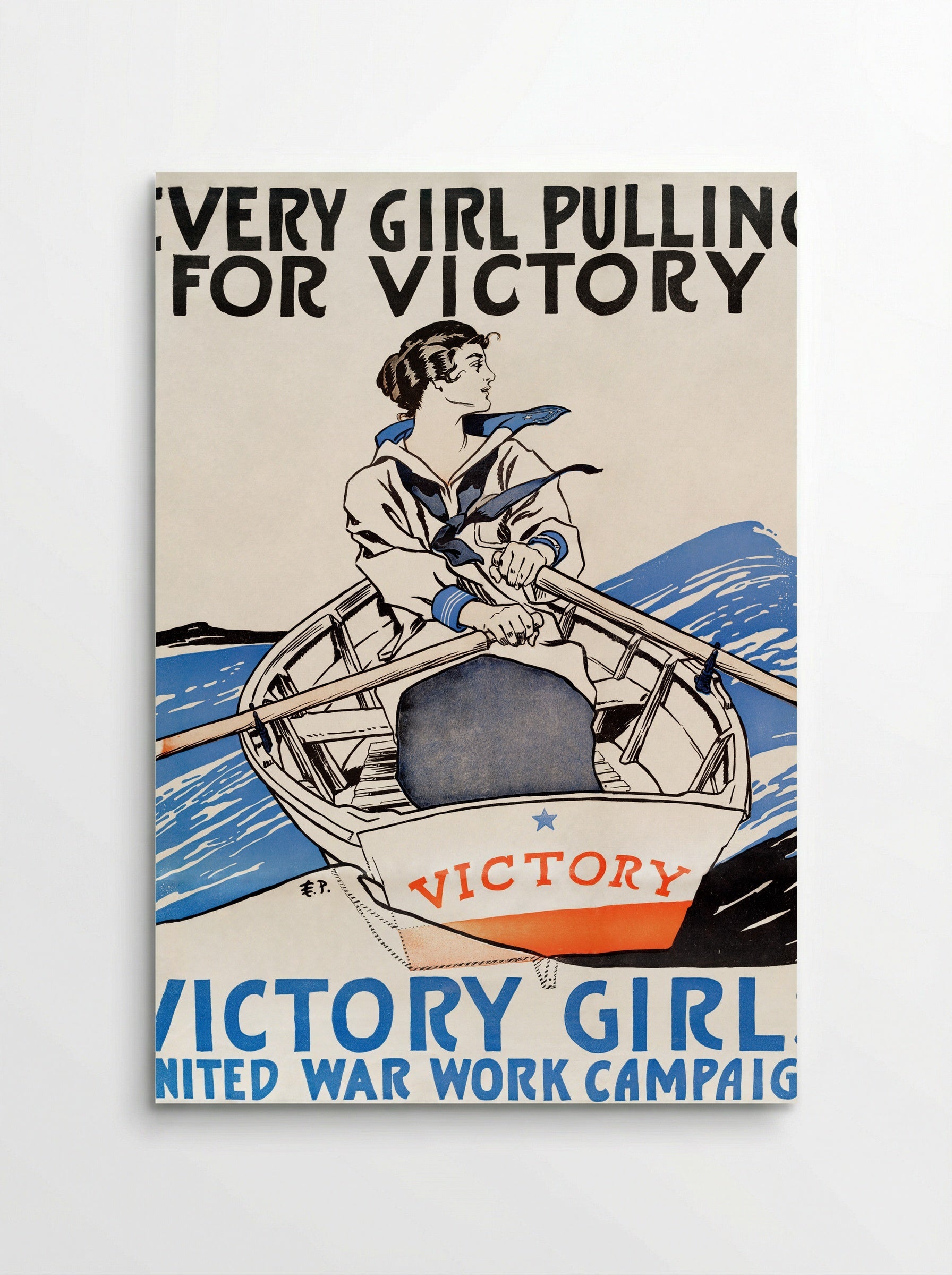

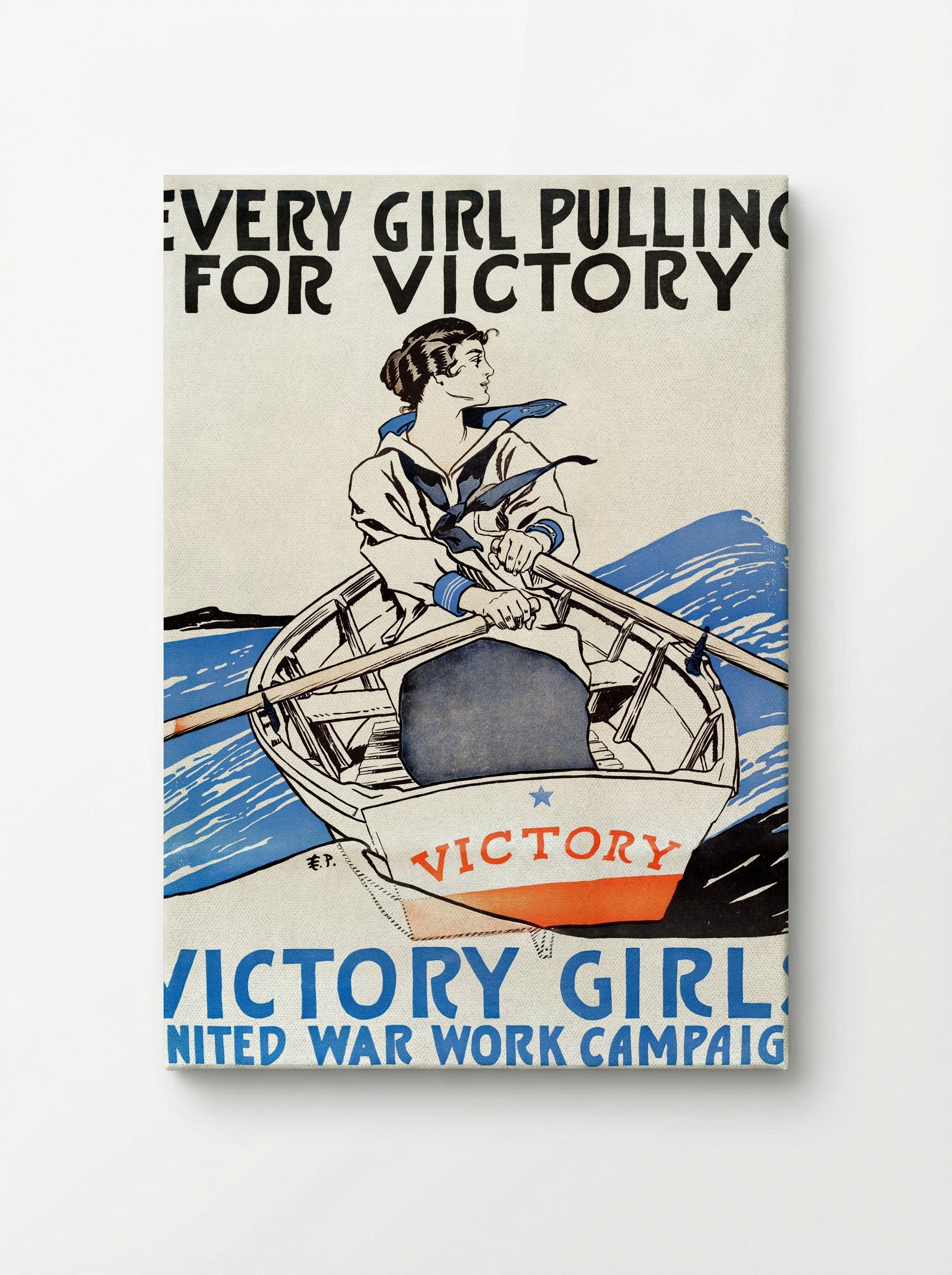
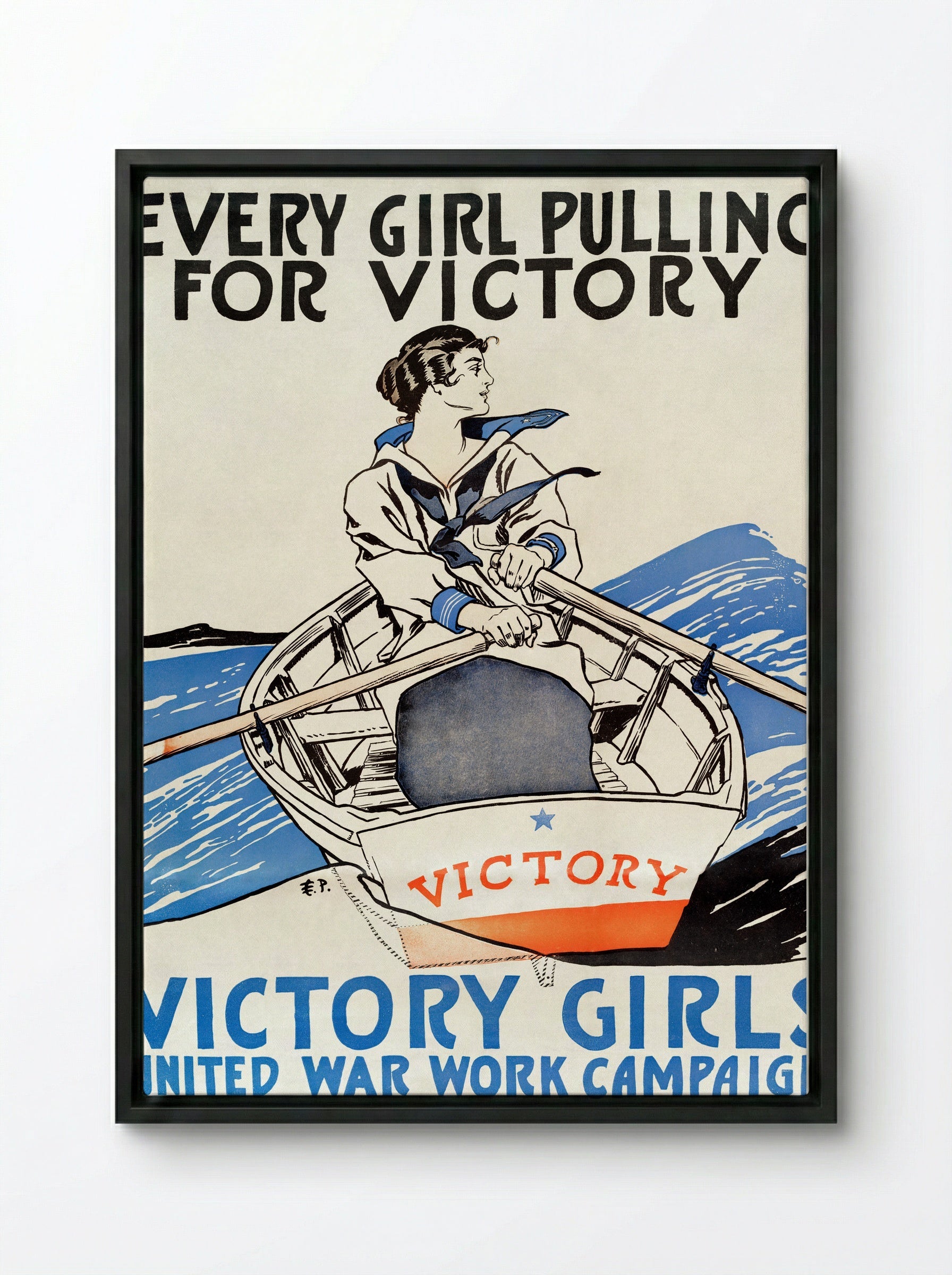
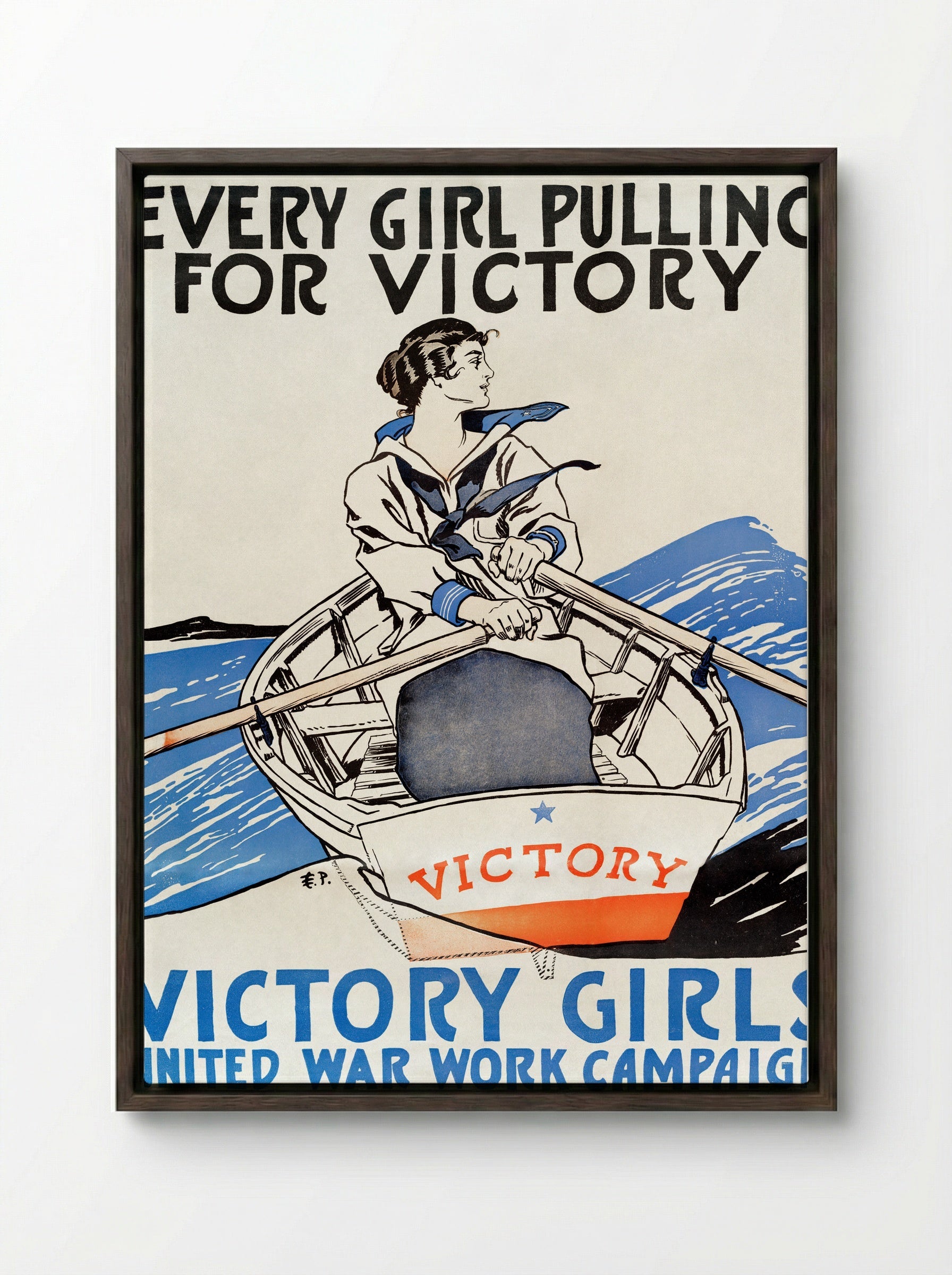

Every Girl Pulling for Victory - Edward Penfield
Archival giclée
Ready to hang
Secure checkout
Made to order
Description
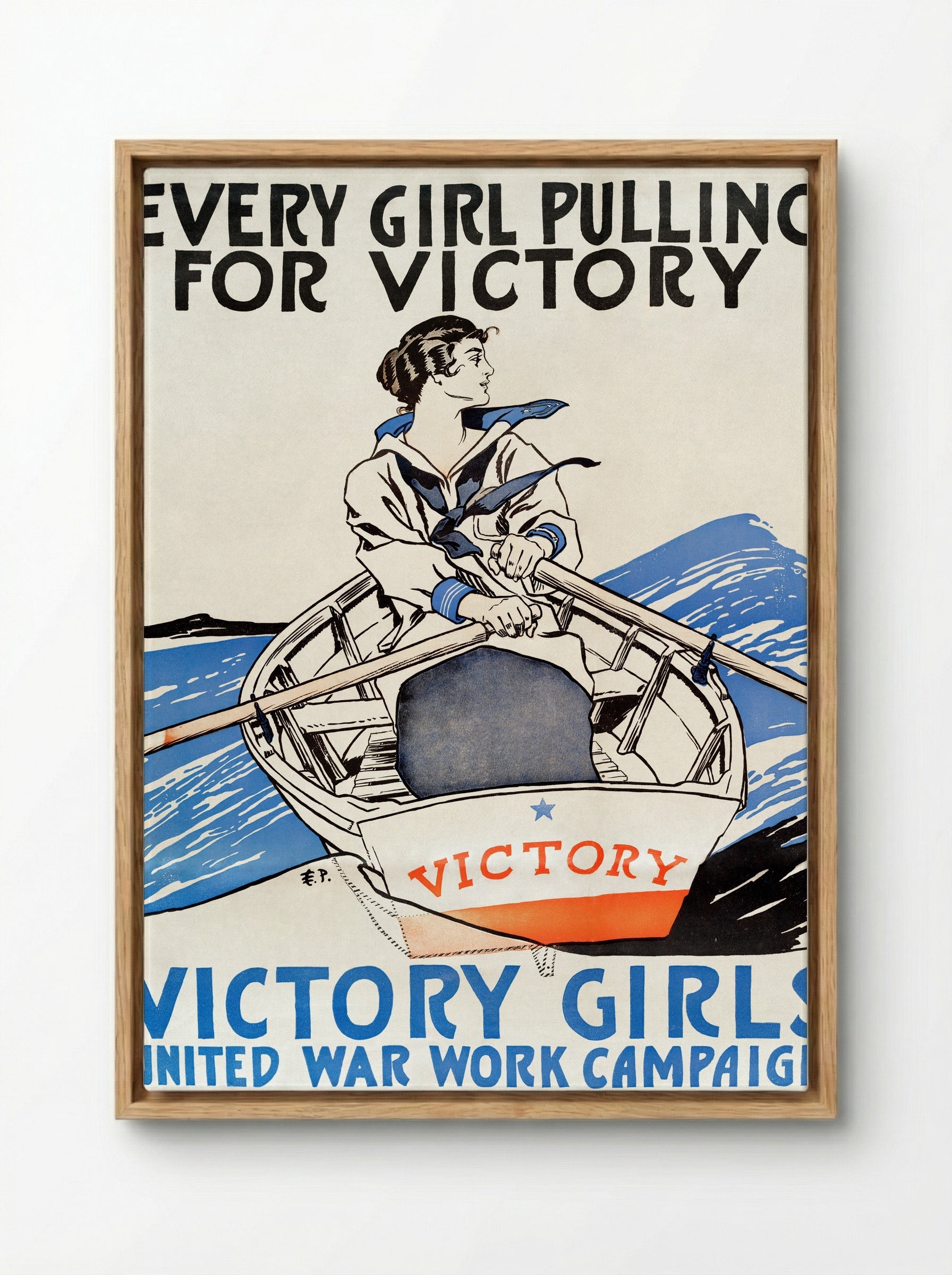
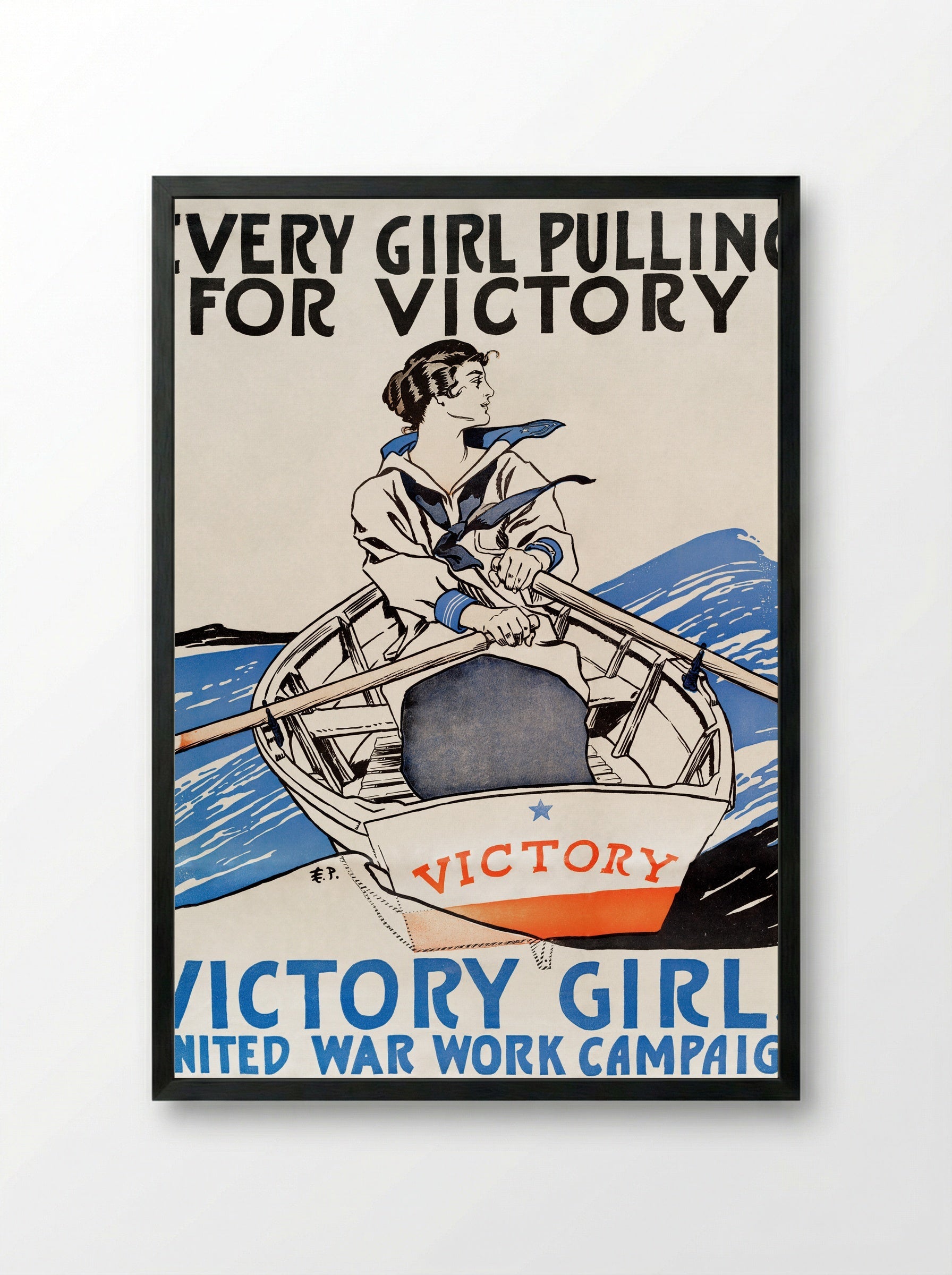
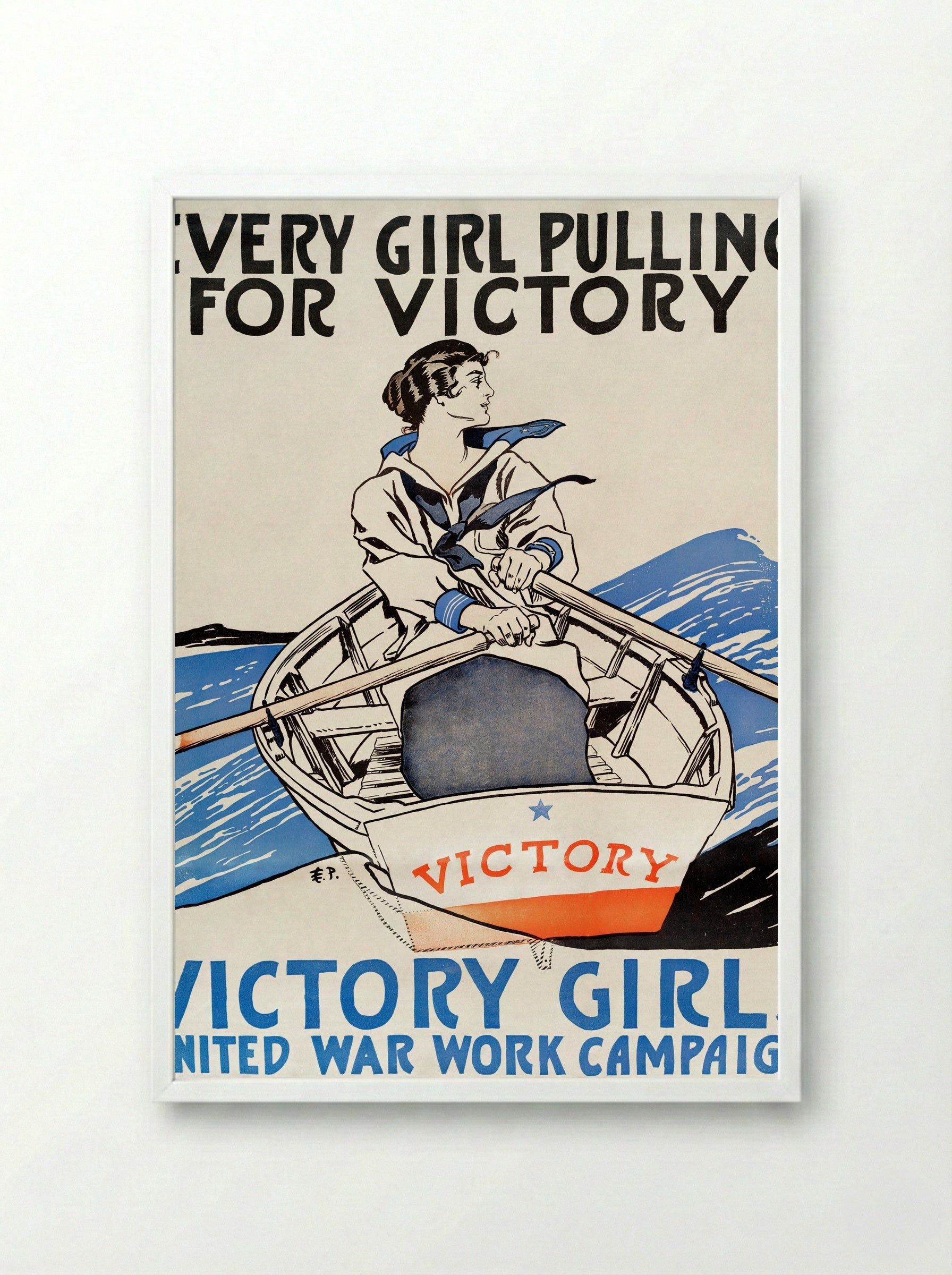
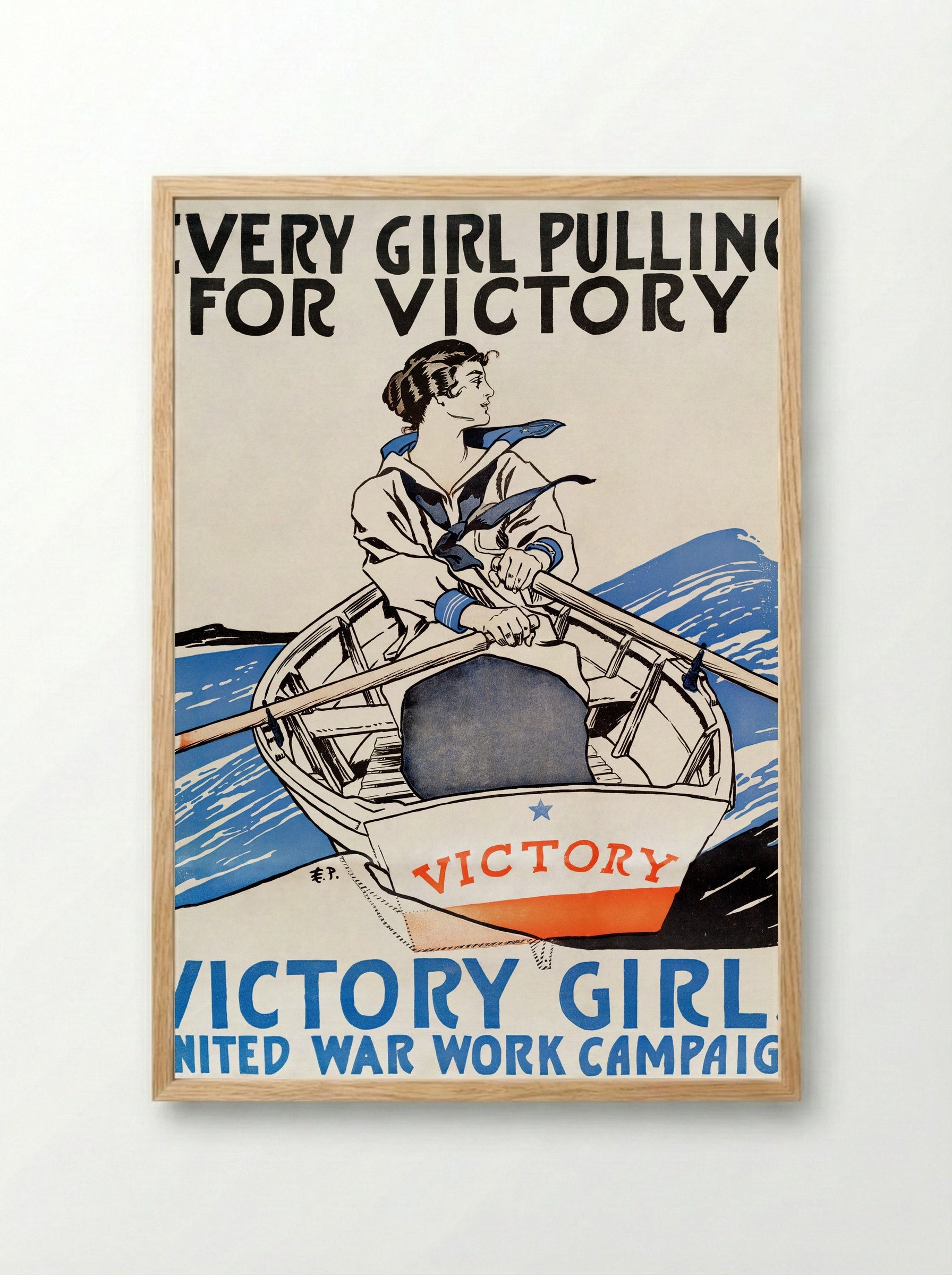
Edward Penfield's Every Girl Pulling for Victory (1918) is an American First World War recruitment poster created during the final year of the conflict. It depicts a young woman in sailor-style clothing rowing a boat emblazoned with the word "Victory," a direct call for women to contribute to the war effort through factory work, nursing, agriculture, and clerical service.
Historical context
By 1918, the United States had been at war for just over a year. With millions of men deployed to the Western Front, the government launched a coordinated propaganda campaign to mobilise women into roles that kept the economy and military supply chain running. The Division of Pictorial Publicity, a volunteer corps of illustrators and designers led by Charles Dana Gibson, produced hundreds of posters to rally public support. Penfield's image sits within this tradition, using the metaphor of rowing together to frame women's wartime labour as collective, patriotic action.
The poster's colour palette of red, white, and blue is deliberate, reinforcing national identity. The composition is stripped back and direct: one figure, one boat, one word. There is no battlefield imagery. Instead, the message centres on civilian participation, the idea that victory depended on everyone, soldiers included but far from alone.
The rowing metaphor carries specific connotations. Rowing was associated with elite universities and collective discipline; each stroke must be synchronised for the boat to move. Penfield transplants this idea of coordinated effort from the boathouse to the factory floor and the hospital ward, asking women to pull together with the same precision. The poster was distributed widely during 1918 and remains one of the most frequently reproduced examples of American war propaganda in textbooks and exhibitions.
About Edward Penfield (1866–1925)
Often called the father of the American poster, Penfield served as art director of Harper's Magazine from 1890 to 1901, producing over 100 cover designs during that period. His style drew on Japanese woodblock printing and the French affiche tradition: flat areas of colour, bold outlines, and minimal detail. He became one of the most recognised illustrators of the American Art Nouveau movement, and his wartime posters remain some of the most widely studied examples of early 20th-century graphic propaganda.
This fine art reproduction is printed on museum-grade stock, faithful to the original's bold colours and graphic simplicity.
Return policy
Because every print is made to order, we don't offer change-of-mind returns, refunds or exchanges. If your order arrives faulty, damaged or incorrect, we'll replace it free of charge — just contact us within 48 hours of delivery. EU customers have a 14-day cooling-off right. See our refunds page for full details.
Shipping
We ship worldwide, printing at the production hub nearest to your delivery address. Delivery times and costs vary by destination — you'll see the options available to you at checkout.
Manufacturing
Each print is produced to order using 12-colour giclée printing on FSC-certified archival paper. Designed in Britain and printed at your nearest production hub to reduce waste and speed up delivery.
Every Girl Pulling for Victory - Edward Penfield
Our Features
Designed for Lasting Impact
Specific Features
Every Solis piece is made to order with archival, gallery-quality materials built to last.
- Museum-grade giclée printing for rich, fade-resistant colour
- Archival matte fine-art paper, FSC-certified
- Choose poster, framed print, canvas or framed canvas
- Frames in black, natural wood, dark wood or white
- Framed prints arrive ready to hang
Care & Cleaning
To keep your artwork looking its best:
- Dust gently with a soft, dry cloth
- Avoid prolonged direct sunlight
- Never use liquid cleaners on the print or canvas surface
- Keep in a dry, room-temperature space
- Handle prints with clean, dry hands
Materials & Sizing
Museum-grade giclée on FSC-certified archival matte paper, with framed and canvas options.
- Paper sizes: A4, A3, A2, A1, A0 and B2 (50×70 cm)
- Canvas: XS (20×30 cm) to Large (60×90 cm)
- Frames: black, natural wood, dark wood or white
Why Choose Us ?
100% Satisfaction Guarantee
Fast Shipping
Museum-Quality Materials

Artist Biography
Edward Penfield
Penfield embraced simplicity and strong, flat colours, drawing inspiration from Japanese prints and the Arts and Crafts movement. Eschewing excessive detail, he focused on conveying the essence of a scene or product with minimal lines and bold compositions. His posters, often promoting *Harper's* magazine, exude a sophisticated charm and a distinctly American sensibility. Penfield's innovative approach to composition and colour made his work instantly recognisable and highly influential.
Today, Edward Penfield's posters are celebrated for their timeless appeal and graphic ingenuity. His ability to distill complex ideas into visually arresting images continues to inspire designers and artists. Collectors are drawn to Penfield's work not only for its aesthetic beauty but also for its historical significance as a window into a bygone era of American optimism and artistic innovation. His prints add a touch of vintage elegance and graphic punch to any modern space.
You May Also Like