

Fine Art Poster
From $39
A giclée print on 200gsm matte fine art paper, using a twelve-colour process for accurate, fade-resistant colour. Supplied unframed, delivered flat or rolled.


Archival giclée
Frames arrive ready to hang
Secure checkout
Made to order
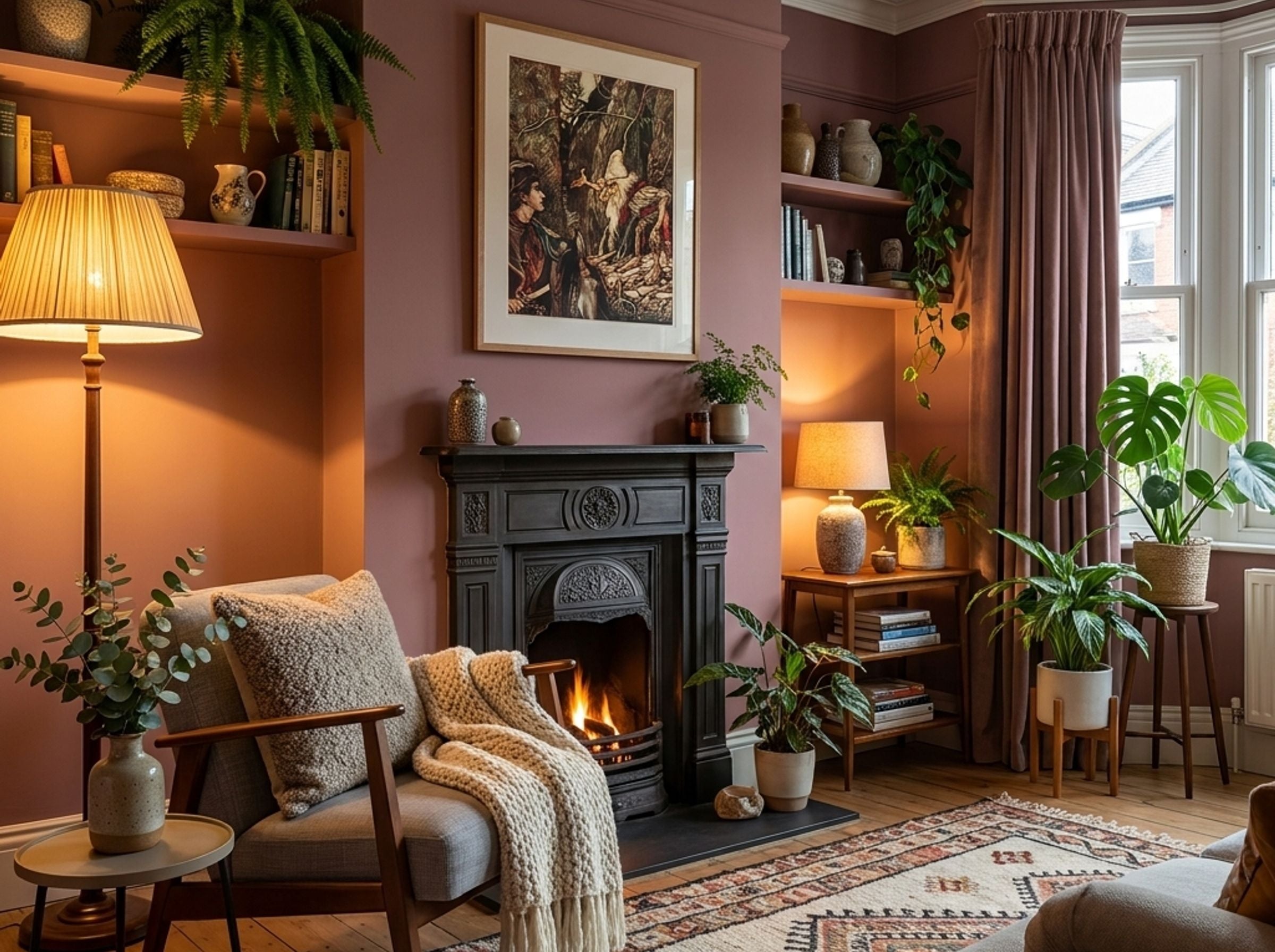
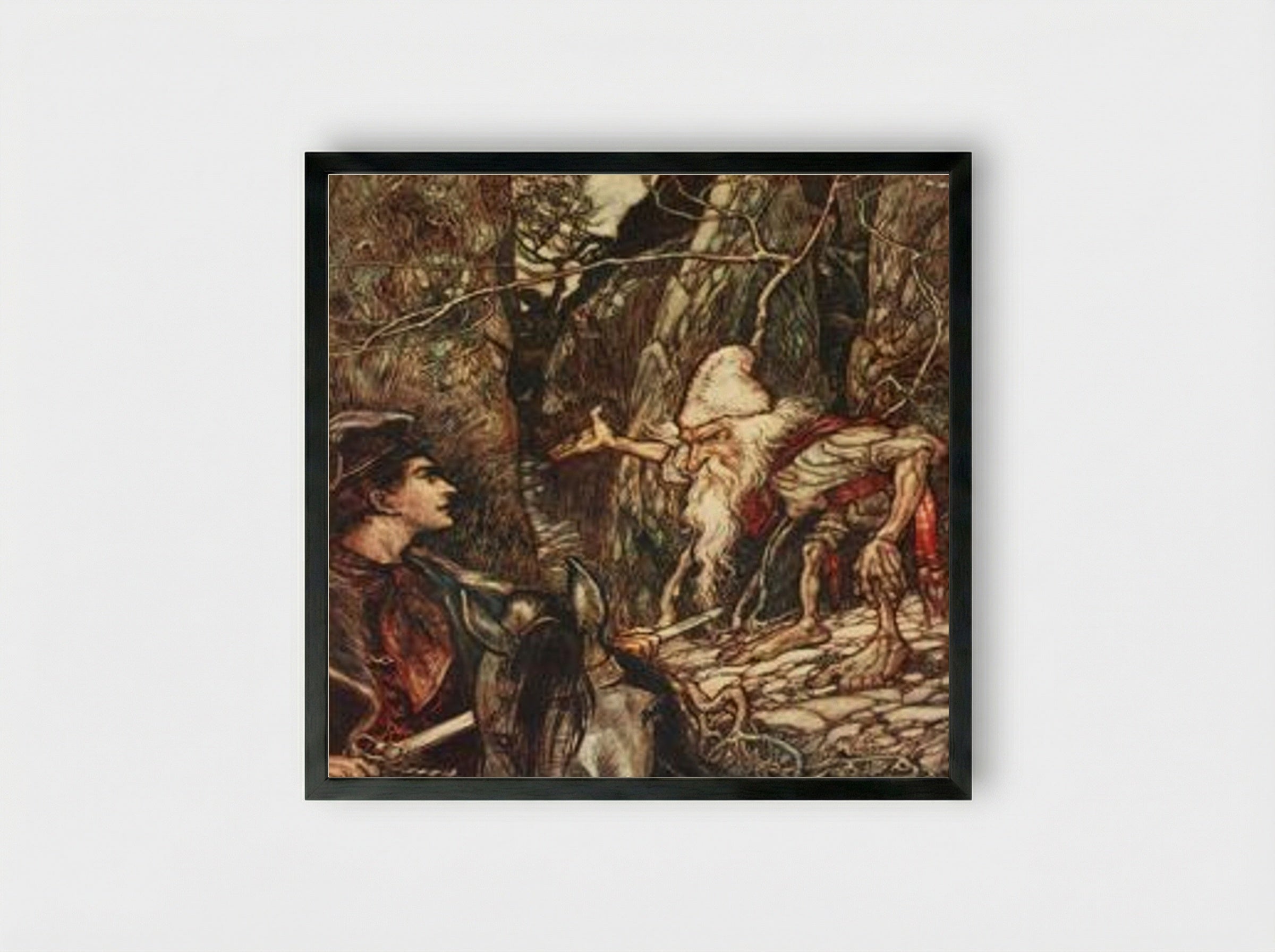
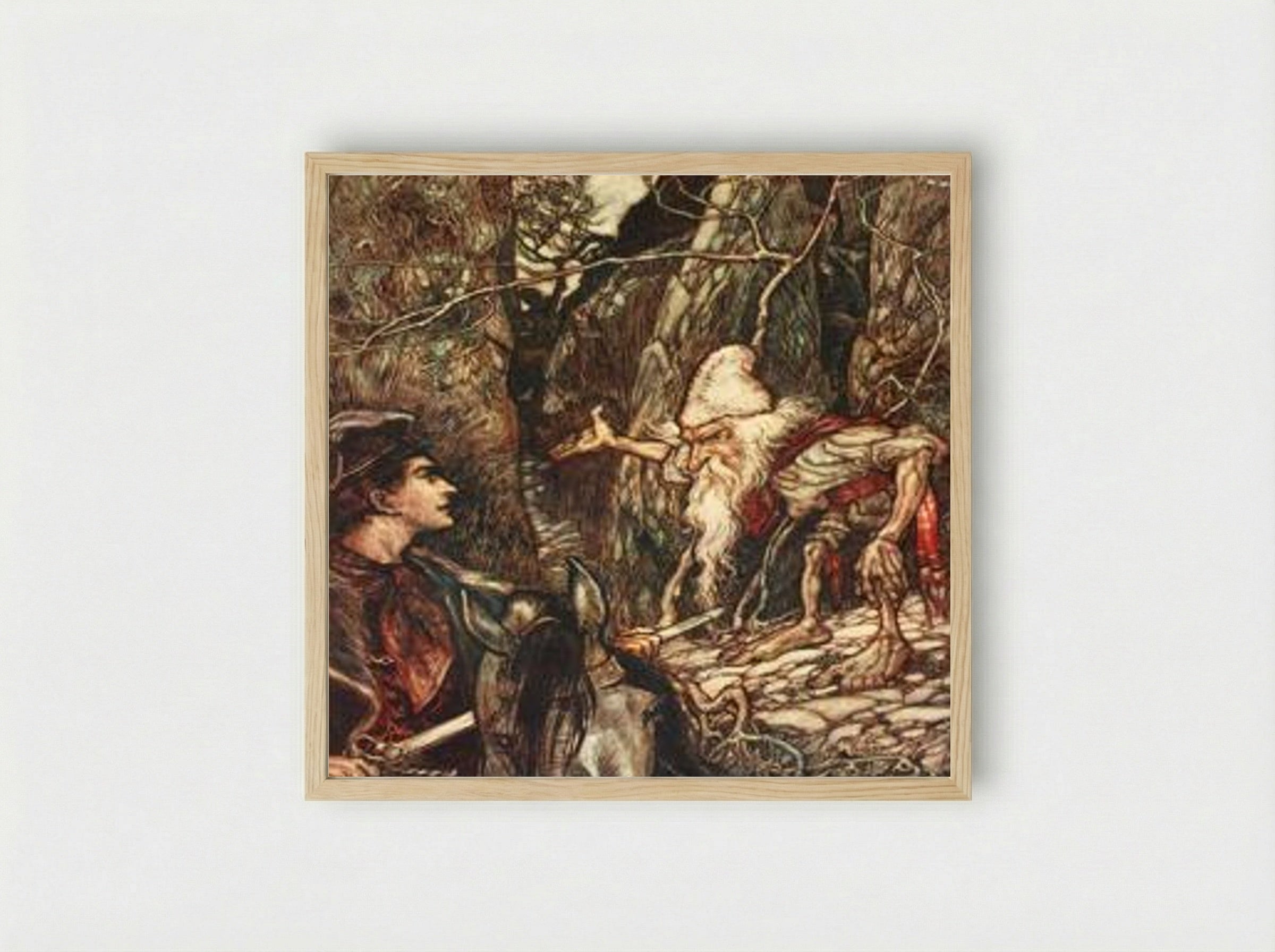
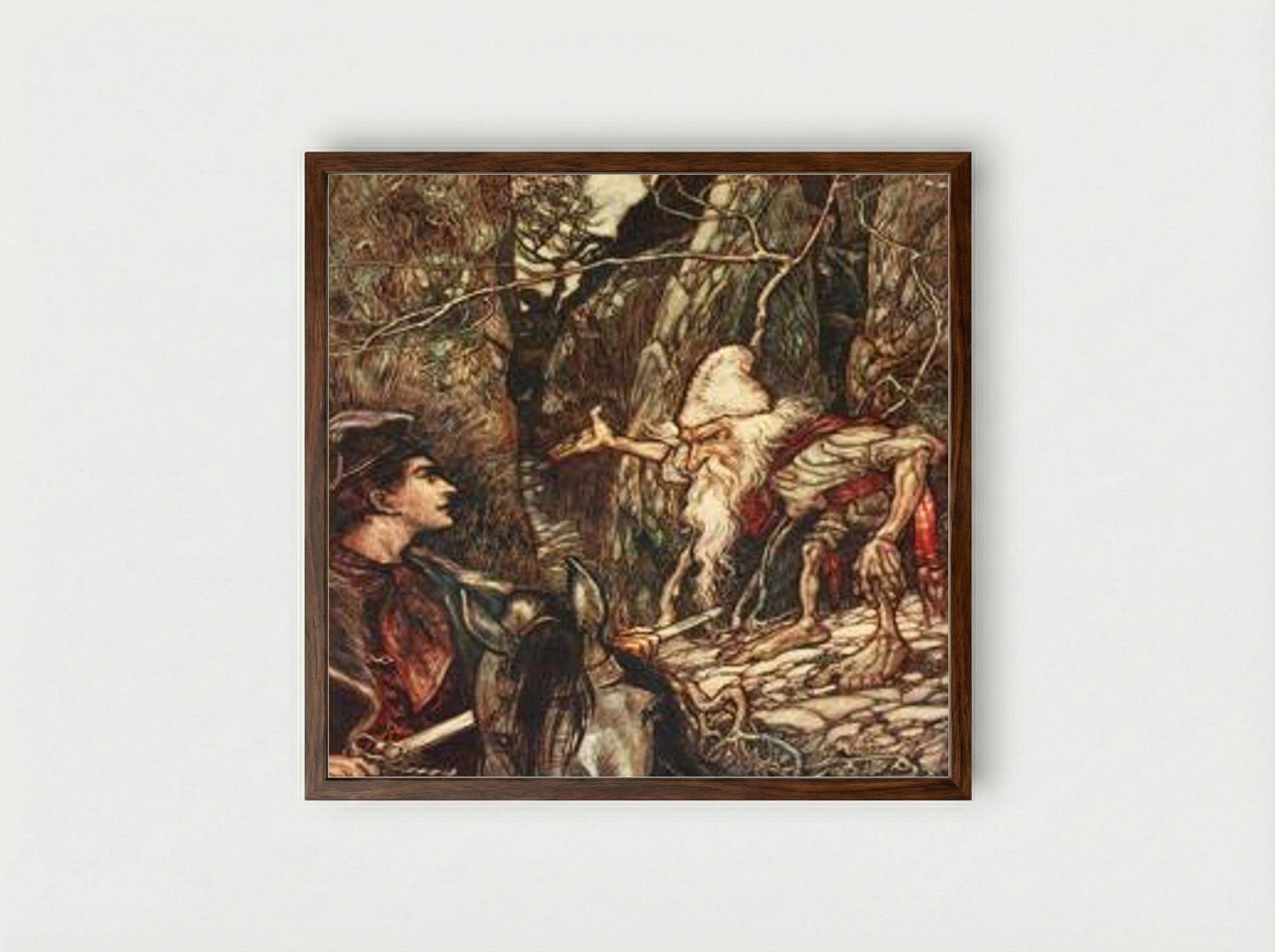
This illustration by Arthur Rackham depicts a scene with a young man on horseback confronting a dwarf in a forest. The muted colours and fine lines add to the overall atmosphere of mystery.
Arthur Rackham (1867-1939) was a British book illustrator. His work is characterised by its imaginative, detailed, and often whimsical style. Rackham's illustrations brought classic fairy tales and myths to life for a new generation of readers. He combined delicate line work with watercolour washes, creating images that are both enchanting and slightly unsettling. His style is instantly recognisable, influencing illustrators for decades. 'Good Dwarf, can you not tell me where my brothers are' depicts a scene with a young man on horseback confronting a dwarf in a forest. The dwarf, with a long white beard and pointed hat, gestures with his hand as if in conversation. The scene is set amongst gnarled trees and rocky terrain, creating a sense of mystery and otherworldliness. Rackham's use of muted colours and fine lines adds to the overall atmosphere of the illustration. The composition draws the viewer into the encounter, inviting them to imagine the story behind the image.
Because every print is made to order, we don't offer change-of-mind returns, refunds or exchanges. If your order arrives faulty, damaged or incorrect, we'll replace it free of charge — just contact us within 48 hours of delivery. See our refunds page for full details.
We ship worldwide, printing at the production hub nearest to your delivery address. Delivery times and costs vary by destination — you'll see the options available to you at checkout.
Each print is produced to order using 12-colour giclée printing on FSC-certified archival paper. Designed in Britain and printed at your nearest production hub to reduce waste and speed up delivery.
Specific Features
Every Solis piece is made to order with archival, gallery-quality materials built to last.
Care & Cleaning
To keep your artwork looking its best:
Materials & Sizing
Museum-grade giclée on FSC-certified archival matte paper, with framed and canvas options.

Artist Biography
Made to order
Every piece is printed to order. These are the five finishes, and what makes each one different.
From $39
A giclée print on 200gsm matte fine art paper, using a twelve-colour process for accurate, fade-resistant colour. Supplied unframed, delivered flat or rolled.

From $119
The same fine art print in a solid wood frame with UV-protective acrylic glaze and rigid backing. Five frame colours. Arrives ready to hang.
Why Choose Us ?
Damage-free delivery guarantee
Fast Shipping
Museum-Quality Materials
You May Also Like
We use cookies to measure our marketing and see which prints people love.We use cookies to measure our marketing.
By continuing to browse, you agree · Privacy Policy