

Fine Art Poster
From $29
A giclée print on 200gsm matte fine art paper, using a twelve-colour process for accurate, fade-resistant colour. Supplied unframed, delivered flat or rolled.



Archival giclée
Frames arrive ready to hang
Secure checkout
Made to order
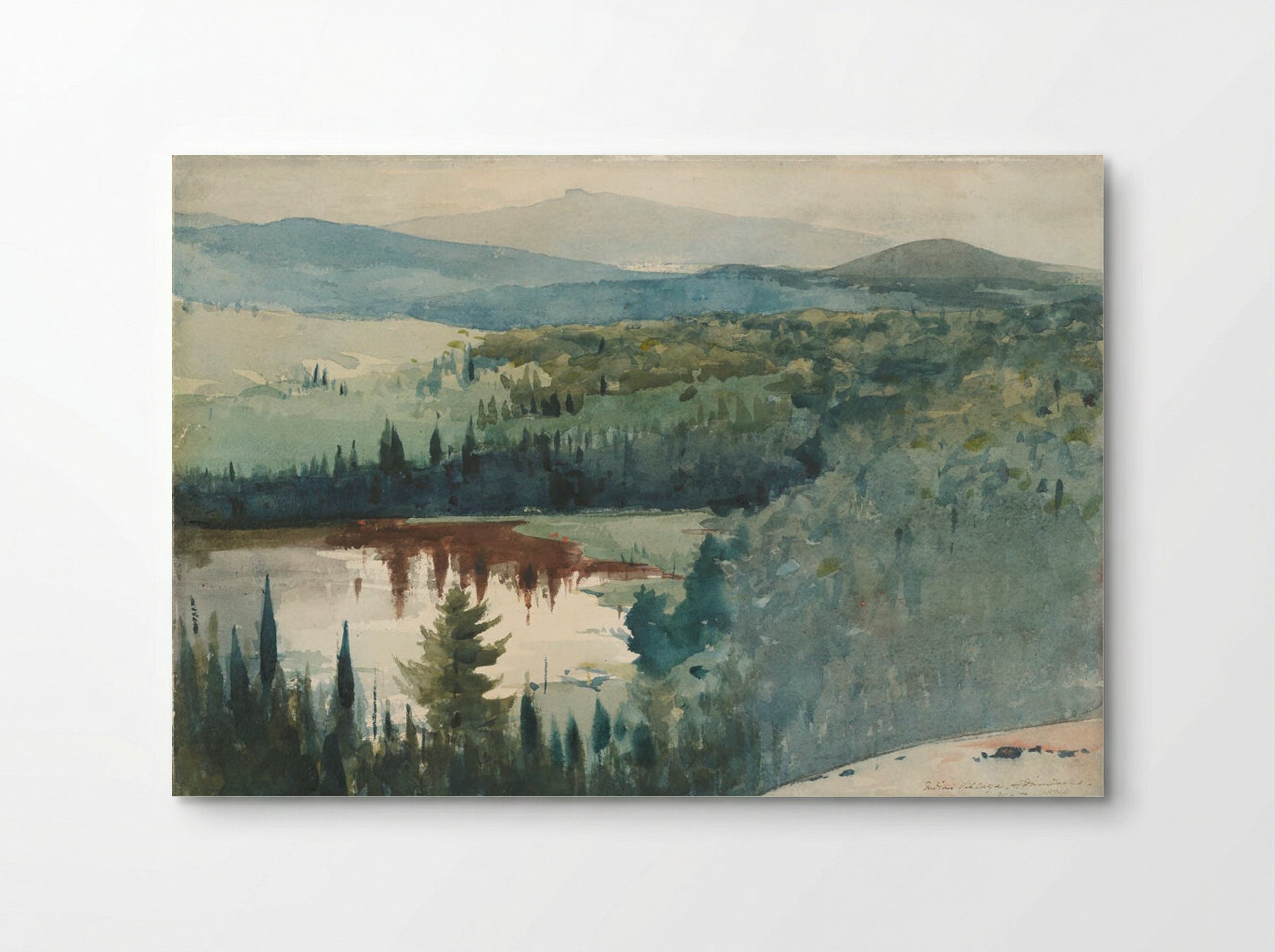
A serene watercolour by Winslow Homer depicting the mountainous terrain and reflective waters of the Adirondacks in 1892.
Winslow Homer produced this watercolour during his frequent visits to the Adirondack Mountains in New York State. The work captures the atmospheric conditions of the region, focusing on the interplay between the mountainous terrain and the reflective surface of the water. Homer utilised a restrained palette, relying on washes of blue, green, and earthy tones to define the receding planes of the composition. The foreground features dark, vertical silhouettes of pine trees, which provide a sense of scale and depth. These elements frame the view, drawing the eye toward the middle ground where the water mirrors the surrounding forest. The distant mountains are rendered with lighter, more translucent pigments, suggesting the hazy quality of the atmosphere at a distance. Homer's technique here demonstrates his mastery of the medium, as he balances precise detail with broader, more fluid applications of colour. Unlike his earlier, more narrative-driven works, this piece prioritises the observation of light and topography. The composition is structured to lead the viewer through the scene, from the immediate density of the woods to the expansive, quiet horizon. The paper remains visible in certain areas, allowing the texture of the support to contribute to the overall effect of the light. This work reflects Homer's interest in the natural environment of the Adirondacks, a subject he returned to repeatedly throughout the 1890s. It remains a clear example of his ability to capture the specific character of the American wilderness through a disciplined and observant approach to watercolour painting.
Because every print is made to order, we don't offer change-of-mind returns, refunds or exchanges. If your order arrives faulty, damaged or incorrect, we'll replace it free of charge — just contact us within 48 hours of delivery. See our refunds page for full details.
We ship worldwide, printing at the production hub nearest to your delivery address. Delivery times and costs vary by destination — you'll see the options available to you at checkout.
Each print is produced to order using 12-colour giclée printing on FSC-certified archival paper. Designed in Britain and printed at your nearest production hub to reduce waste and speed up delivery.
Specific Features
Every Solis piece is made to order with archival, gallery-quality materials built to last.
Care & Cleaning
To keep your artwork looking its best:
Materials & Sizing
Museum-grade giclée on FSC-certified archival matte paper, with framed and canvas options.

Artist Biography
Made to order
Every piece is printed to order. These are the five finishes, and what makes each one different.
From $29
A giclée print on 200gsm matte fine art paper, using a twelve-colour process for accurate, fade-resistant colour. Supplied unframed, delivered flat or rolled.

From $89
The same fine art print in a solid wood frame with UV-protective acrylic glaze and rigid backing. Five frame colours. Arrives ready to hang.

From $169
A deeper solid wood frame: 33mm deep with a 20mm face and Perspex glaze. The print sits unmounted for a clean gallery presentation. Black, white or natural.

From $59
Hand-stretched canvas with neat gallery-wrapped edges, giving the artwork surface texture and depth. Arrives ready to hang.

From $175
Stretched canvas set in a floating wood frame, our most substantial finish. Arrives ready to hang.
Why Choose Us ?
Damage-free delivery guarantee
Fast Shipping
Museum-Quality Materials
You May Also Like
We use cookies to measure our marketing and see which prints people love.We use cookies to measure our marketing.
By continuing to browse, you agree · Privacy Policy