

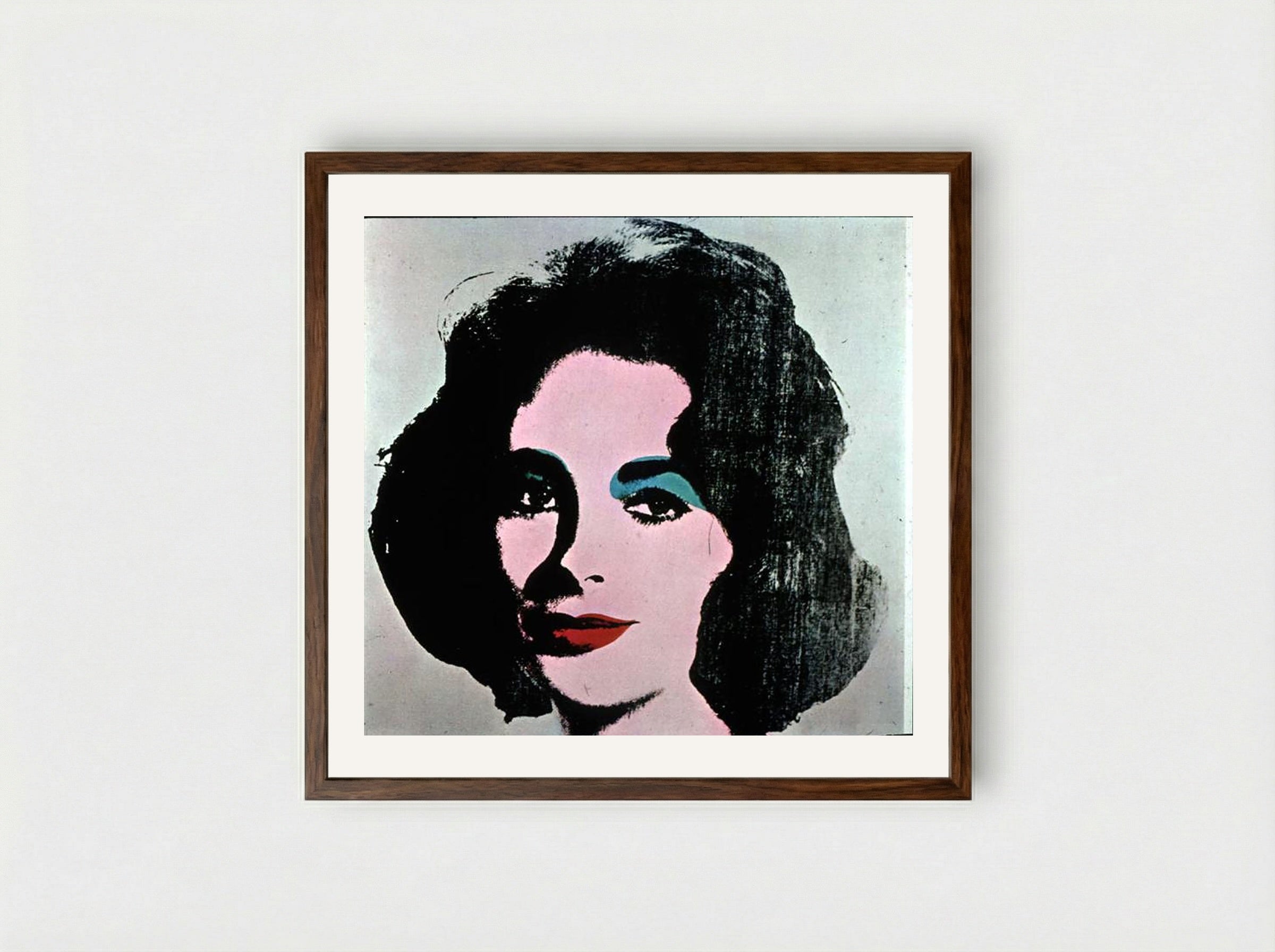
Liz Taylor - Andy Warhol
Archival giclée
Ready to hang
Secure checkout
Made to order
Description
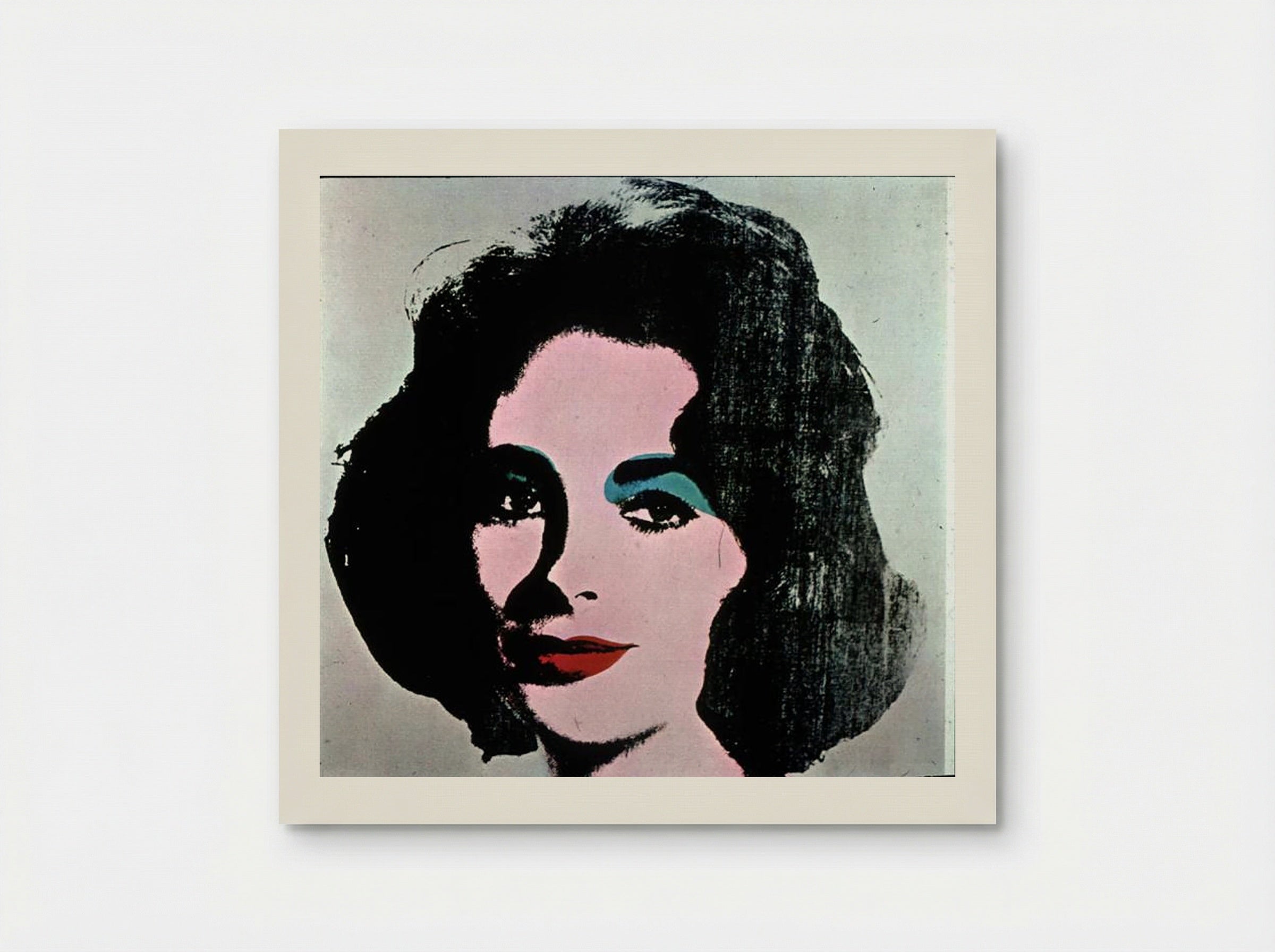
A silkscreen portrait of Elizabeth Taylor, this piece exemplifies Andy Warhol's Pop Art style and his exploration of celebrity culture through bold colours and graphic techniques.
This silkscreen portrait of Elizabeth Taylor is a quintessential example of Andy Warhol's fascination with celebrity culture. Warhol, an American artist (1928-1987), rose to prominence in the 1960s as a leading figure in the Pop Art movement. His work often explored the relationship between art, advertising, and fame, using mass production techniques to create images that were both iconic and accessible. In this portrait, Taylor's face is rendered in bold, flat colours, with stark contrasts between light and shadow. The silkscreen technique allows for a graphic quality, emphasising the artificiality of the image. The bright red lips and teal eyeshadow are characteristic of Taylor's glamorous persona, while the black ink creates a sense of drama. Warhol's portraits of celebrities like Taylor, Marilyn Monroe, and Elvis Presley are not just representations of individuals; they are symbols of a media-saturated society where image and reality become blurred.
Return policy
Because every print is made to order, we don't offer change-of-mind returns, refunds or exchanges. If your order arrives faulty, damaged or incorrect, we'll replace it free of charge — just contact us within 48 hours of delivery. EU customers have a 14-day cooling-off right. See our refunds page for full details.
Shipping
We ship worldwide, printing at the production hub nearest to your delivery address. Delivery times and costs vary by destination — you'll see the options available to you at checkout.
Manufacturing
Each print is produced to order using 12-colour giclée printing on FSC-certified archival paper. Designed in Britain and printed at your nearest production hub to reduce waste and speed up delivery.
Liz Taylor - Andy Warhol
Our Features
Designed for Lasting Impact
Specific Features
Every Solis piece is made to order with archival, gallery-quality materials built to last.
- Museum-grade giclée printing for rich, fade-resistant colour
- Archival matte fine-art paper, FSC-certified
- Choose poster, framed print, canvas or framed canvas
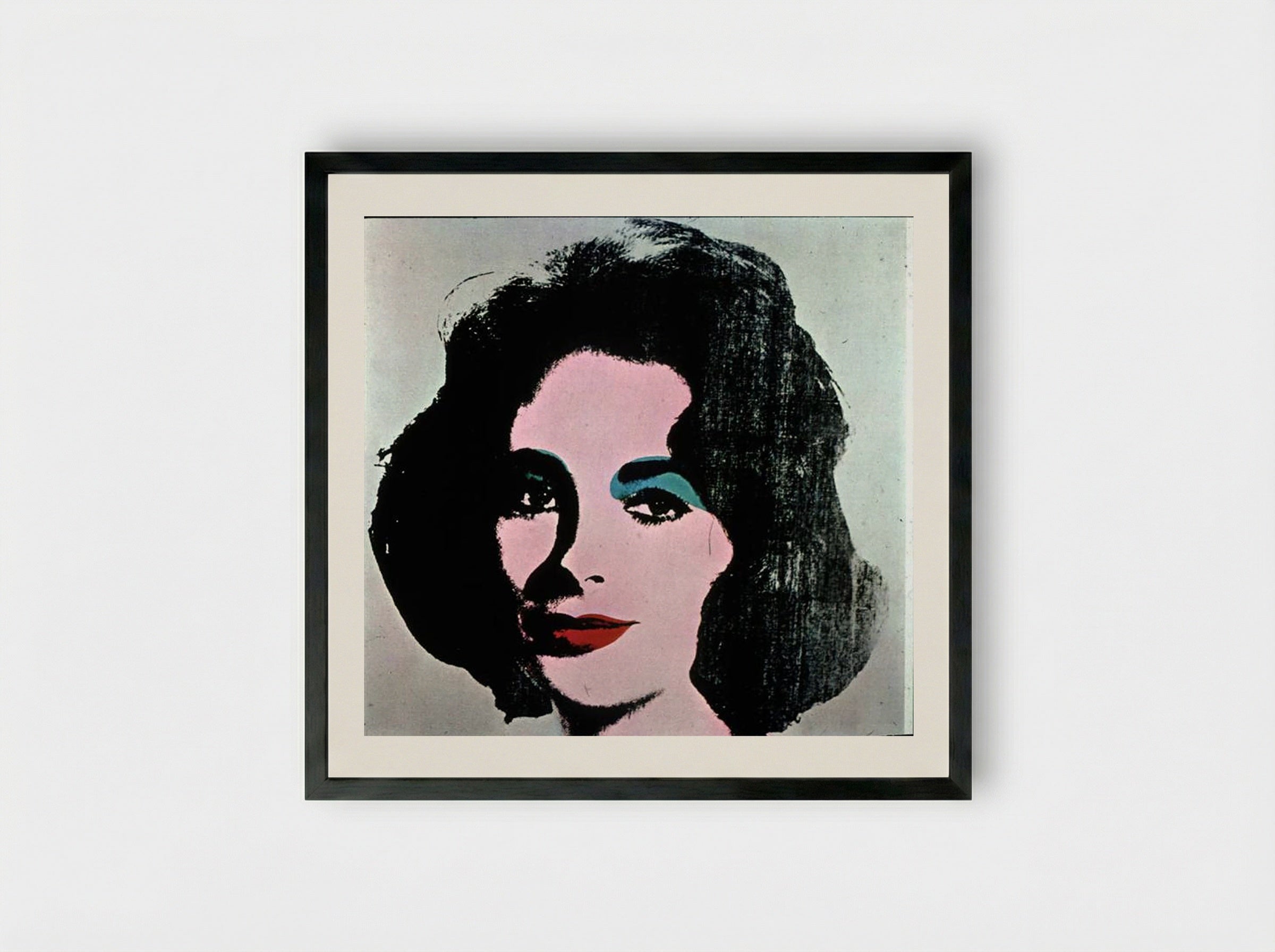
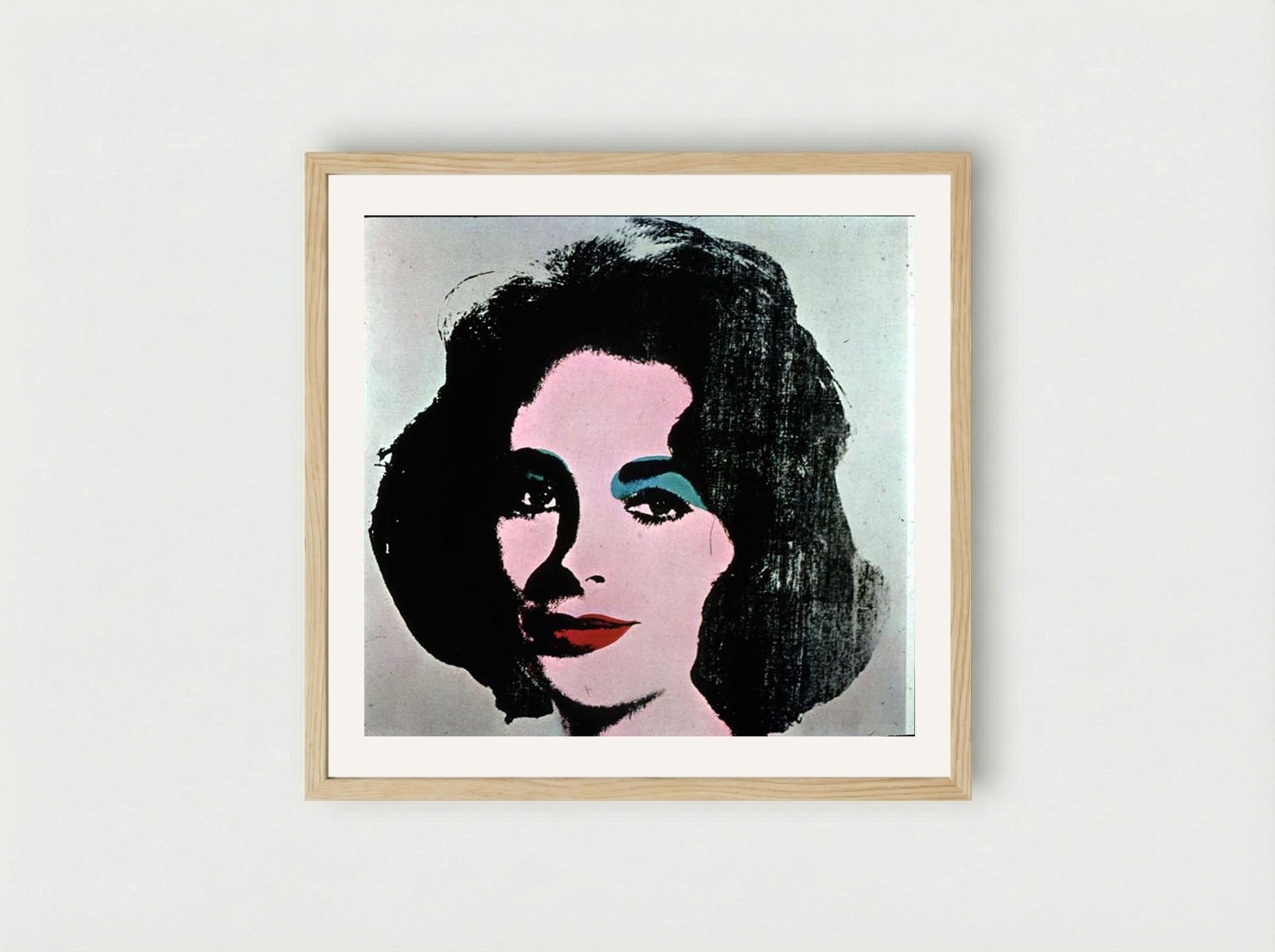
- Frames in black, natural wood, dark wood or white
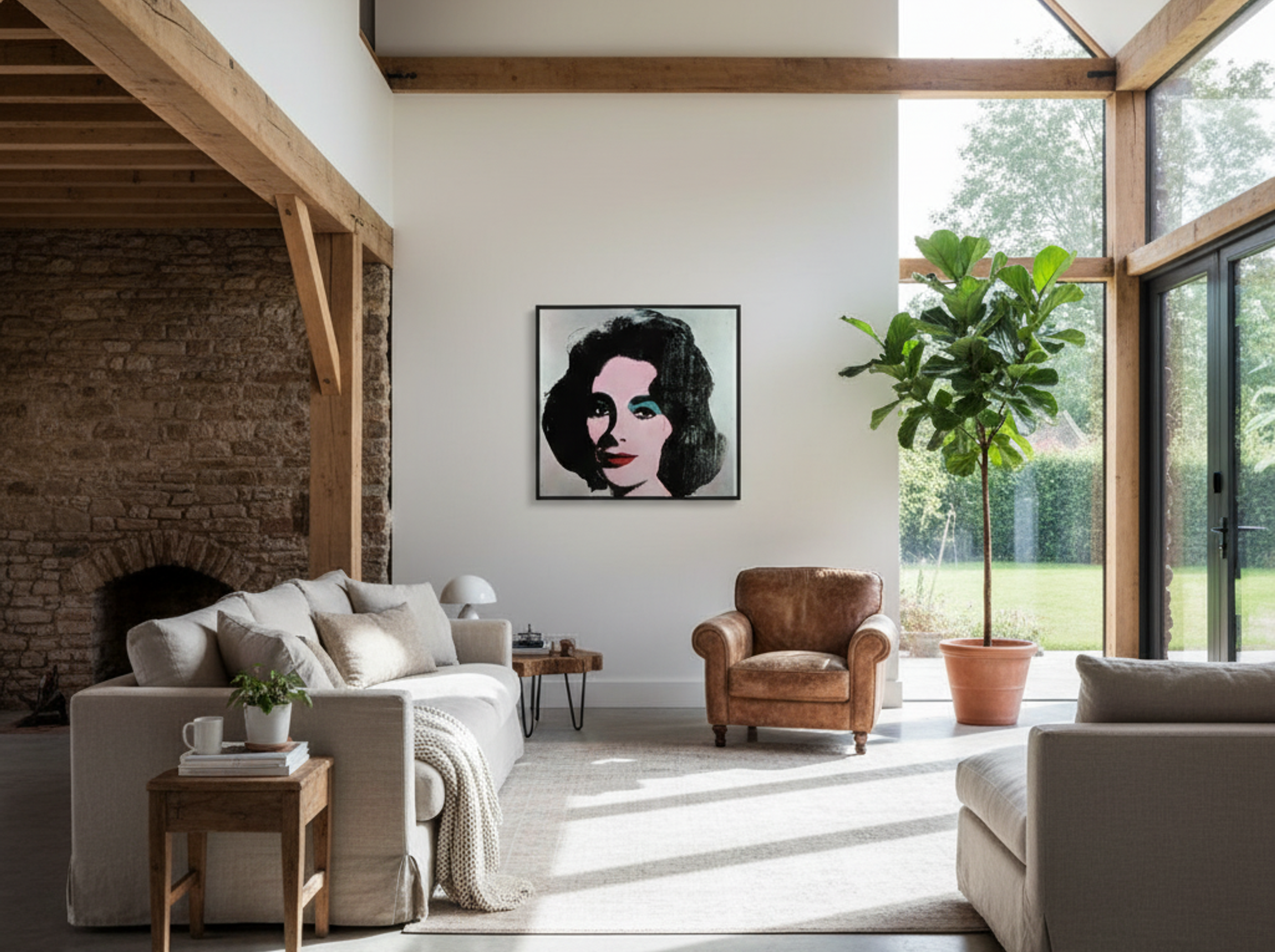
- Framed prints arrive ready to hang
Care & Cleaning
To keep your artwork looking its best:
- Dust gently with a soft, dry cloth
- Avoid prolonged direct sunlight
- Never use liquid cleaners on the print or canvas surface
- Keep in a dry, room-temperature space
- Handle prints with clean, dry hands
Materials & Sizing
Museum-grade giclée on FSC-certified archival matte paper, with framed and canvas options.
- Paper sizes: A4, A3, A2, A1, A0 and B2 (50×70 cm)
- Canvas: XS (20×30 cm) to Large (60×90 cm)
- Frames: black, natural wood, dark wood or white
Why Choose Us ?
100% Satisfaction Guarantee
Fast Shipping
Museum-Quality Materials

Artist Biography
Andy Warhol
He moved to New York after graduating from Carnegie Tech in 1949 and spent the 1950s as a commercial illustrator. He was successful at it: shoe drawings for I. Miller, album covers, magazine illustrations. The work was loose, charming, and camp. He won awards. But commercial art was not taken seriously, and Warhol wanted to be taken seriously.
The Campbell's Soup Cans came in 1962. Thirty-two canvases, one for each flavour. Then Marilyn, then Elvis, then the car crashes and electric chairs. The technique was silk-screen printing: photographic images transferred to canvas through a mesh screen and printed in flat, commercial colours. The process removed the artist's hand almost entirely, which was the point. Warhol made art that looked like it had been manufactured, in a culture that manufactured everything.
The Factory, his silver-foiled studio on East 47th Street, became the centre of a scene that included musicians, actors, drag queens, socialites, and addicts, sometimes all at once. He made films. He started Interview magazine. He managed the Velvet Underground. He was shot by Valerie Solanas in 1968 and nearly died; he wore a surgical corset for the rest of his life.
His late work, often dismissed, includes the Oxidation Paintings (made with urine on metallic paint), the Shadow series, and the Last Supper paintings. He died in 1987 after gallbladder surgery, at fifty-eight. His estate was valued at around 600 million dollars.
You May Also Like