

Fine Art Poster
From $39
A giclée print on 200gsm matte fine art paper, using a twelve-colour process for accurate, fade-resistant colour. Supplied unframed, delivered flat or rolled.


Archival giclée
Frames arrive ready to hang
Secure checkout
Made to order
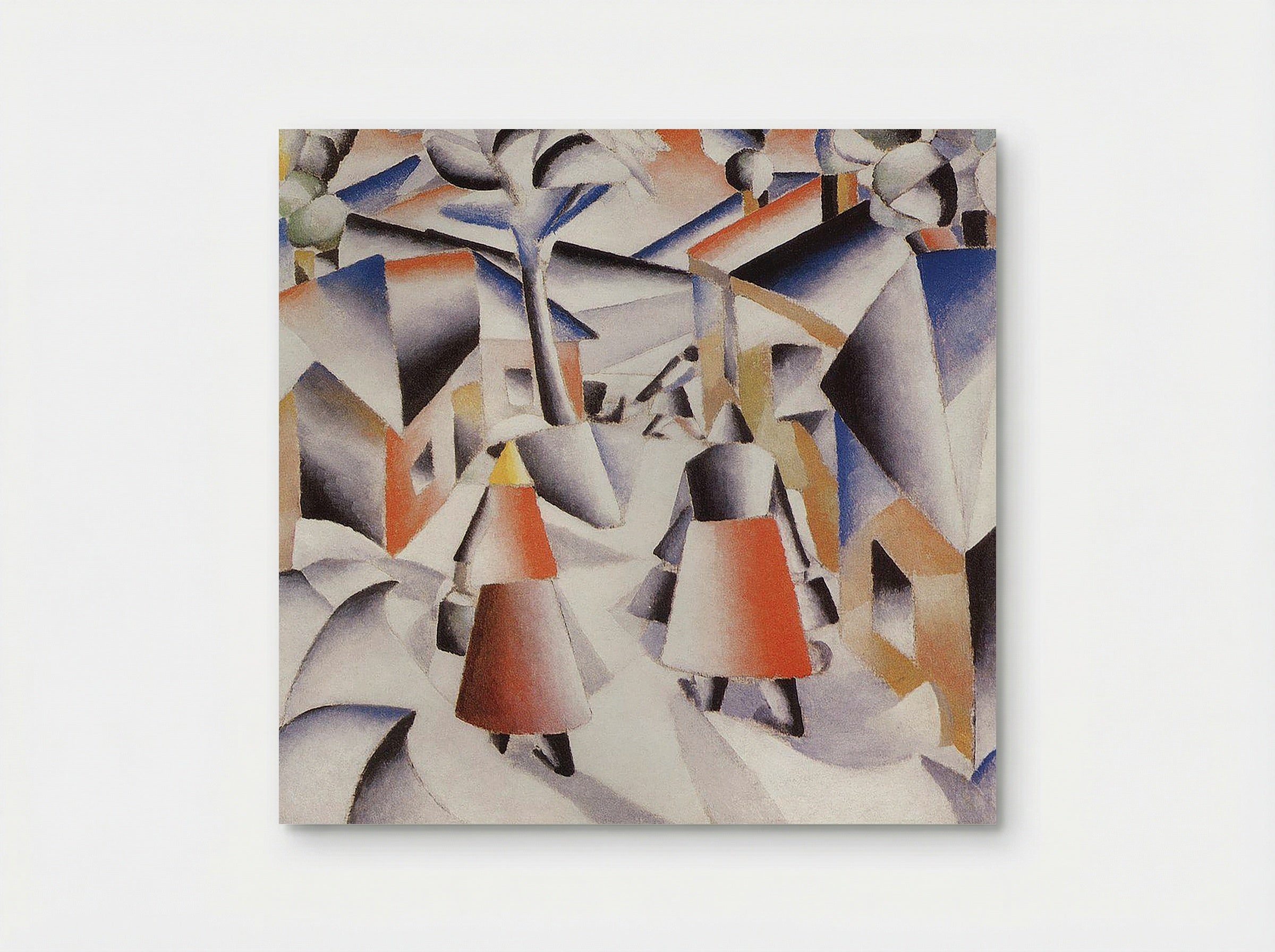
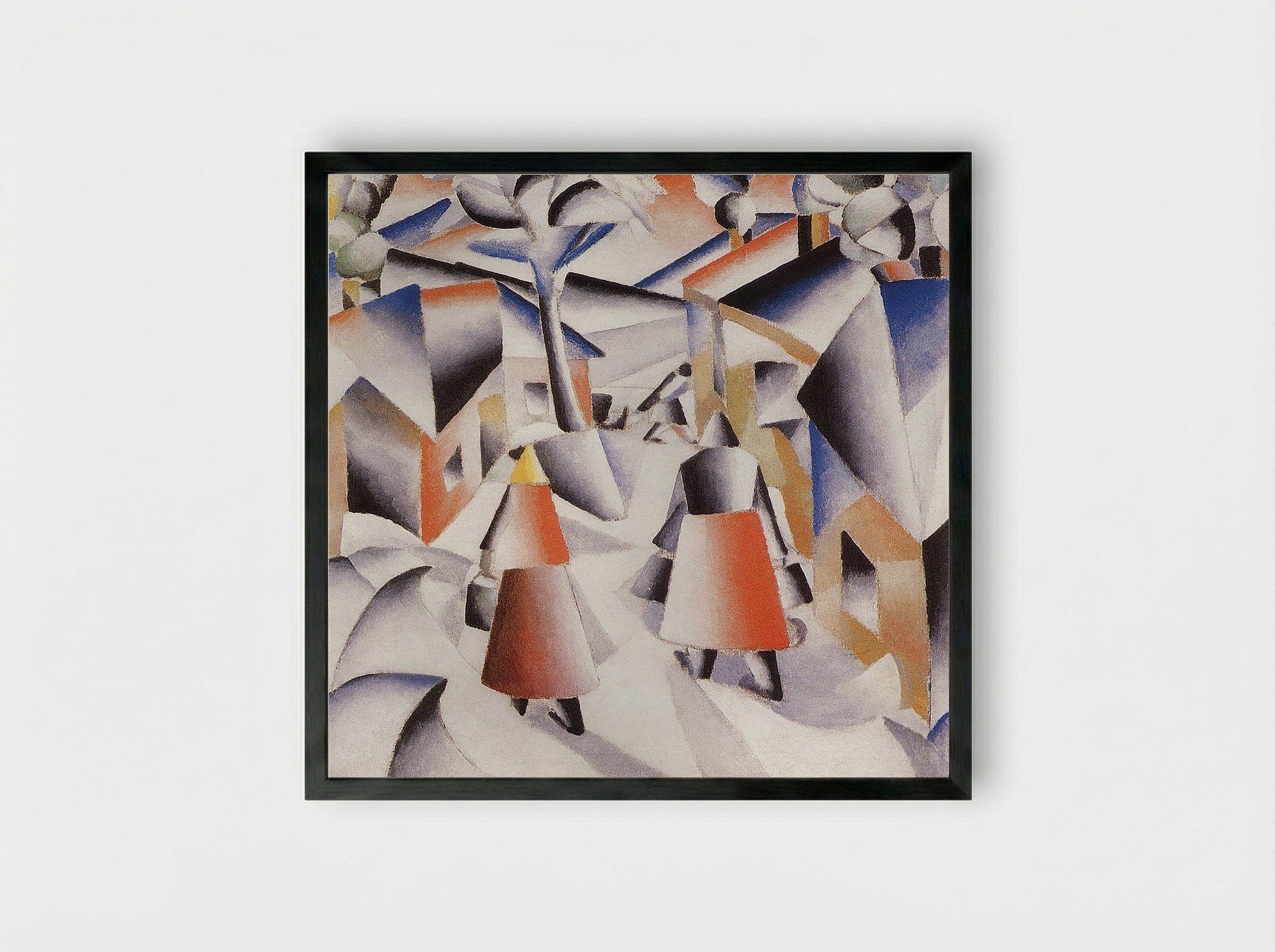
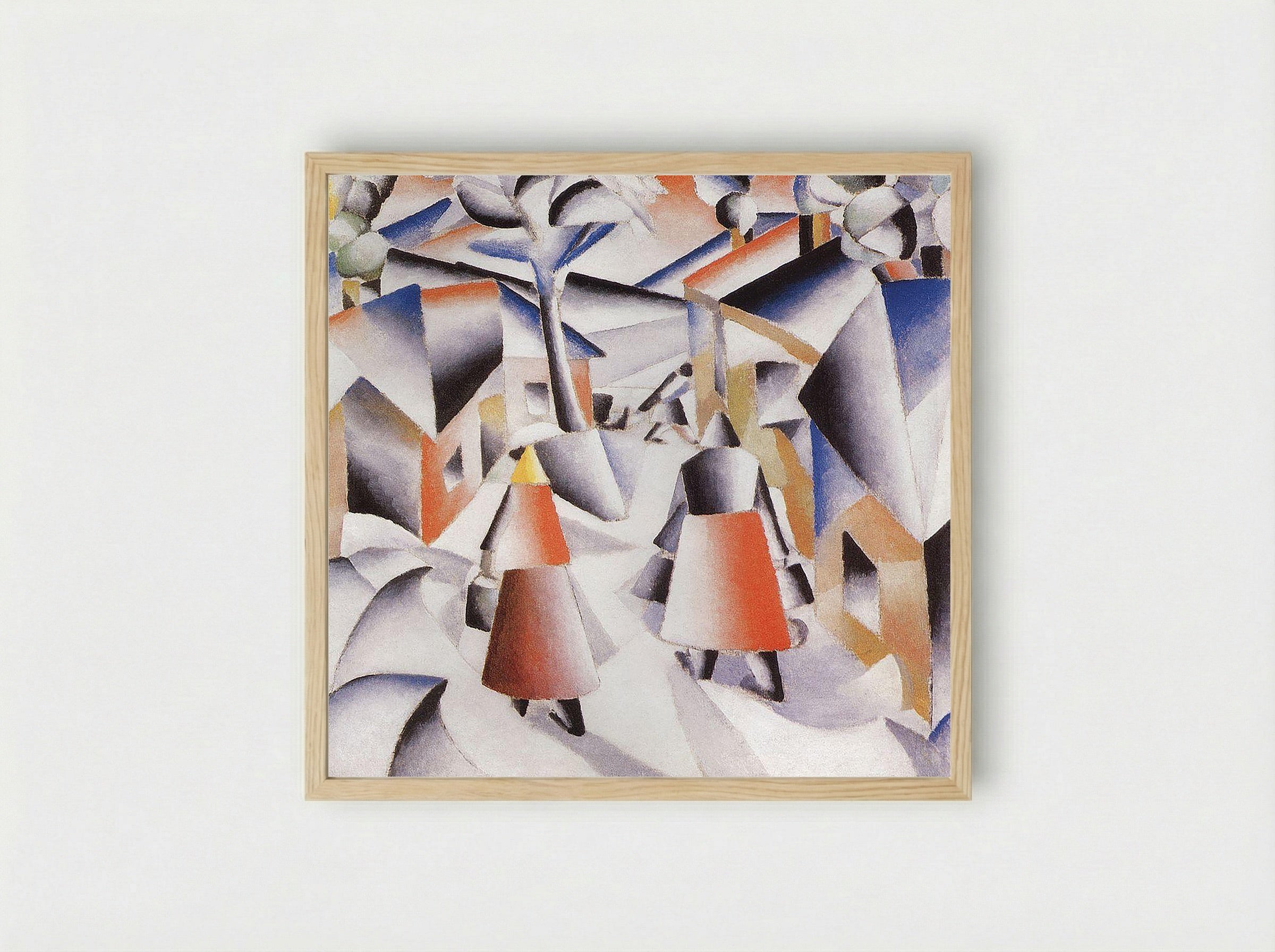
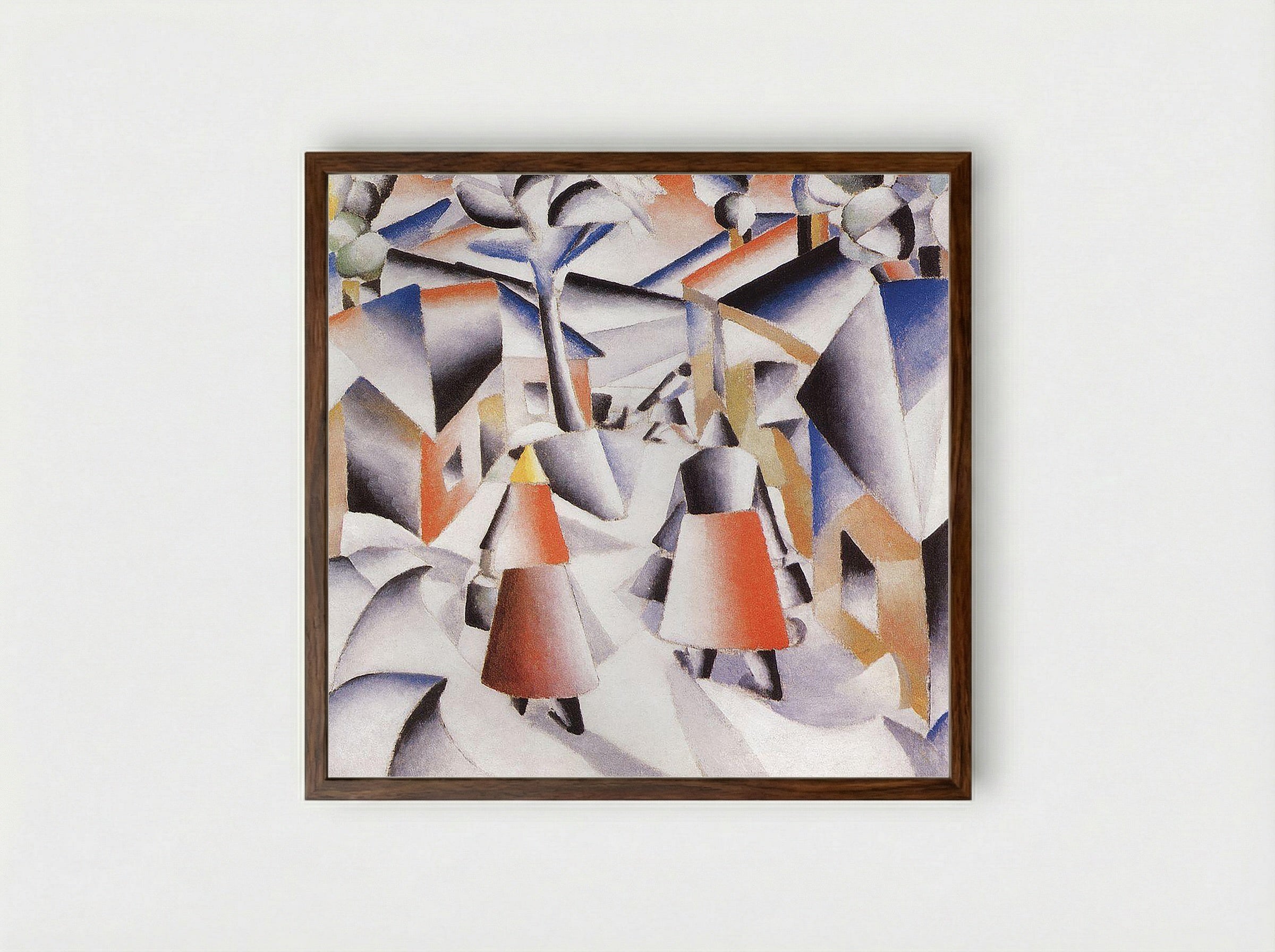
Kazimir Malevich's 'Morning in the Village after Snowstorm' (1912) is a Cubist-inspired oil painting depicting a rural winter scene through geometric forms and a restrained colour palette, marking a transition towards Malevich's Suprematism.
Kazimir Malevich's 1912 oil on canvas, *Morning in the Village after Snowstorm*, exemplifies the artist's move towards abstraction. The painting depicts a rural scene transformed through a Cubist lens. Figures and buildings are rendered as geometric forms, fracturing the conventional representation of space and volume. The colour palette is restrained, dominated by whites and greys that evoke the crispness of a winter morning. Accents of red and blue punctuate the composition, adding depth and visual interest. Malevich's work from this period reflects the influence of both Cubism and Futurism, movements that sought to capture the dynamism of modern life. However, Malevich moved beyond these influences, developing his own distinct style known as Suprematism. This painting represents a transitional phase in Malevich's career, bridging his earlier representational works with his later, purely abstract compositions. The simplification of forms and the emphasis on geometric shapes foreshadow the radical abstraction that would define his Suprematist paintings. *Morning in the Village after Snowstorm* offers insight into Malevich's artistic evolution, revealing his experimentation with form and colour as he moved towards a new visual language.
Because every print is made to order, we don't offer change-of-mind returns, refunds or exchanges. If your order arrives faulty, damaged or incorrect, we'll replace it free of charge — just contact us within 48 hours of delivery. See our refunds page for full details.
We ship worldwide, printing at the production hub nearest to your delivery address. Delivery times and costs vary by destination — you'll see the options available to you at checkout.
Each print is produced to order using 12-colour giclée printing on FSC-certified archival paper. Designed in Britain and printed at your nearest production hub to reduce waste and speed up delivery.
Specific Features
Every Solis piece is made to order with archival, gallery-quality materials built to last.
Care & Cleaning
To keep your artwork looking its best:
Materials & Sizing
Museum-grade giclée on FSC-certified archival matte paper, with framed and canvas options.

Artist Biography
Made to order
Every piece is printed to order. These are the five finishes, and what makes each one different.
From $39
A giclée print on 200gsm matte fine art paper, using a twelve-colour process for accurate, fade-resistant colour. Supplied unframed, delivered flat or rolled.

From $119
The same fine art print in a solid wood frame with UV-protective acrylic glaze and rigid backing. Five frame colours. Arrives ready to hang.
Why Choose Us ?
Damage-free delivery guarantee
Fast Shipping
Museum-Quality Materials
You May Also Like
We use cookies to measure our marketing and see which prints people love.We use cookies to measure our marketing.
By continuing to browse, you agree · Privacy Policy