

Fine Art Poster
From $29
A giclée print on 200gsm matte fine art paper, using a twelve-colour process for accurate, fade-resistant colour. Supplied unframed, delivered flat or rolled.



Archival giclée
Frames arrive ready to hang
Secure checkout
Made to order
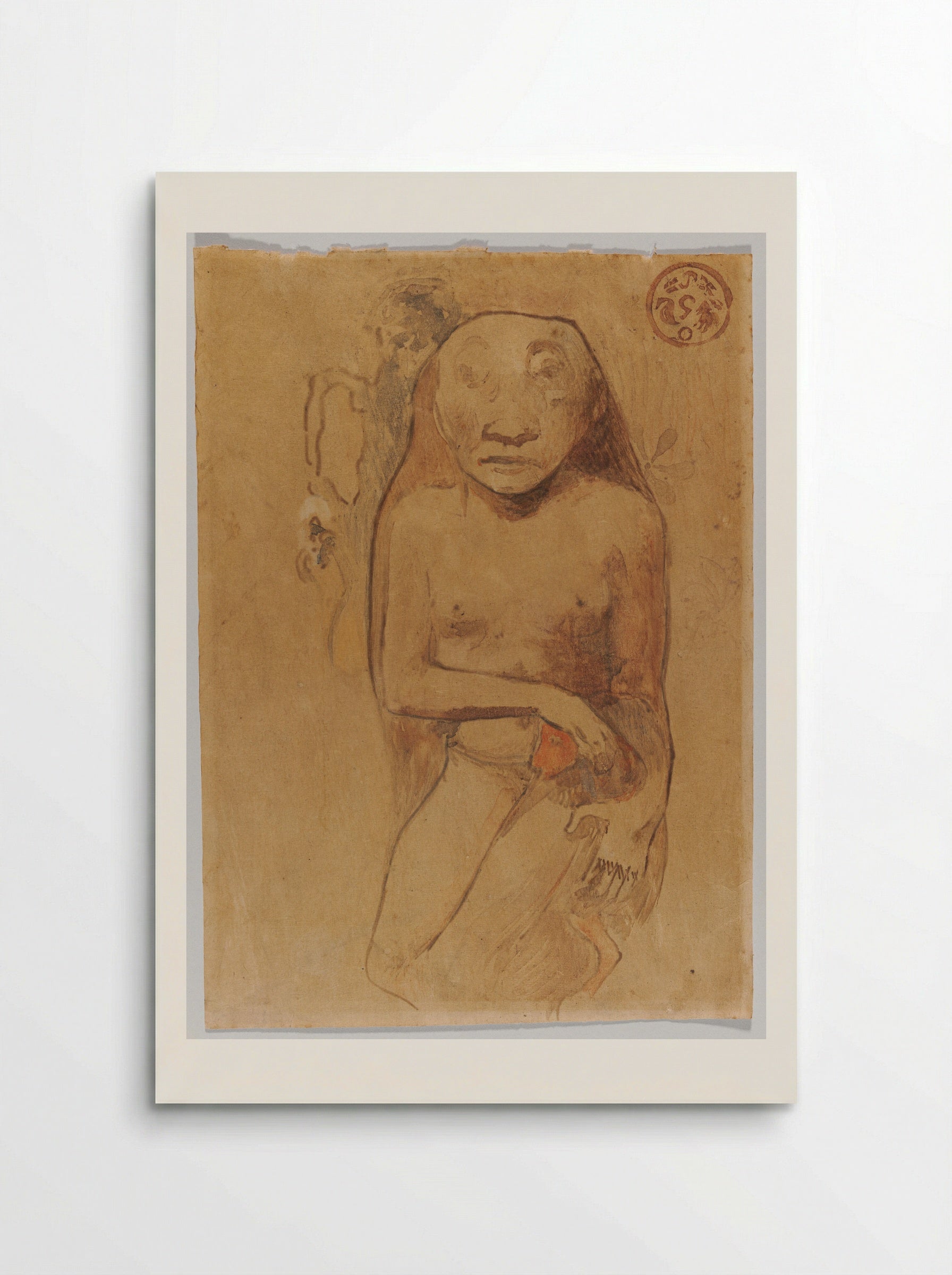
A monotype study of the Tahitian deity Oviri, capturing the raw, symbolic aesthetic characteristic of Paul Gauguin's later period.
This monotype by Paul Gauguin depicts the figure of Oviri, a Tahitian deity associated with death and mourning. The work relates to the artist's ceramic sculpture of the same name, created during his second stay in Tahiti. Gauguin often explored themes of indigenous mythology, blending these subjects with his own personal iconography. The figure is rendered with a heavy, mask-like face and a stoic expression, reflecting the artist's interest in non-Western aesthetic traditions. The composition is sparse, focusing entirely on the central figure against a neutral background. Gauguin employs a monotype technique, which allows for a unique, painterly quality in the lines and shading. The application of watercolour adds subtle tonal variations to the paper, creating a sense of depth without relying on traditional perspective. The presence of a circular stamp in the upper right corner is characteristic of the artist's later works, often used to mark his personal collection or specific editions. In this study, the figure holds a small creature, a detail that appears in the larger ceramic version. The ambiguity of the subject matter is typical of Gauguin's approach to Symbolism, where the visual elements invite interpretation rather than providing a clear narrative. The rough, textured quality of the paper surface complements the raw, primitive aesthetic that Gauguin sought to cultivate during his time in the South Pacific. By stripping away extraneous detail, the artist directs the viewer's attention to the psychological presence of the deity. This print offers a glimpse into the experimental methods Gauguin used to translate his sculptural ideas into two-dimensional media, demonstrating his technical versatility and his preoccupation with the intersection of myth and reality.
Because every print is made to order, we don't offer change-of-mind returns, refunds or exchanges. If your order arrives faulty, damaged or incorrect, we'll replace it free of charge — just contact us within 48 hours of delivery. See our refunds page for full details.
We ship worldwide, printing at the production hub nearest to your delivery address. Delivery times and costs vary by destination — you'll see the options available to you at checkout.
Each print is produced to order using 12-colour giclée printing on FSC-certified archival paper. Designed in Britain and printed at your nearest production hub to reduce waste and speed up delivery.

Artist Biography
Our Features
Designed for Lasting Impact
Every Solis piece is made to order with archival, gallery-quality materials built to last.
To keep your artwork looking its best:
Museum-grade giclée on FSC-certified archival matte paper, with framed and canvas options.
Made to order
Every piece is printed to order. These are the five finishes, and what makes each one different.
From $29
A giclée print on 200gsm matte fine art paper, using a twelve-colour process for accurate, fade-resistant colour. Supplied unframed, delivered flat or rolled.

From $89
The same fine art print in a solid wood frame with UV-protective acrylic glaze and rigid backing. Five frame colours. Arrives ready to hang.

From $169
A deeper solid wood frame: 33mm deep with a 20mm face and Perspex glaze. The print sits unmounted for a clean gallery presentation. Black, white or natural.

From $59
Hand-stretched canvas with neat gallery-wrapped edges, giving the artwork surface texture and depth. Arrives ready to hang.

From $175
Stretched canvas set in a floating wood frame, our most substantial finish. Arrives ready to hang.
Why Choose Us ?
Damage-free delivery guarantee
Fast Shipping
Museum-Quality Materials
Artist Biography
Paul Gauguin
You May Also Like
We use cookies to measure our marketing and see which prints people love.We use cookies to measure our marketing.
By continuing to browse, you agree · Privacy Policy