



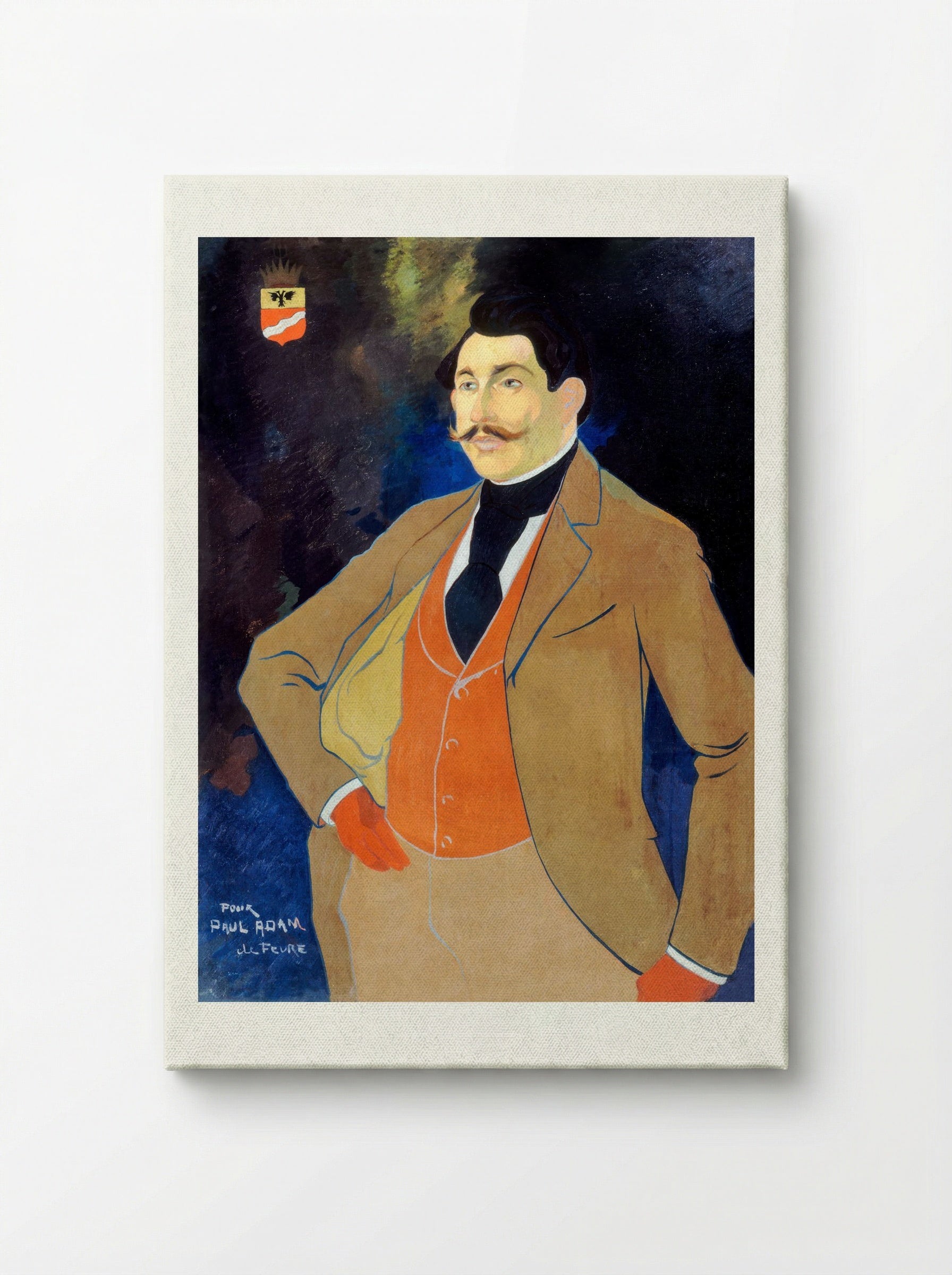
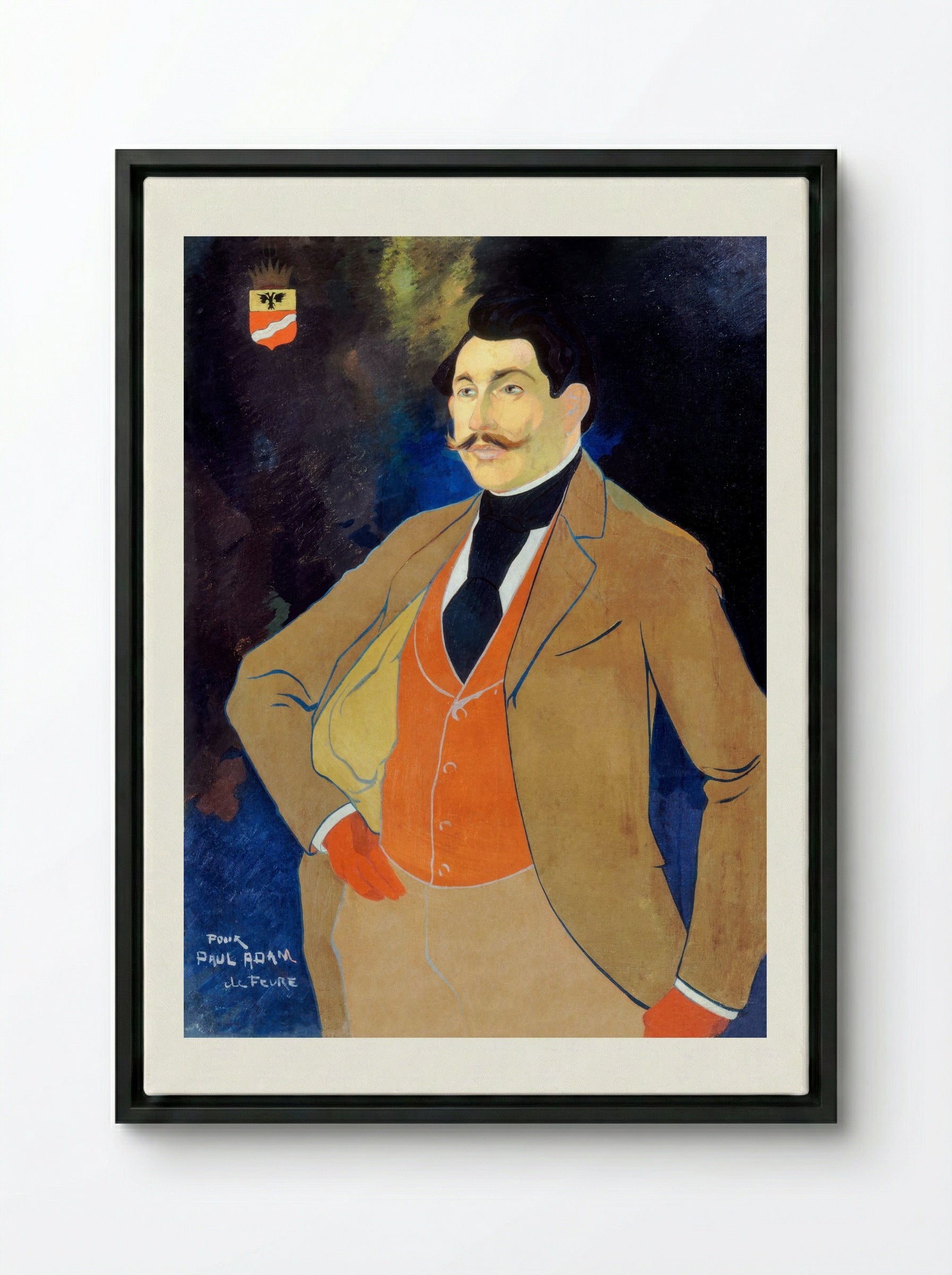

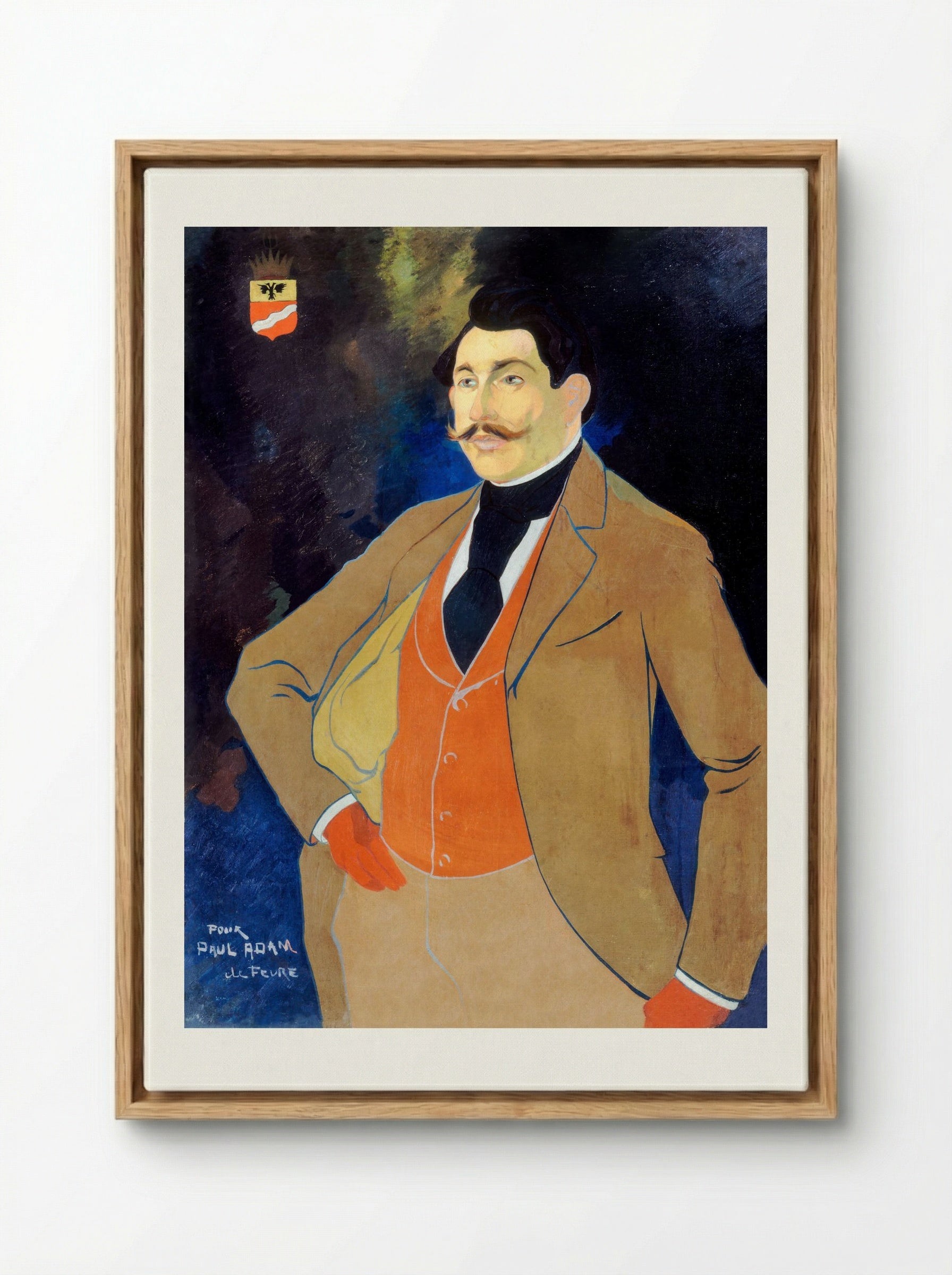

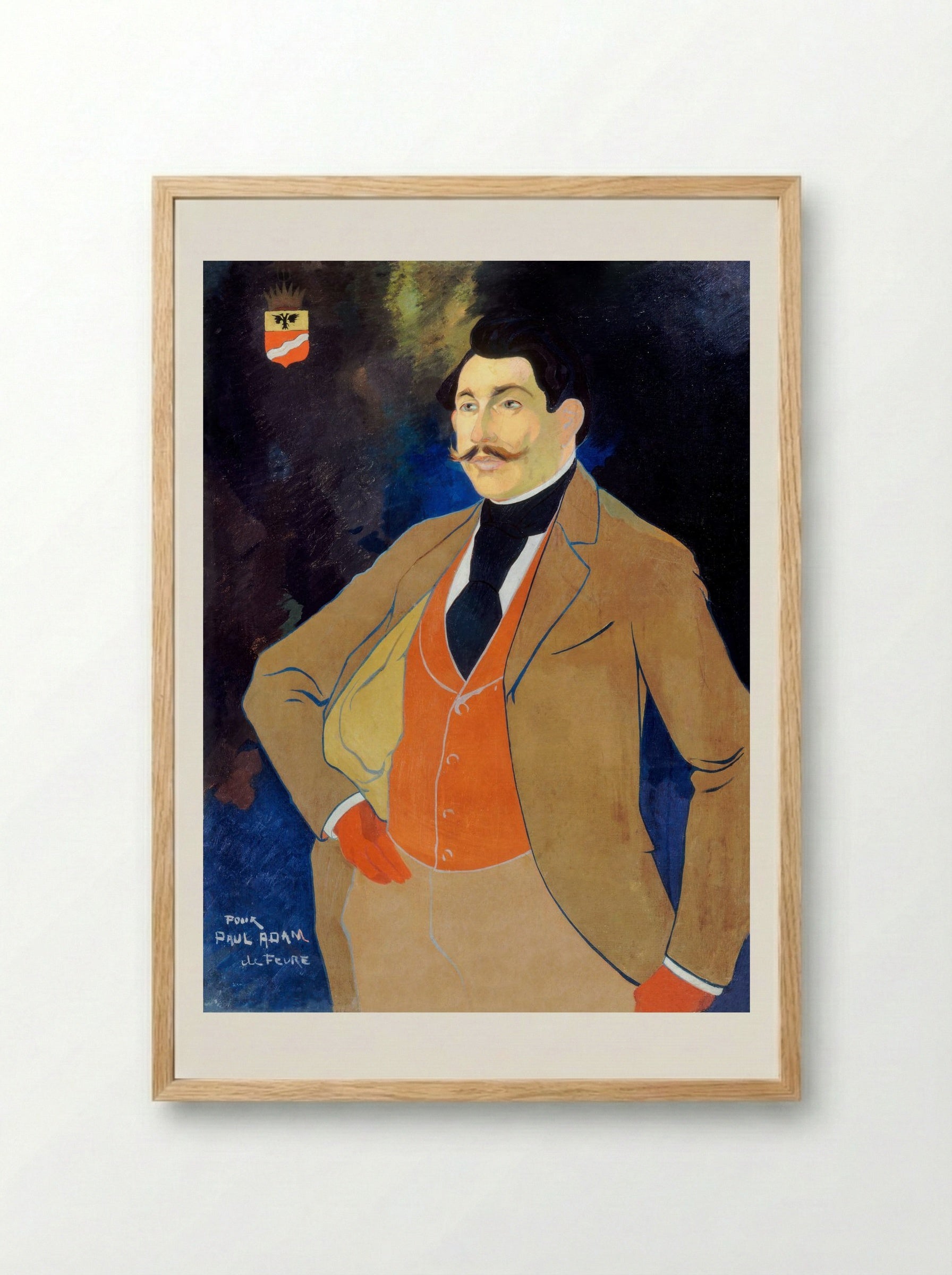
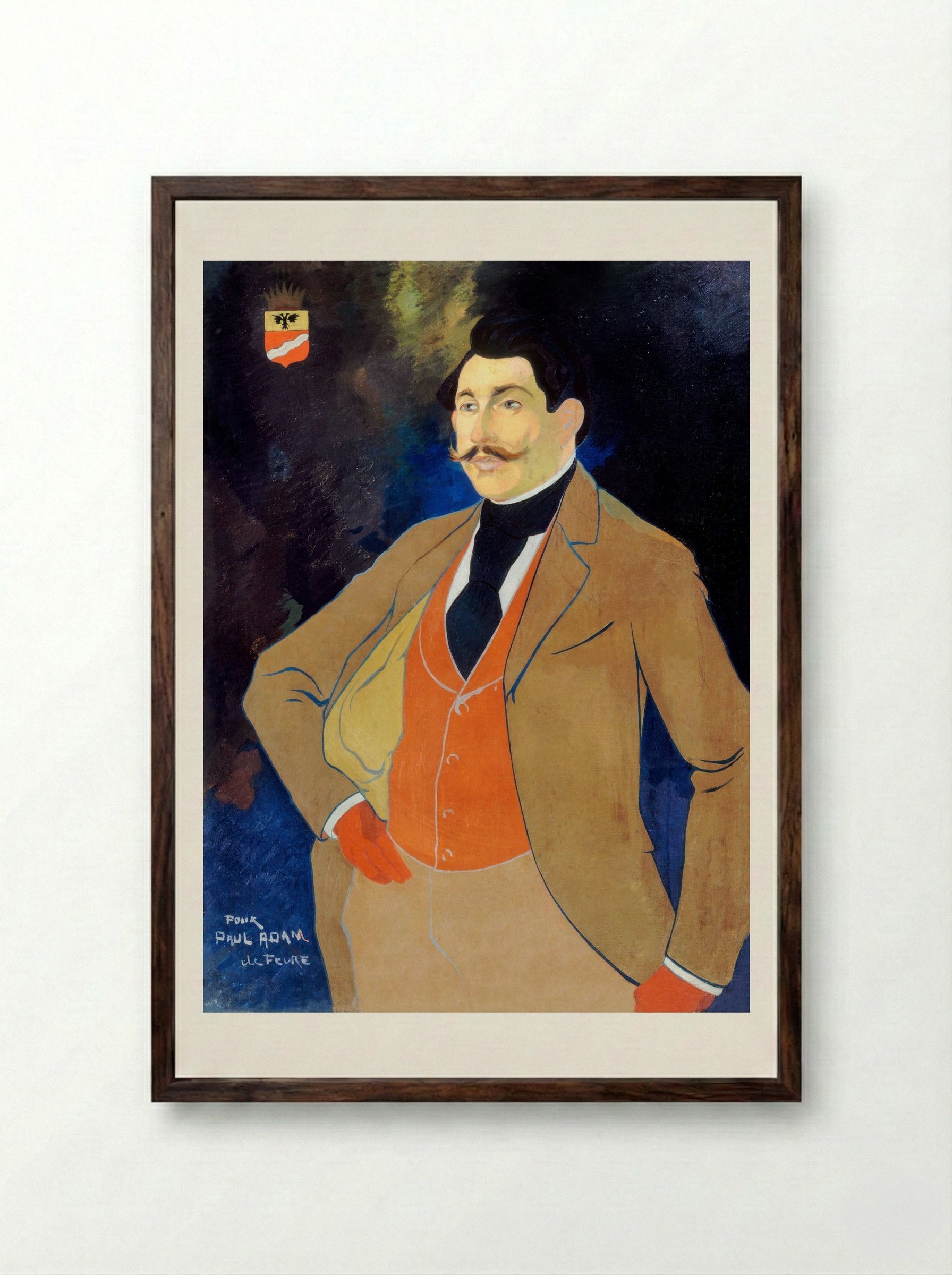
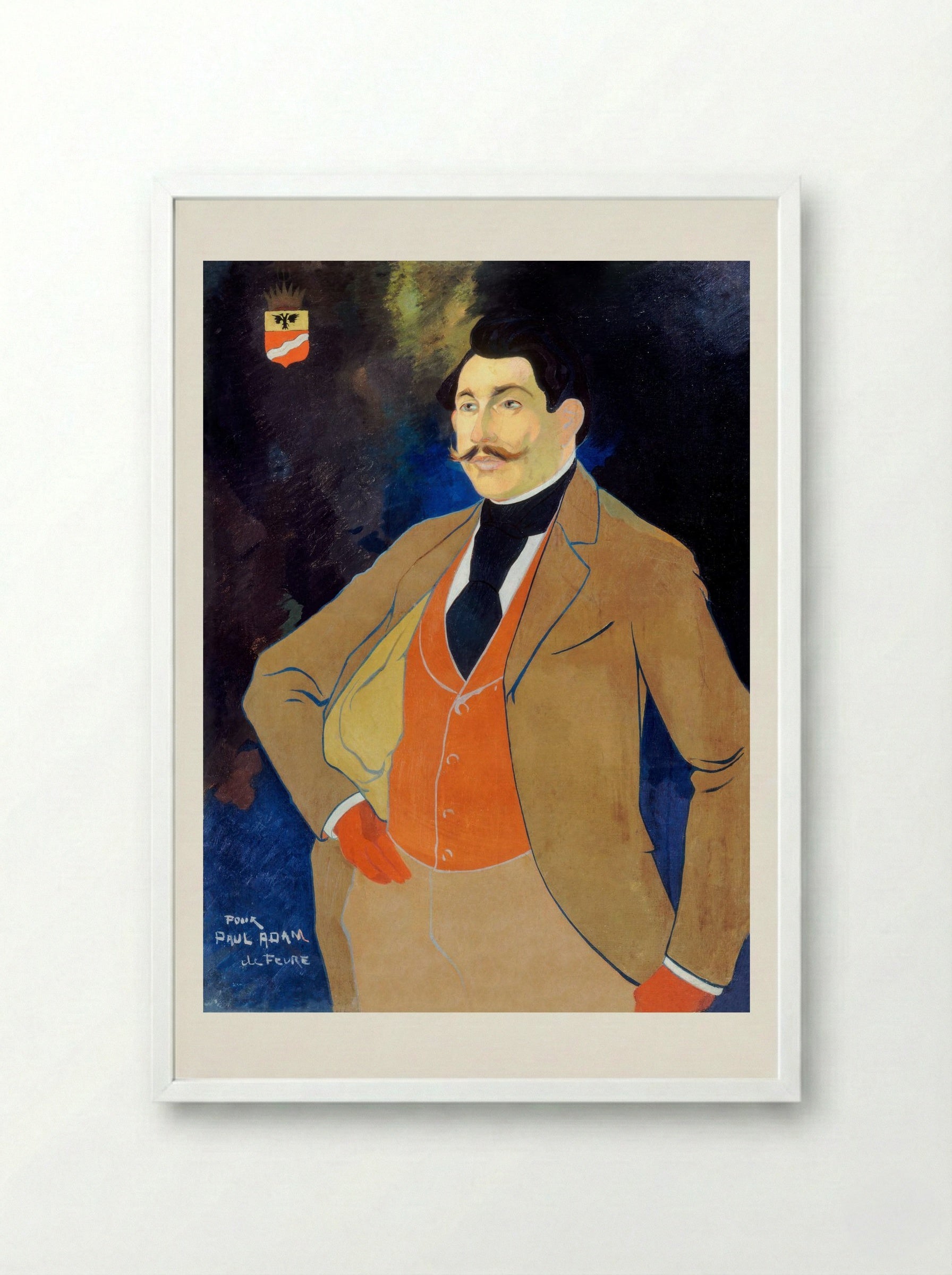
Portrait of Paul Adam - Georges de Feure
Archival giclée
Ready to hang
Secure checkout
Made to order
Description
A captivating portrait of the French writer Paul Adam by Georges de Feure, c. 1900. This Art Nouveau masterpiece brings a touch of Belle Époque elegance to any space.
This striking portrait by Georges de Feure captures the French writer Paul Adam (1862-1920) in a moment of poised confidence. Painted around 1900, the work exemplifies the Art Nouveau aesthetic with its elegant lines and subtle colour palette. Adam, known for his symbolist and decadent novels, is depicted in a stylish brown suit, bright orange waistcoat, and matching gloves, set against a dark, atmospheric background. A coat of arms is visible in the upper left corner. De Feure, a master of Art Nouveau, was celebrated for his depictions of modern life and his ability to capture the essence of his subjects. This portrait offers a glimpse into the artistic and literary circles of fin-de-siècle Paris. As a fine art print, this portrait brings a touch of Belle Époque sophistication to any interior. Its muted tones and elegant composition make it a versatile addition to a living room, study, or hallway, adding a touch of intellectual and artistic flair to your home.
Return policy
Because every print is made to order, we don't offer change-of-mind returns, refunds or exchanges. If your order arrives faulty, damaged or incorrect, we'll replace it free of charge — just contact us within 48 hours of delivery. EU customers have a 14-day cooling-off right. See our refunds page for full details.
Shipping
We ship worldwide, printing at the production hub nearest to your delivery address. Delivery times and costs vary by destination — you'll see the options available to you at checkout.
Manufacturing
Each print is produced to order using 12-colour giclée printing on FSC-certified archival paper. Designed in Britain and printed at your nearest production hub to reduce waste and speed up delivery.
Portrait of Paul Adam - Georges de Feure
Our Features
Designed for Lasting Impact
Specific Features
Every Solis piece is made to order with archival, gallery-quality materials built to last.
- Museum-grade giclée printing for rich, fade-resistant colour
- Archival matte fine-art paper, FSC-certified
- Choose poster, framed print, canvas or framed canvas
- Frames in black, natural wood, dark wood or white
- Framed prints arrive ready to hang
Care & Cleaning
To keep your artwork looking its best:
- Dust gently with a soft, dry cloth
- Avoid prolonged direct sunlight
- Never use liquid cleaners on the print or canvas surface
- Keep in a dry, room-temperature space
- Handle prints with clean, dry hands
Materials & Sizing
Museum-grade giclée on FSC-certified archival matte paper, with framed and canvas options.
- Paper sizes: A4, A3, A2, A1, A0 and B2 (50×70 cm)
- Canvas: XS (20×30 cm) to Large (60×90 cm)
- Frames: black, natural wood, dark wood or white
Why Choose Us ?
100% Satisfaction Guarantee
Fast Shipping
Museum-Quality Materials

Artist Biography
Georges de Feure
De Feure's artistic journey began in the Netherlands, but it was in Paris that he truly flourished. He became a key figure in the Parisian avant-garde, contributing regularly to journals like *Le Courrier français* and exhibiting at prestigious venues such as the Salon de la Rose + Croix. His illustrations, often featuring ethereal women in flowing gowns, captured the spirit of the age. Yet, unlike some of his peers, de Feure resisted being pigeonholed. His work often explored darker, more psychologically complex themes, hinting at the anxieties lurking beneath the surface of Belle Époque society.
While his paintings and prints are highly sought after, de Feure's legacy extends beyond the canvas. His designs for Siegfried Bing's *Maison de l'Art Nouveau* helped define the movement's aesthetic. His furniture, with its organic forms and sensual curves, exemplifies the Art Nouveau desire to bring art into everyday life. Whether it's a delicate perfume bottle or a striking poster, a Georges de Feure piece embodies the era's fascination with beauty, mystery, and the transformative power of art.
You May Also Like