

Fine Art Poster
From $29
A giclée print on 200gsm matte fine art paper, using a twelve-colour process for accurate, fade-resistant colour. Supplied unframed, delivered flat or rolled.



Archival giclée
Frames arrive ready to hang
Secure checkout
Made to order
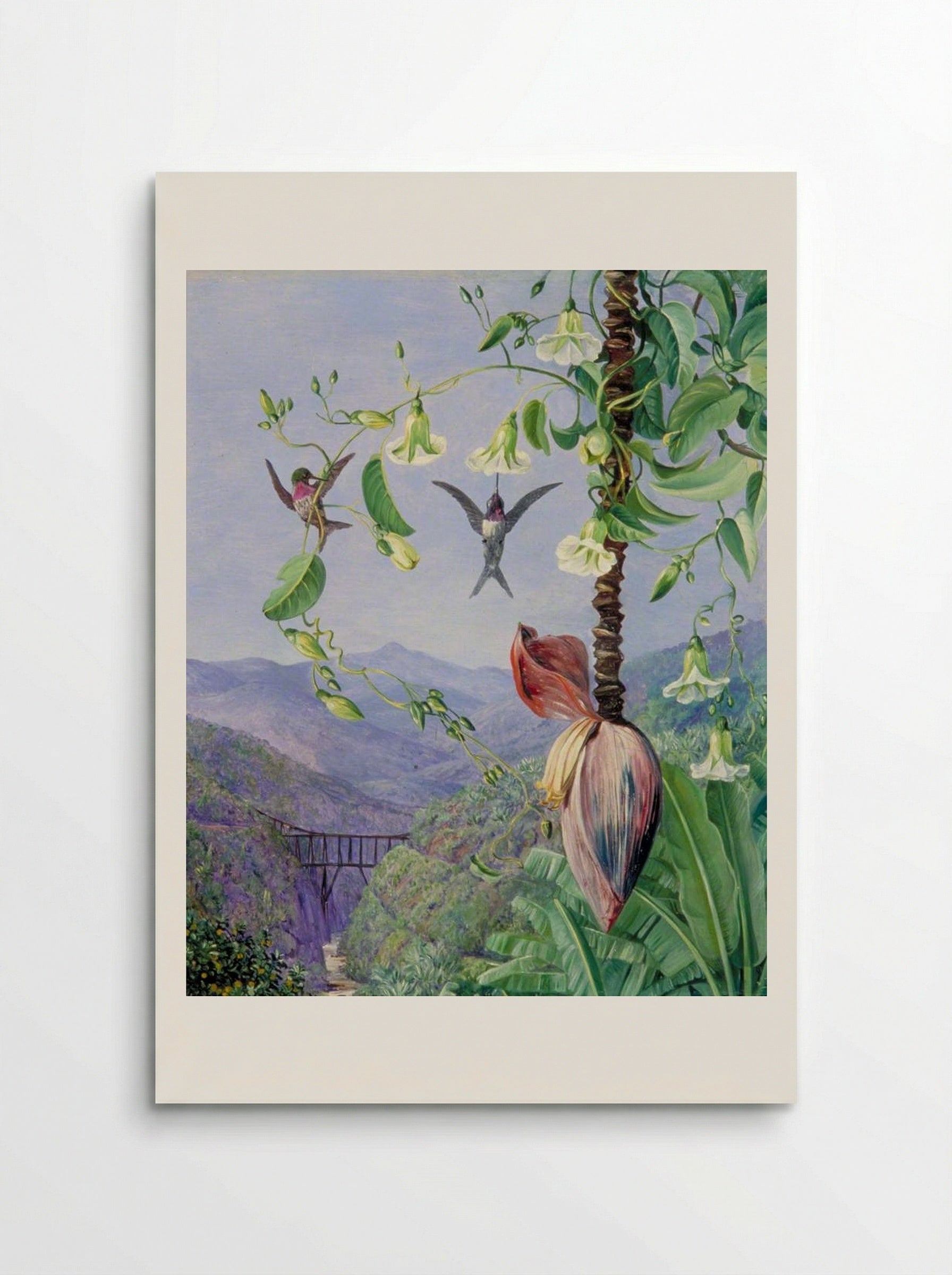
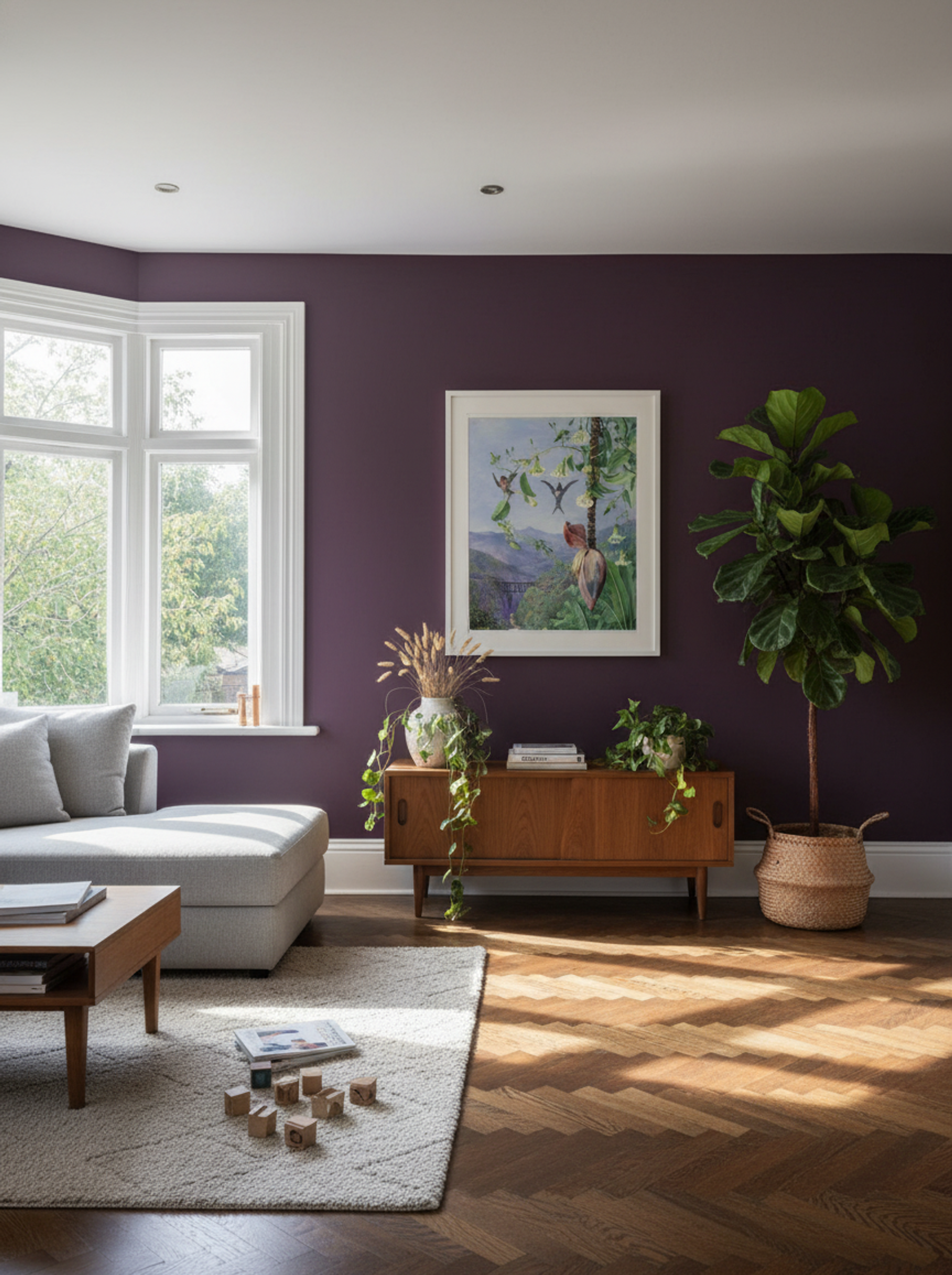
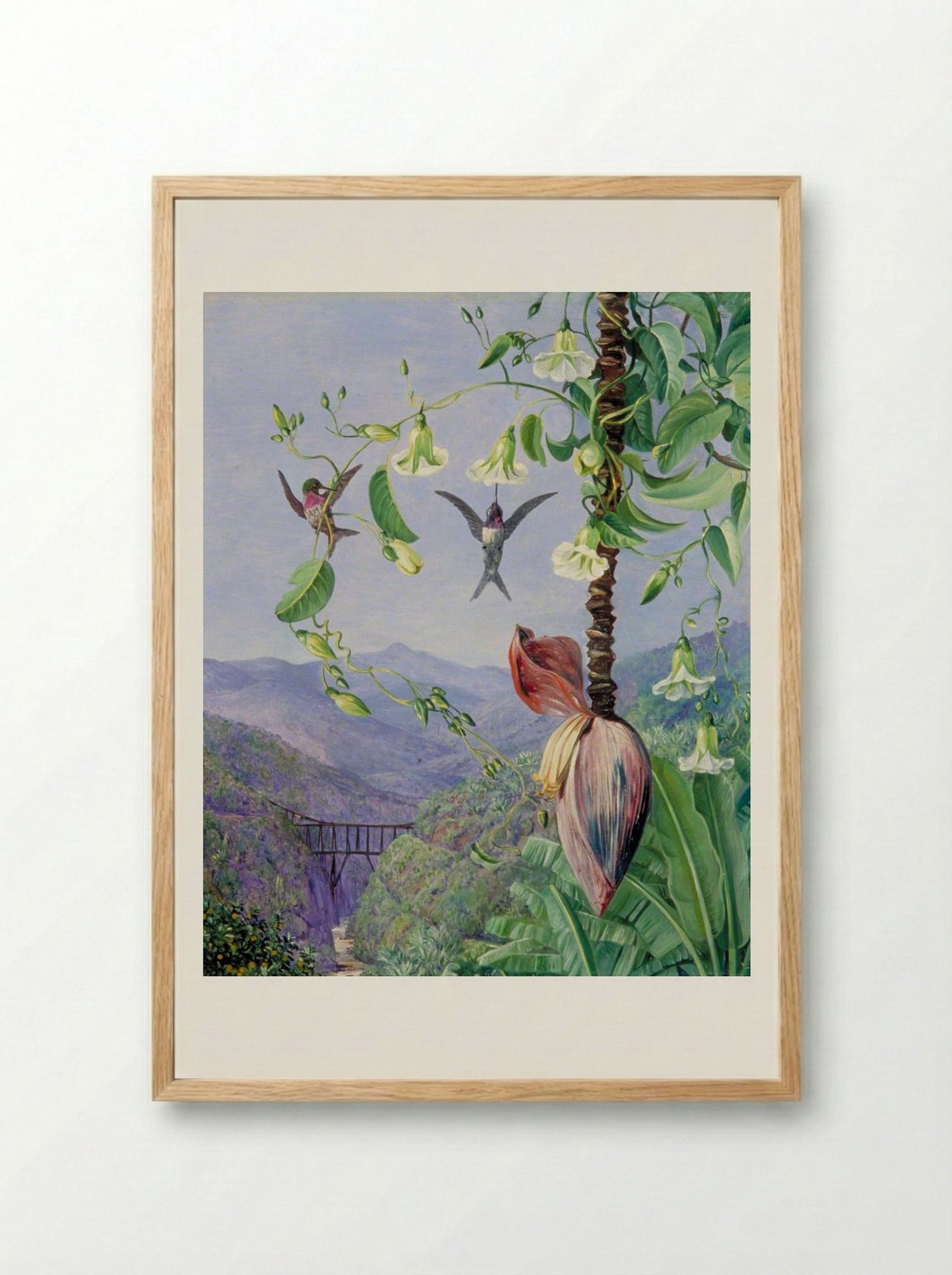
A botanical painting by Marianne North depicting the Brazilian countryside, framed by lush vegetation, hummingbirds, and a distant aqueduct. The work exemplifies North's commitment to portraying plants in their natural habitats.
Marianne North (1830-1890) was a prolific British biologist and botanical artist, notable for her extensive travels and detailed depictions of plant life from around the globe. Unlike many botanical illustrators of her time, North prioritised the accurate representation of plants within their natural environments, rather than as isolated specimens. Her dedication led her to create over 800 paintings, now housed in a dedicated gallery at the Royal Botanic Gardens, Kew. 'The Aqueduct of Morro Velho, Brazil' exemplifies North's approach. The painting presents a view of the Brazilian countryside, framed by lush vegetation and hummingbirds. A vine bearing white, bell-shaped flowers arches across the upper portion of the composition, while a large banana flower dominates the foreground. In the distance, an aqueduct spans a deep valley, providing a glimpse into the infrastructure of the region. The colour palette is dominated by greens and blues, creating a sense of depth and atmosphere. The painting is executed with fine detail, capturing the textures of the leaves and the delicate forms of the hummingbirds.
Because every print is made to order, we don't offer change-of-mind returns, refunds or exchanges. If your order arrives faulty, damaged or incorrect, we'll replace it free of charge — just contact us within 48 hours of delivery. See our refunds page for full details.
We ship worldwide, printing at the production hub nearest to your delivery address. Delivery times and costs vary by destination — you'll see the options available to you at checkout.
Each print is produced to order using 12-colour giclée printing on FSC-certified archival paper. Designed in Britain and printed at your nearest production hub to reduce waste and speed up delivery.

Artist Biography
Our Features
Designed for Lasting Impact
Every Solis piece is made to order with archival, gallery-quality materials built to last.
To keep your artwork looking its best:
Museum-grade giclée on FSC-certified archival matte paper, with framed and canvas options.
Made to order
Every piece is printed to order. These are the five finishes, and what makes each one different.
From $29
A giclée print on 200gsm matte fine art paper, using a twelve-colour process for accurate, fade-resistant colour. Supplied unframed, delivered flat or rolled.

From $89
The same fine art print in a solid wood frame with UV-protective acrylic glaze and rigid backing. Five frame colours. Arrives ready to hang.
Why Choose Us ?
Damage-free delivery guarantee
Fast Shipping
Museum-Quality Materials
Artist Biography
Marianne North
You May Also Like
We use cookies to measure our marketing and see which prints people love.We use cookies to measure our marketing.
By continuing to browse, you agree · Privacy Policy