

Fine Art Poster
From $29
A giclée print on 200gsm matte fine art paper, using a twelve-colour process for accurate, fade-resistant colour. Supplied unframed, delivered flat or rolled.



Archival giclée
Frames arrive ready to hang
Secure checkout
Made to order
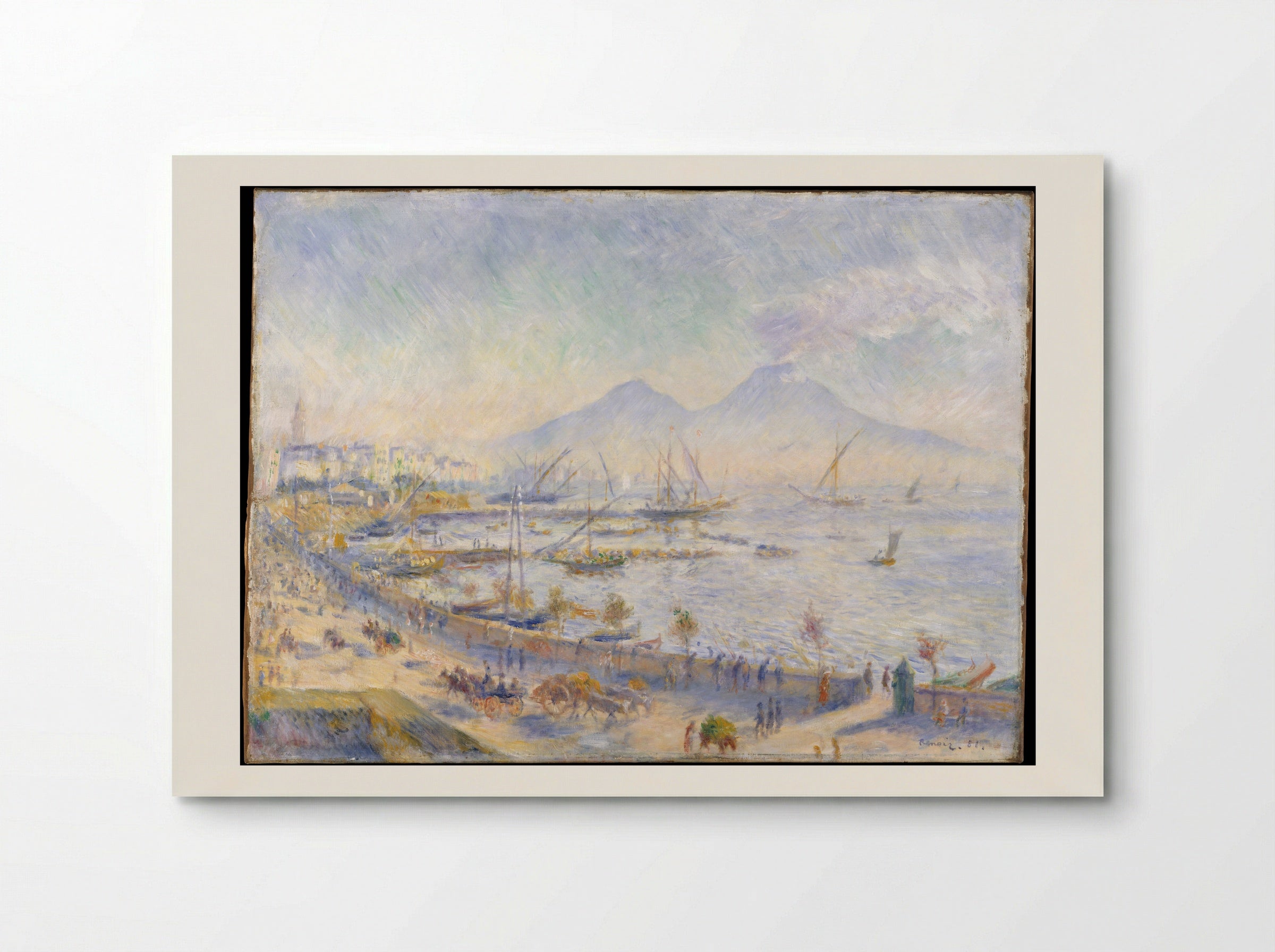
A light-filled Impressionist study of the Italian coast, capturing the hazy atmosphere of the Bay of Naples in 1881.
Painted in 1881 during his travels through Italy, this work captures the atmospheric conditions of the Bay of Naples. Renoir employs a light, airy palette to depict the Mediterranean coastline, focusing on the interplay between the soft sky and the shimmering water. The composition is anchored by the distant, hazy silhouette of Mount Vesuvius, which looms over the harbour. In the foreground, the artist renders the bustling activity of the quay with quick, gestural brushstrokes. Figures move along the promenade, and small boats are moored near the stone wall. Renoir prioritises the sensation of light and movement over precise architectural detail. The application of paint is thin and fluid, allowing the canvas texture to contribute to the overall effect of the scene. This approach reflects his interest in capturing the fleeting qualities of the Italian sun and the humid atmosphere of the coast. Unlike his earlier, more structured compositions, this piece demonstrates a shift towards a looser technique. The colours are largely pastel, with soft blues, pale yellows, and muted ochres dominating the canvas. The lack of heavy outlines creates a sense of depth that draws the eye from the immediate activity of the shore towards the expansive horizon. By focusing on the transient nature of the light, Renoir provides a personal interpretation of the Italian geography, moving away from traditional topographical representation to favour a more subjective, sensory experience of the location.
Because every print is made to order, we don't offer change-of-mind returns, refunds or exchanges. If your order arrives faulty, damaged or incorrect, we'll replace it free of charge — just contact us within 48 hours of delivery. See our refunds page for full details.
We ship worldwide, printing at the production hub nearest to your delivery address. Delivery times and costs vary by destination — you'll see the options available to you at checkout.
Each print is produced to order using 12-colour giclée printing on FSC-certified archival paper. Designed in Britain and printed at your nearest production hub to reduce waste and speed up delivery.

Artist Biography
Our Features
Designed for Lasting Impact
Every Solis piece is made to order with archival, gallery-quality materials built to last.
To keep your artwork looking its best:
Museum-grade giclée on FSC-certified archival matte paper, with framed and canvas options.
Made to order
Every piece is printed to order. These are the five finishes, and what makes each one different.
From $29
A giclée print on 200gsm matte fine art paper, using a twelve-colour process for accurate, fade-resistant colour. Supplied unframed, delivered flat or rolled.

From $89
The same fine art print in a solid wood frame with UV-protective acrylic glaze and rigid backing. Five frame colours. Arrives ready to hang.

From $169
A deeper solid wood frame: 33mm deep with a 20mm face and Perspex glaze. The print sits unmounted for a clean gallery presentation. Black, white or natural.

From $59
Hand-stretched canvas with neat gallery-wrapped edges, giving the artwork surface texture and depth. Arrives ready to hang.

From $175
Stretched canvas set in a floating wood frame, our most substantial finish. Arrives ready to hang.
Why Choose Us ?
Damage-free delivery guarantee
Fast Shipping
Museum-Quality Materials
Artist Biography
Pierre-Auguste Renoir
You May Also Like
We use cookies to measure our marketing and see which prints people love.We use cookies to measure our marketing.
By continuing to browse, you agree · Privacy Policy