

Fine Art Poster
From $29
A giclée print on 200gsm matte fine art paper, using a twelve-colour process for accurate, fade-resistant colour. Supplied unframed, delivered flat or rolled.




Archival giclée
Frames arrive ready to hang
Secure checkout
Made to order
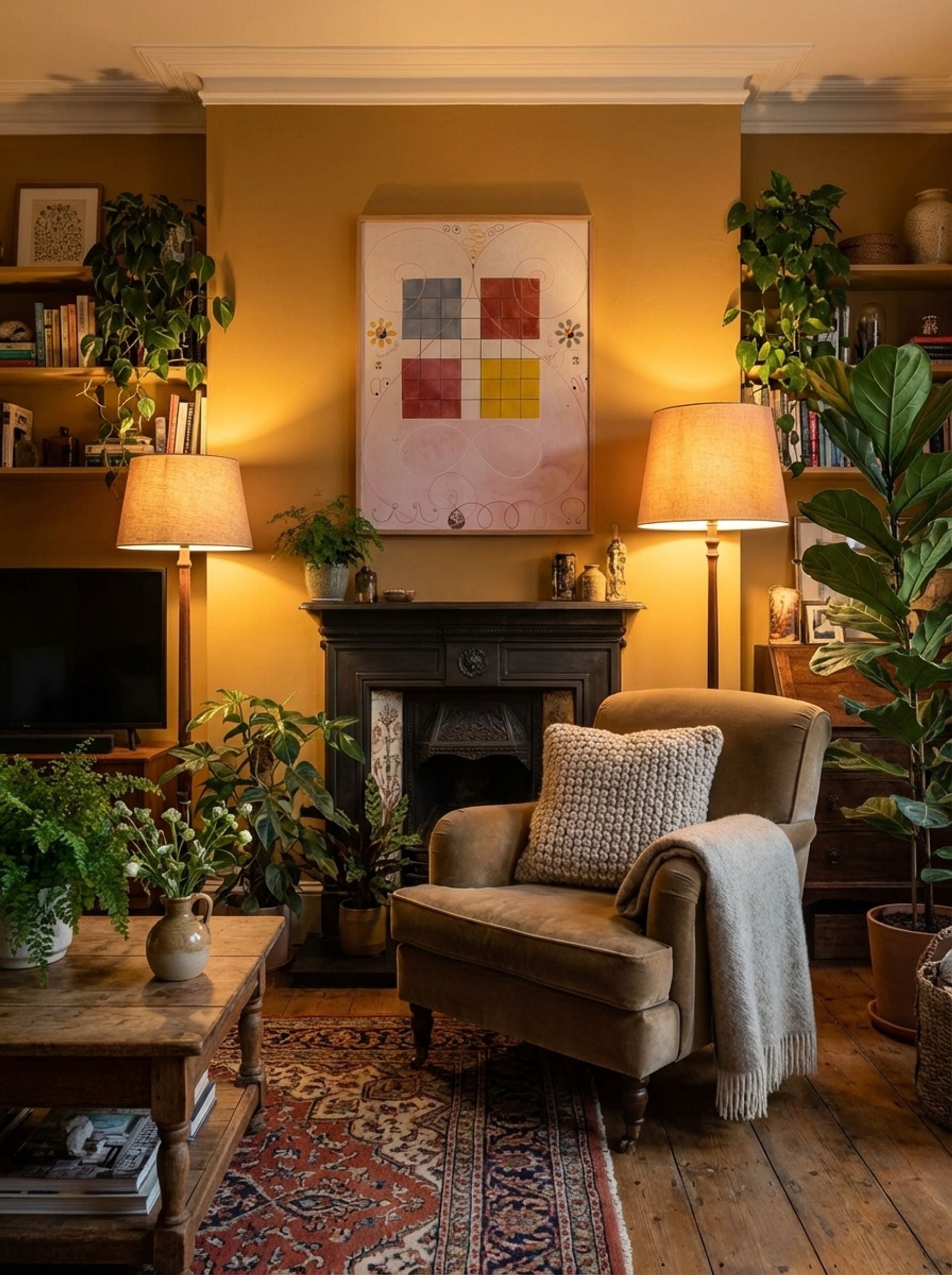
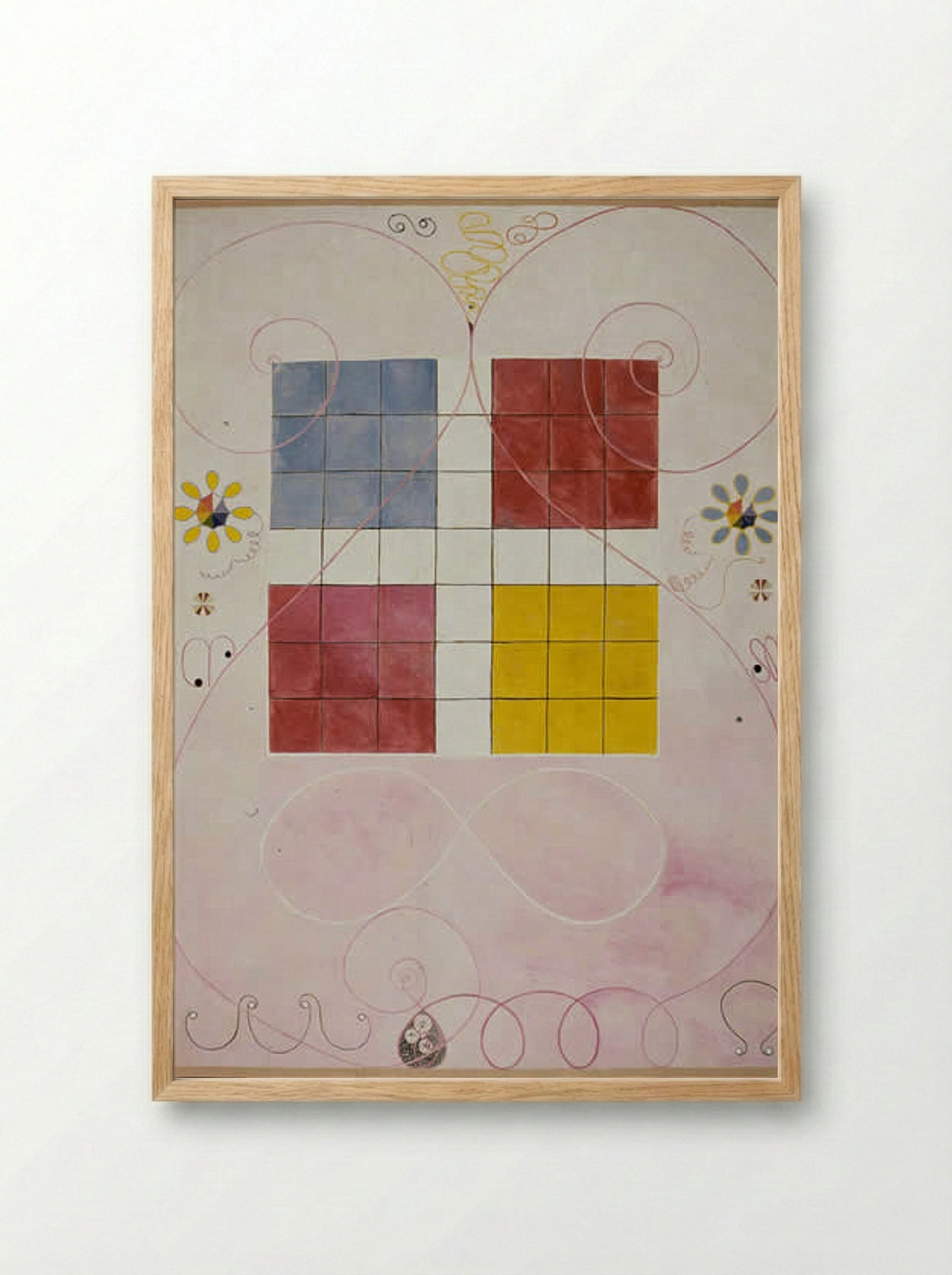
'The Ten Largest, No. 10, Old Age' by Hilma af Klint is an abstract composition featuring coloured squares and swirling lines, reflecting the artist's interest in spiritual and symbolic themes.
Hilma af Klint (1862-1944) was a Swedish artist and mystic whose paintings are considered among the first abstract works in Western art history. She created a visual language of geometric shapes and symbolic forms, aiming to represent spiritual dimensions of reality. Her work remained largely unseen until decades after her death. 'The Ten Largest' is a series of paintings created between 1907. They are large-scale works intended to depict different stages of life. 'No. 10, Old Age' features a grid of coloured squares, predominantly in shades of blue, red, and yellow, set against a pale pink background. The composition includes swirling lines and floral motifs, adding a decorative element to the geometric structure. The colours are muted, creating a sense of calm and contemplation. The work combines geometric abstraction with symbolic imagery, reflecting af Klint's interest in spiritual and esoteric ideas.
Because every print is made to order, we don't offer change-of-mind returns, refunds or exchanges. If your order arrives faulty, damaged or incorrect, we'll replace it free of charge — just contact us within 48 hours of delivery. See our refunds page for full details.
We ship worldwide, printing at the production hub nearest to your delivery address. Delivery times and costs vary by destination — you'll see the options available to you at checkout.
Each print is produced to order using 12-colour giclée printing on FSC-certified archival paper. Designed in Britain and printed at your nearest production hub to reduce waste and speed up delivery.
Specific Features
Every Solis piece is made to order with archival, gallery-quality materials built to last.
Care & Cleaning
To keep your artwork looking its best:
Materials & Sizing
Museum-grade giclée on FSC-certified archival matte paper, with framed and canvas options.

Artist Biography
Made to order
Every piece is printed to order. These are the five finishes, and what makes each one different.
From $29
A giclée print on 200gsm matte fine art paper, using a twelve-colour process for accurate, fade-resistant colour. Supplied unframed, delivered flat or rolled.

From $89
The same fine art print in a solid wood frame with UV-protective acrylic glaze and rigid backing. Five frame colours. Arrives ready to hang.
Why Choose Us ?
Damage-free delivery guarantee
Fast Shipping
Museum-Quality Materials
You May Also Like
We use cookies to measure our marketing and see which prints people love.We use cookies to measure our marketing.
By continuing to browse, you agree · Privacy Policy