

Fine Art Poster
From $29
A giclée print on 200gsm matte fine art paper, using a twelve-colour process for accurate, fade-resistant colour. Supplied unframed, delivered flat or rolled.



Archival giclée
Frames arrive ready to hang
Secure checkout
Made to order
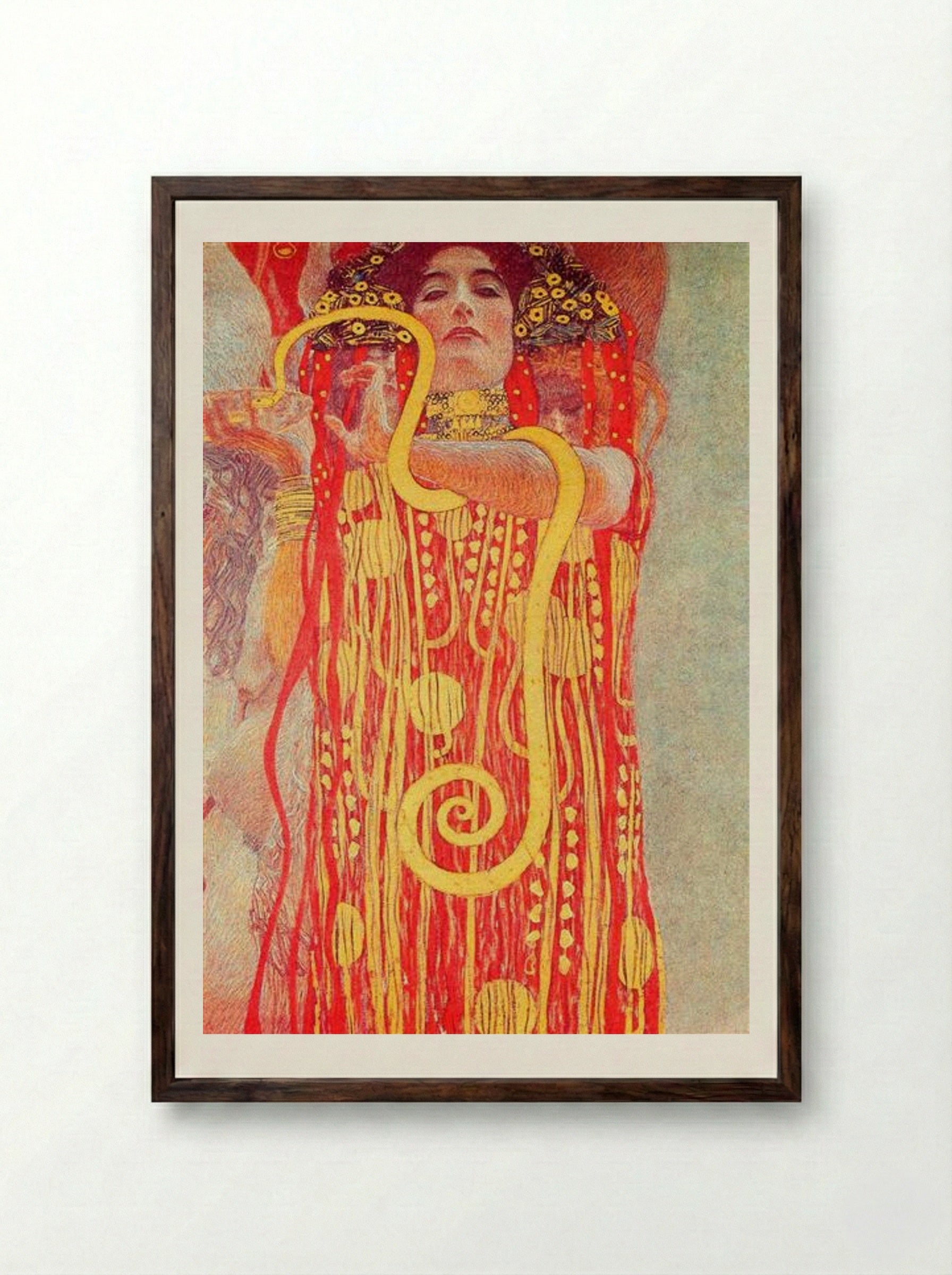
A detail from Gustav Klimt's controversial "Medicine" ceiling painting for the University of Vienna, depicting Hygieia, the Greek goddess of health, in a stylised Art Nouveau manner. The original painting was destroyed in 1945; this image is derived from surviving photographs.
This is a detail from Gustav Klimt's "Medicine", one of three paintings commissioned for the ceiling of the University of Vienna's Great Hall. The commission became a source of controversy due to its pessimistic symbolism and departure from traditional allegorical representations of academic disciplines. Klimt's interpretation of medicine presents a stream of suffering humanity, with Hygieia, the Greek goddess of health, as a detached observer. The complete work was eventually rejected by the university faculty. All three ceiling paintings were destroyed in 1945 during World War II. Only preparatory sketches and photographs remain. The detail focuses on Hygieia, depicted with pale skin and red hair. She is adorned with gold jewellery and a patterned headdress. A golden serpent, symbolising medicine, coils around her arm and body. Her red and gold robe features stylised patterns and vertical lines. The background is a muted grey-green, providing a subtle contrast to the warm tones of the figure.
Because every print is made to order, we don't offer change-of-mind returns, refunds or exchanges. If your order arrives faulty, damaged or incorrect, we'll replace it free of charge — just contact us within 48 hours of delivery. See our refunds page for full details.
We ship worldwide, printing at the production hub nearest to your delivery address. Delivery times and costs vary by destination — you'll see the options available to you at checkout.
Each print is produced to order using 12-colour giclée printing on FSC-certified archival paper. Designed in Britain and printed at your nearest production hub to reduce waste and speed up delivery.
Specific Features
Every Solis piece is made to order with archival, gallery-quality materials built to last.
Care & Cleaning
To keep your artwork looking its best:
Materials & Sizing
Museum-grade giclée on FSC-certified archival matte paper, with framed and canvas options.

Artist Biography
Made to order
Every piece is printed to order. These are the five finishes, and what makes each one different.
From $29
A giclée print on 200gsm matte fine art paper, using a twelve-colour process for accurate, fade-resistant colour. Supplied unframed, delivered flat or rolled.

From $89
The same fine art print in a solid wood frame with UV-protective acrylic glaze and rigid backing. Five frame colours. Arrives ready to hang.
Why Choose Us ?
Damage-free delivery guarantee
Fast Shipping
Museum-Quality Materials
You May Also Like
We use cookies to measure our marketing and see which prints people love.We use cookies to measure our marketing.
By continuing to browse, you agree · Privacy Policy