

Fine Art Poster
From $29
A giclée print on 200gsm matte fine art paper, using a twelve-colour process for accurate, fade-resistant colour. Supplied unframed, delivered flat or rolled.




Archival giclée
Frames arrive ready to hang
Secure checkout
Made to order
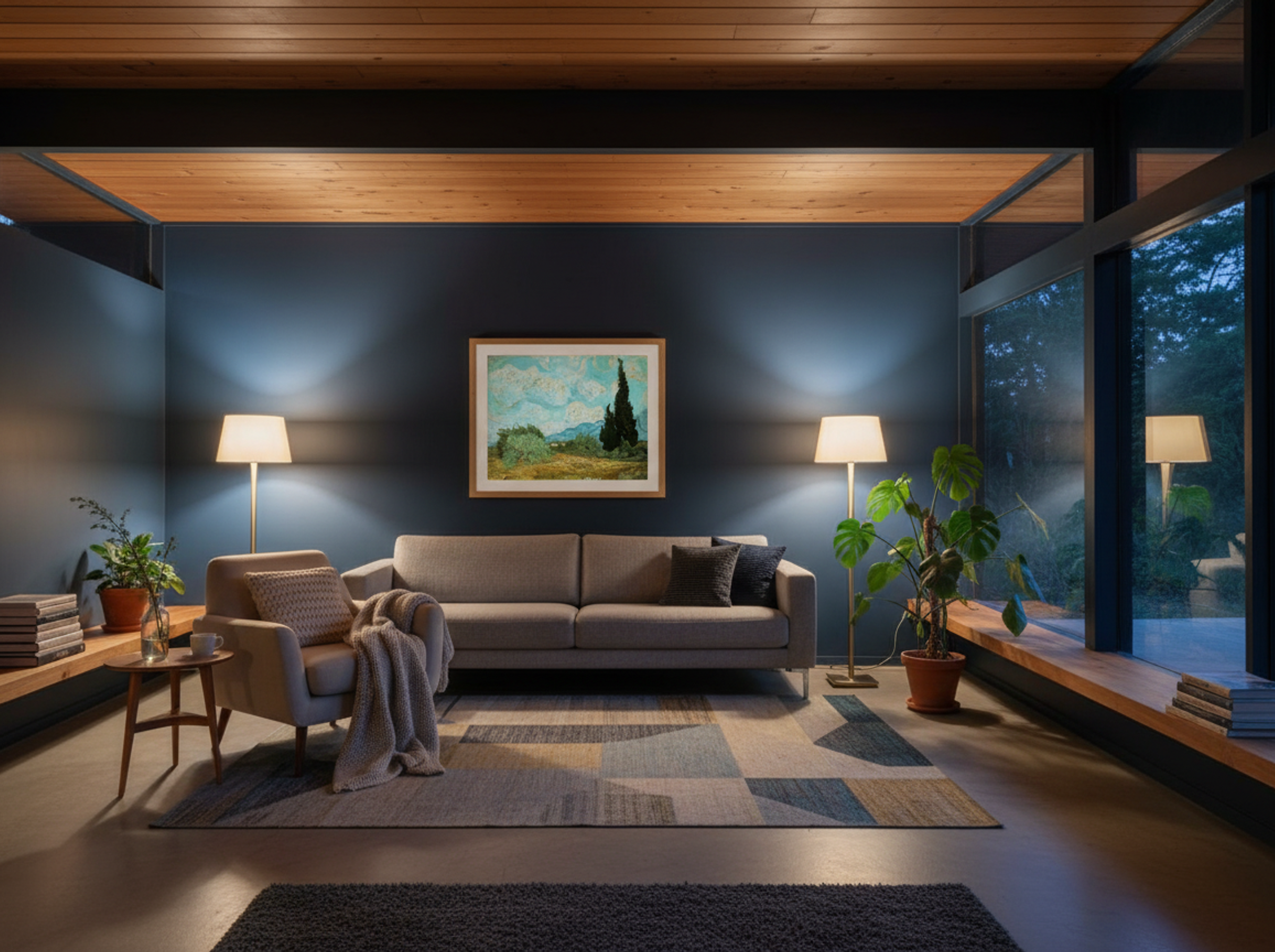
Vincent van Gogh's "Wheat Field with Cypresses", painted in 1889, captures the artist's emotional response to the Provençal countryside. The painting features bold brushwork and contrasting colours, depicting a wheat field, cypresses, and a swirling sky.
Painted in 1889 during Vincent van Gogh's stay at the Saint-Paul-de-Mausole asylum in Saint-Rémy, France, "Wheat Field with Cypresses" is one of three versions of this composition. Van Gogh was captivated by the form of the cypress tree, seeing it as a symbol of both life and death. He wrote of his desire to paint them as he saw them in the Provençal countryside, against the intense blue sky. The painting depicts a golden wheat field under a bright, swirling sky. The dark, flame-like forms of the cypresses rise dramatically from the right side of the canvas, contrasting with the undulating field and the rolling clouds. The brushwork is characteristically thick and textured, with short, expressive strokes of paint that capture the movement of the wind and the intensity of the light. The colours are bold and contrasting, with the yellows and greens of the field set against the blues and whites of the sky. In the distance, the Alpilles mountains are visible, rendered in cool blues and purples. The overall effect is one of dynamic energy and emotional intensity, reflecting Van Gogh's own turbulent state of mind.
Because every print is made to order, we don't offer change-of-mind returns, refunds or exchanges. If your order arrives faulty, damaged or incorrect, we'll replace it free of charge — just contact us within 48 hours of delivery. See our refunds page for full details.
We ship worldwide, printing at the production hub nearest to your delivery address. Delivery times and costs vary by destination — you'll see the options available to you at checkout.
Each print is produced to order using 12-colour giclée printing on FSC-certified archival paper. Designed in Britain and printed at your nearest production hub to reduce waste and speed up delivery.

Artist Biography
Our Features
Designed for Lasting Impact
Every Solis piece is made to order with archival, gallery-quality materials built to last.
To keep your artwork looking its best:
Museum-grade giclée on FSC-certified archival matte paper, with framed and canvas options.
Made to order
Every piece is printed to order. These are the five finishes, and what makes each one different.
From $29
A giclée print on 200gsm matte fine art paper, using a twelve-colour process for accurate, fade-resistant colour. Supplied unframed, delivered flat or rolled.

From $89
The same fine art print in a solid wood frame with UV-protective acrylic glaze and rigid backing. Five frame colours. Arrives ready to hang.
Why Choose Us ?
Damage-free delivery guarantee
Fast Shipping
Museum-Quality Materials
Artist Biography
Vincent van Gogh
You May Also Like
We use cookies to measure our marketing and see which prints people love.We use cookies to measure our marketing.
By continuing to browse, you agree · Privacy Policy