


The Atlas Collection
Travel posters
For places worth remembering. Modern prints inspired by favourite coastlines, towns and landmarks.
New destinations added regularly
Posters from the places you love






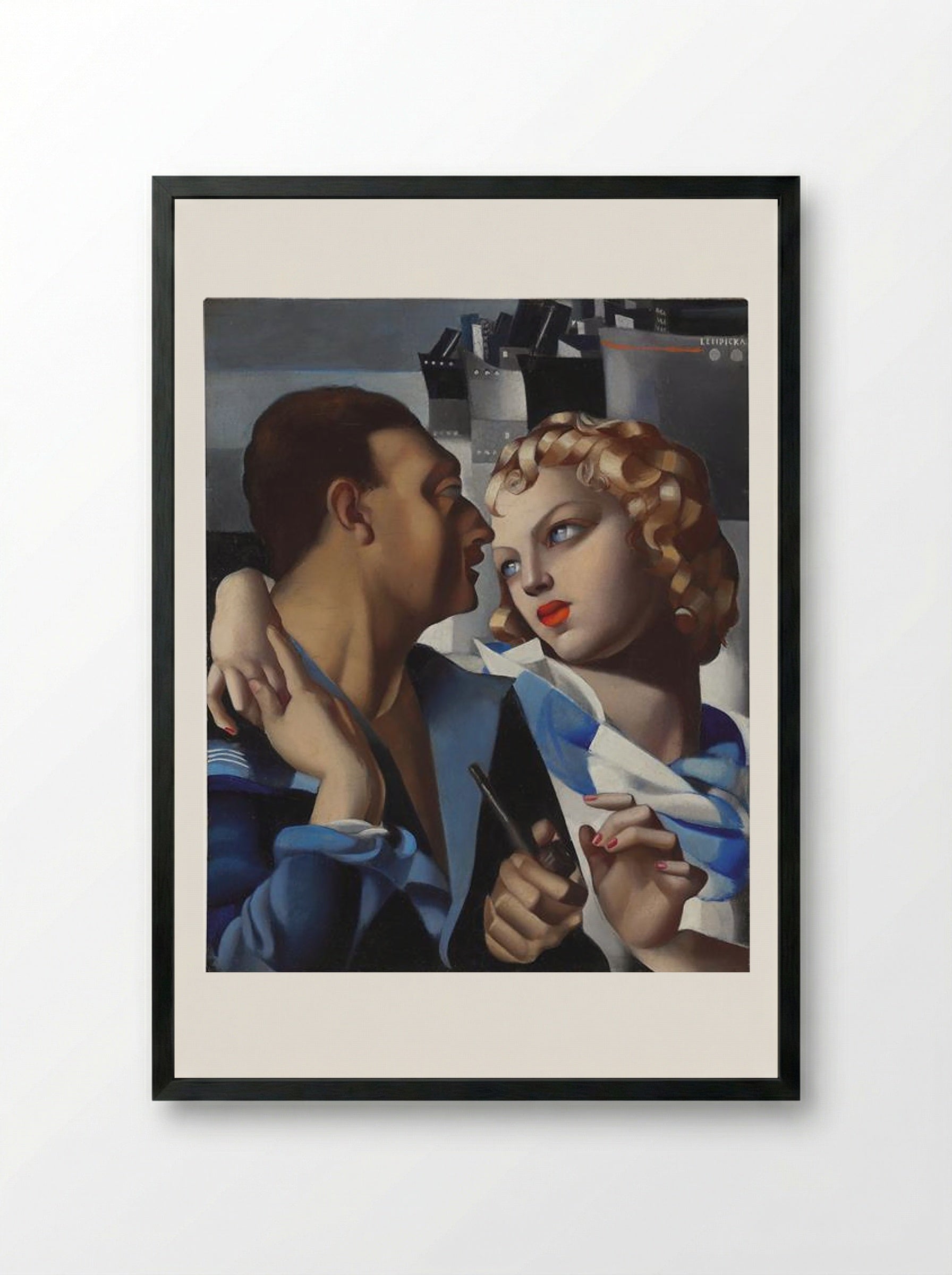


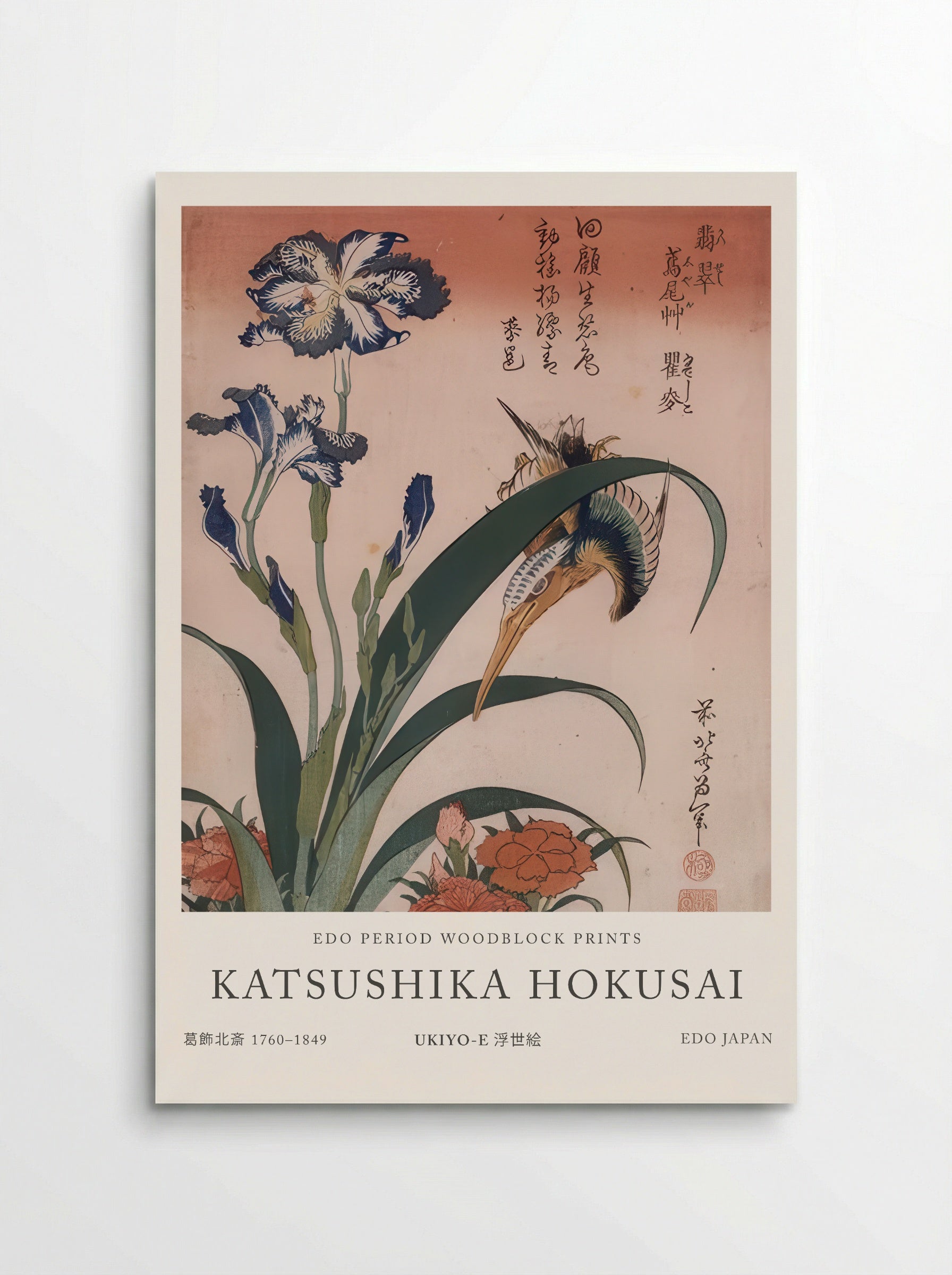


Over 320 curated artists
Browse all artists


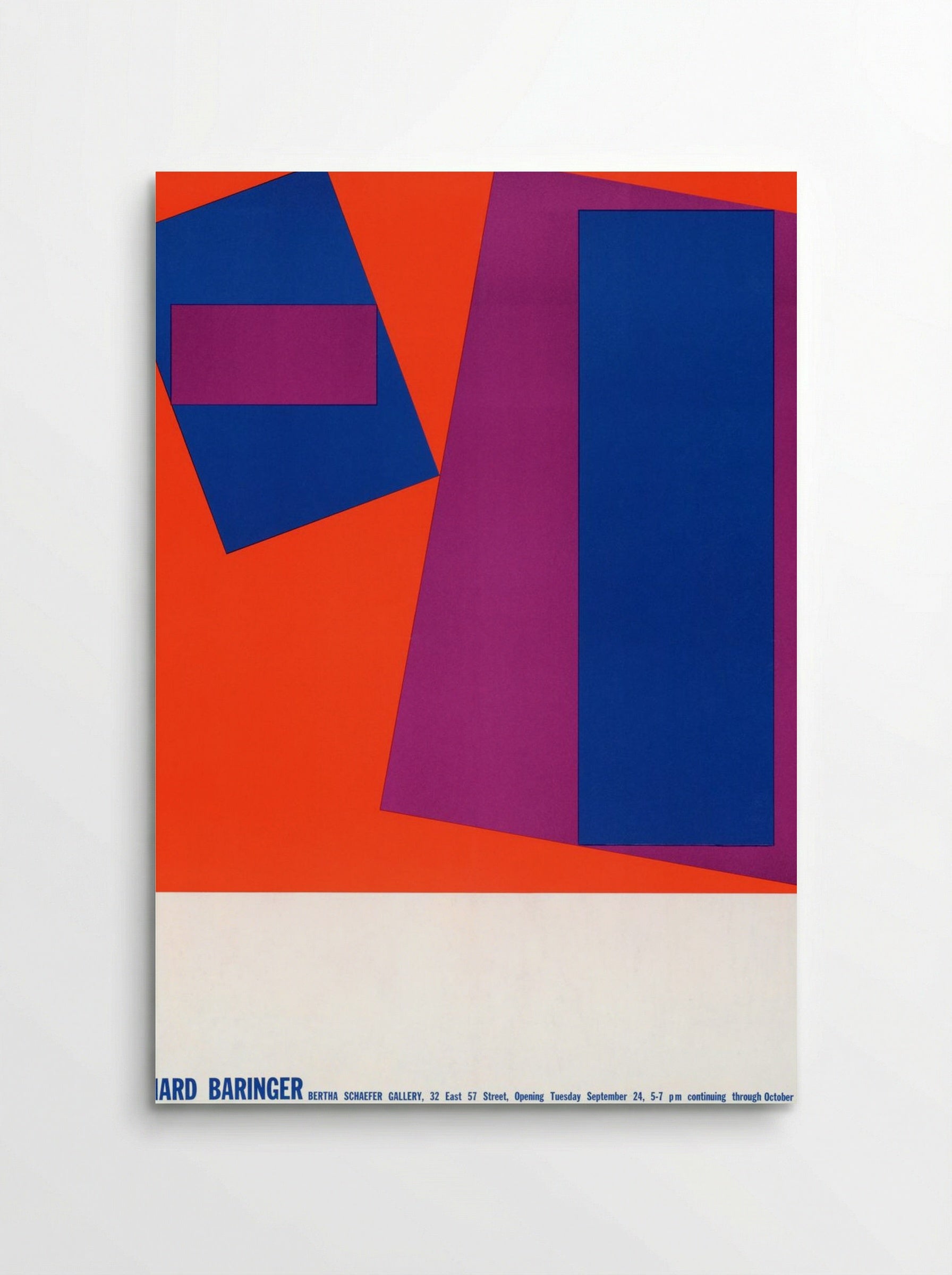


Curated by Artists
Museum Quality Prints
Crafted to Last
Designed for Interiors
Style It Your Way
Popular prints available framed or on canvas


Timeless Art For Beautifully Designed Homes
Why Choose Us ?
What customers say
Over 5000
Happy Art Lovers


From Our Journal


Kuniyoshi Drew Kabuki Actors as Cats to Dodge the 1842 Ban
In 1842 the shogunate's senior councillor, Mizuno Tadakuni, banned the publication of woodblock prints showing kabuki actors, courtesans and geisha. It was one clause in a wider programme of moral austerity known as the Tenpō Reforms, and on paper it ended a whole category of print overnight. Utagawa Kuniyoshi, already Edo's most inventive designer of warriors and monsters, simply moved the actors somewhere the law could not reach. He drew them as cats grooming themselves in a leading man's exact stage pose, as goldfish with a familiar crest stamped on the fin, as toys and paper fans carrying a face any kabuki-goer would know at a glance. He pushed the joke further once, and it nearly cost him. The Earth Spider Conjures Up Demons at the Mansion of Minamoto Yorimitsu, a triptych from the following year, shows a warrior asleep and ill while demons close in around him; Edo read it at once as a portrait of a sick government surrounded by the people it had ruined. The magistrates called Kuniyoshi and his publisher in to account for it. Both talked their way out of a formal charge, though the printing blocks were confiscated. A silk dyer's son learns from Toyokuni Kuniyoshi was born in Edo in the last days of 1797 by the Japanese calendar, which places his birthday on 1 January 1798 in the Western one. His father dyed silk for a living. As a boy he is said to have shown the print master Utagawa Toyokuni a drawing of Shōki, the demon-queller of Chinese legend, and impressed him enough to be taken on as a pupil around 1811. Training in Toyokuni's studio meant the standard Utagawa curriculum: actor portraits and pictures of beautiful women, the two genres that sold. Kuniyoshi took the art name by which he is known and set up on his own around 1814, and the years that followed were lean. By one account he was reduced for a time to repairing and reselling discarded tatami mats to get by. Commissions came slowly. It took thirteen more years, and one particular series, to change that. The Suikoden makes his name In 1827 the publisher Kagaya Kichiemon issued the first instalments of One Hundred and Eight Heroes of the Popular Suikoden (Tsūzoku Suikoden Gōketsu Hyakuhachinin no Hitori), Kuniyoshi's single-sheet portraits of the outlaw-heroes of the Chinese Water Margin tale in its Japanese retelling. Each print gave one hero the full-page, close-up treatment: a fixed stare, a weapon, and skin covered in dragons, tigers, peonies and demons rendered as elaborate tattoos. Kyūmonryū Shishin, "Nine Dragons" Shi Jin, bares a back covered in coiling dragon tattoos in one of the set's best-known sheets. The design was new to print and, by most accounts, new to Edo fashion too: tattoo motifs Kuniyoshi invented for paper are credited with helping start a vogue for full-body irezumi among firemen and labourers who wanted the same designs on their own skin. The series ran for years and made Kuniyoshi the leading designer of warrior prints in Japan, a position he held for the rest of his career even as he moved into views of famous places, ghost stories and comic sheets of frogs and other animals mimicking kabuki roles. The Tenpō Reforms reach the print shops Shogun Tokugawa Ienari died in 1841. His successor's government handed real power to Mizuno Tadakuni, a rōjū (senior councillor), who used the change to launch a broad programme of retrenchment named for the Tenpō era, covering sumptuary limits on dress and festivals as well as tighter restrictions on the size and cost of woodblock prints. The print trade's specific blow landed in 1842, when the production of prints depicting kabuki actors, courtesans and geisha was prohibited outright. For Edo's publishers this was not a minor loss. Actor portraits and pictures of beautiful women were the two best-selling genres in the trade, the genres Kuniyoshi himself had trained in years before. Mizuno fell from office in 1843, driven out over a separate and deeply unpopular land-reallocation edict, but the print ban he had imposed did not lift with him. Enforcement continued for several more years and only eased around 1846, when actors began to reappear in prints, at first still folded into scenery and crowd scenes rather than named outright on a theatre bill. Cats, goldfish and a wardrobe of disguises Kuniyoshi's workaround was to keep drawing actors and simply stop calling them that. Around 1842 he produced A Hundred Cats' Physiognomies (Neko no Hyaku Mensō), showing performers from a famous scene in the play Chūshingura as cats: the pose, a crest worked into a paw or a collar, the tilt of a whiskered face were enough for a regular theatregoer to name every actor being sent up. A companion print did the same trick with goldfish, each fish carrying an actor's mon, or family crest, on its fin so the joke could be read at a glance. Others turn up disguised as toys, kitchen implements and folding fans. None of this broke the letter of the ban. A cat is a cat; a goldfish is a goldfish; the magistrates had prohibited pictures of actors, not pictures of animals that happened to strike an actor's pose. Kuniyoshi's publishers understood the distinction and kept printing. A demon-haunted shogun asleep Not every print from these years was so easily defended. The Earth Spider Conjures Up Demons at the Mansion of Minamoto Yorimitsu, published in 1843, shows the Heian-era warrior Yorimitsu lying ill and asleep while a monstrous spider spins its web above him. His retainers sit in the foreground playing a board game, oblivious, as grotesque yōkai crowd in from every side. Read as a straightforward illustration of an old warrior legend, the print was unremarkable. Read as commentary on the current government, with the sleeping, sickly Yorimitsu standing in for a shogunate that had lost its grip and the demons for the officials and citizens the reforms had damaged, it was something else again. Edo read it the second way almost immediately. The authorities noticed too: Kuniyoshi and his publisher were brought in for questioning, and the blocks used to print it were seized. Neither man was formally punished. Whether Kuniyoshi intended the reading that made the print famous is still debated; what is certain is that he and his publisher denied it under questioning, and got away with the denial. A house that ran on cats The cats were more than camouflage. By several accounts Kuniyoshi kept a dozen or more of them in his studio at any one time, working with a kitten tucked into the sleeve of his kimono while he painted. When one died he had it buried with a Buddhist funeral and gave it a posthumous name recorded on a small altar he kept at home, alongside what visitors described as a register of his cats' deaths. Cats appear in his work from well before the Tenpō ban and long after it lifted; the appetite for parody just gave a personal habit a commercial outlet for a few years. Utagawa Kuniyoshi, Cats Suggested as the Fifty-three Stations of the Tōkaidō (c.1847-50): cats stand in for the stations of the road, each pose or prop a pun on a place name. Cats Suggested as the Fifty-three Stations of the Tōkaidō, a triptych from around 1847 to 1850, has nothing to do with disguising actors. It takes Hiroshige's Tōkaidō series, itself an account of the fifty-three post-stations on the road between Edo and Kyoto, and replaces every view with a pun: fifty-five cats in total, one for each station plus the two endpoints, each pose or prop a play on the sound of a place name. Understanding the jokes now takes a glossary. Buying the joke in 1850 apparently took nothing more than being able to read a cat's expression, which for Kuniyoshi's audience was evidently a skill already well practised. The students who carried the line on Kuniyoshi ran one of the largest studios of his generation and, by his own students' account, a cheerful one. Yoshitoshi, later called the last master of the woodblock print, joined as a teenager and became his most important pupil. Yoshitora, Yoshiiku, Yoshikazu, Yoshitsuya and Yoshifuji all trained under him and carried Utagawa-school warrior and actor prints into the second half of the century. So did Kyōsai, who arrived at the studio around 1837 at the age of six and stayed until he was nine. Decades later, in a book of reminiscences published in 1887, Kyōsai drew the scene from memory: Kuniyoshi mid-lesson, brush in hand, two of his older students caught mid-scuffle in the corner of the room. He did not draw the cats. By every other account, there would have been several in the picture if he had. Masters of Ukiyo-e What Is Ukiyo-e? Hokusai Hiroshige Utamaro Sharaku Kuniyoshi Yoshitoshi Ohara Koson

Utamaro Was Shackled for Fifty Days for One Print of a Warlord
In the fifth month of 1804, officers of the Tokugawa shogunate arrested Kitagawa Utamaro, the most sought-after designer of women's portraits in Edo. His crime was a set of woodblock prints showing the sixteenth-century warlord Toyotomi Hideyoshi at a cherry-blossom party with his wife and concubines, each one named beside her likeness, drawn from the popular chronicle Ehon Taikōki. Naming the Taikō, or any recent military ruler, in a commercial print was against the law. Utamaro was jailed for several days, then manacled at his own house for about fifty days, and his publishers were fined. He was in his early fifties, at the height of his reputation as the pre-eminent painter of bijin (pictures of beautiful women) in Japan. He died two years later, in 1806, and historians of ukiyo-e still debate how much those fifty days in chains had to do with it. The print that broke the law The prints that ended Utamaro's freedom, however briefly, were not shunga or courtesan studies, the material usually blamed for his censorship troubles. They showed Toyotomi Hideyoshi (1537 to 1598), the warlord who unified Japan before the Tokugawa family took power, entertaining his wife and concubines at a spring outing to view cherry blossoms. The gathering, held at Daigo-ji temple in Kyoto in 1598 not long before Hideyoshi's death, was already familiar from popular history. Utamaro's source was the Ehon Taikōki, an illustrated chronicle of Hideyoshi's rise published between 1797 and 1802 and staged repeatedly as kabuki and jōruri between 1799 and 1804. Depicting named, identifiable military rulers, Hideyoshi above all, was forbidden under shogunate law. Hideyoshi's son and heir had been destroyed by the first Tokugawa shogun in 1615; a picture of the old warlord surrounded by named women, sold in the idiom of a Yoshiwara courtesan print, was not a comfortable subject for his successors to see in circulation. Utamaro was not alone in misjudging the risk. Kitagawa Tsukimaro, Utagawa Toyokuni, Katsukawa Shuntei, Katsukawa Shun'ei and the writer Jippensha Ikku were caught in the same case, along with their publishers. Utamaro, the best known of the group, was jailed for several days and then sentenced to about fifty days in manacles at his own house. The publishers paid heavy fines. Toyoaki becomes Utamaro Utamaro's origins are not well documented. He was born around 1753, and even his birthplace, variously given as Edo, Kyoto, Osaka and Kawagoe, is not settled. He trained under Toriyama Sekien, a Kanō-schooled painter turned ukiyo-e artist who taught him for years before his own death in 1788. Utamaro published minor book illustrations and actor prints from about 1775 under the name Kitagawa Toyoaki. At a banquet in 1782 he announced a new art name, Utamaro, the one he used for the rest of his career. By 1783 he had moved into the household of Tsutaya Jūzaburō, the Yoshiwara publisher who had built his business on guidebooks to the licensed quarter and was about to become the most important print publisher in Edo. Utamaro lived and worked under Tsutaya's roof for several years, alongside other talents the publisher had gathered, Kitao Masanobu among them. His earliest bijin prints followed the elegant, elongated figures that Torii Kiyonaga had made fashionable through the 1780s. Only in the early 1790s did Utamaro find a manner unmistakably his own, and it was Tsutaya who published it. The invention of the ōkubi-e What changed, around 1791, was distance. Instead of the full-length figure that Kiyonaga and his contemporaries favoured, Utamaro began cropping in: head and shoulders, or the figure from the waist up, set against a plain or mica-dusted ground with no interior and no furniture to place the woman anywhere in particular. Historians of the print call the format ōkubi-e (large-head pictures). Neither the close crop nor the coloured ground was new by itself, but Utamaro was the first to use them as a sustained programme rather than an occasional device. Kitagawa Utamaro, Naniwaya Okita, a Ryōgoku teahouse waitress he drew repeatedly, in a large-head bijin portrait. Metropolitan Museum of Art. The effect turned a decorative genre into something closer to characterisation. A face filling the sheet has to carry the print on its own. Utamaro gave his women narrowed or heavy-lidded eyes, private half-smiles, a downward tilt of the head that reads as thought rather than display. Three Beauties of the Present Day, published by Tsutaya around 1792 to 1793, arranges three real Edo women, the geisha Tomimoto Toyohina and the teahouse workers Naniwaya Kita and Takashima Hisa, in a tight triangular cluster of overlapping profiles. Naming ordinary women in prints was against the law, so each is identified instead by a family crest worked into her clothing or her fan. The mica ground behind them catches the light rather than describing a place. Mica, sumptuary law and Tsutaya's shop The shimmering backgrounds were made with kira, powdered mica, brushed onto paper so that the pigment caught the light like a dull metal. It was an expensive effect, several separate printings for one sheet, and it needed a publisher willing to pay for it. Tsutaya was that publisher. He had built his fortune on Yoshiwara guidebooks before moving into prints and illustrated books, and he understood the market for a luxury object sold as ephemera. Their partnership, from 1783 until Tsutaya's death in 1797, produced some of the finest printing of the period. It also operated under constant political risk. Between 1787 and 1793 the shogunate's chief councillor, Matsudaira Sadanobu, pushed through the Kansei Reforms, a programme of sumptuary regulation that reached into the publishing trade: restrictions on subject matter, on naming ordinary women, and eventually, in 1795, a ban on mica grounds themselves. Publishers who defied the rules risked fines or worse. Tsutaya had already lost half his assets in 1791, after the writer Santō Kyōden, whom he published, was sentenced to fifty days in manacles for three sharebon that broke the sumptuary code. Utamaro's mica-ground bijin were a luxury made inside a shrinking legal space, years before his own arrest showed how much further that space could close. Individual faces, not ideal types Utamaro's reputation rests on more than technique. Kiyonaga and his followers had painted an ideal, a type of beauty repeated from print to print. Utamaro increasingly painted particular women. Teahouse workers such as Naniwaya Okita and Takashima Ohisa appear again and again across his output, recognisable from sheet to sheet by more than a crest. He was interested in a woman's character and mood as much as her surface prettiness, in a sideways glance or a hand pressed against a cheek. The law made plain identification difficult. Naming ordinary women in a commercial print was forbidden, so Utamaro and his publishers found ways round it: a crest, a shop name folded into the design, and from around 1795 a run of prints that hid a beauty's name inside a visual puzzle. His range went beyond the Yoshiwara and its teahouses. He drew women diving for awabi shellfish, mothers with children and old women alongside the courtesans and geisha who made his name. Series such as Ten Types of Women's Physiognomy, published in the same years as Three Beauties, isolated one face and one mood at a time: absorption, in a young woman blowing into a glass noisemaker; vanity, in another checking her teeth in a mirror. The last two years Tsutaya Jūzaburō died in 1797. Utamaro kept working, prolifically: across his career he is credited with more than two thousand print designs, over a hundred series of bijin alone, illustrations for close to a hundred books and around thirty paintings, issued through nearly sixty different publishers. Even so, several historians of ukiyo-e judge that his most inventive decade closed with Tsutaya's shop. By the early 1800s the large-head format he had invented was everywhere, copied by rivals and by his own students, Tsukimaro and Kiyomine among them, and his own late series increasingly repeat earlier ideas rather than extend them. The Ehon Taikōki case, in 1804, landed on a fifty-one-year-old artist already past his best years. He served his sentence, fifty days manacled at home after a short jailing, and went back to print design, but not for long. He died in Edo on the twentieth day of the ninth month of 1806, aged fifty-three. Whether the manacles caused his decline in any medical sense is not something the record can settle. What the record shows is the timing: arrest in 1804, a diminished final period, death in 1806. Utamaro reaches Paris Japanese prints began reaching Europe in quantity after trade reopened in 1854, first as packing paper around export porcelain, then as a market in their own right. Utamaro's sheets were among the most sought after. Claude Monet owned more than thirty of them. Edgar Degas, Mary Cassatt, Henri de Toulouse-Lautrec and James McNeill Whistler all collected or studied his bijin. What drew them was the crop: a face or a gesture filling the sheet, with no perspective box or interior to place it in. The Paris shop La Porte Chinoise, a gathering point from the 1860s for painters curious about Japanese imports, did more to shape Impressionist and Post-Impressionist composition than its modest premises suggested. None of this was available to Utamaro. He worked for Edo publishers and Edo buyers, inside Edo law, and the same shogunate that could manacle him for fifty days over a print of a dead warlord had no mechanism for objecting to what happened when his sheets reached Montmartre. By the time Monet was buying them, the ōkubi-e format Utamaro had invented to sell portraits of teahouse waitresses was reshaping paintings the shogunate would never see and could never have licensed. Masters of Ukiyo-e What Is Ukiyo-e? Hokusai Hiroshige Utamaro Sharaku Kuniyoshi Yoshitoshi Ohara Koson

Along the River During Qingming, the Song Scroll of 800 People
In the early twelfth century, in the Northern Song capital of Bianjing (modern Kaifeng), a court painter finished a handscroll 25 centimetres high and about 5.25 metres long. Unrolled section by section, right to left, it shows the city and its river in one continuous view: open fields give way to suburbs, suburbs to a crowded bridge, the bridge to a gated wall and a market street beyond. A modern count puts the human population of the scene at 814, alongside dozens of boats, pack animals and buildings. The scroll carries no signature and no date. Both the painting's title and its attribution to the painter Zhang Zeduan come from a single note, written by the scholar Zhang Zhu in 1186 and mounted onto the scroll as a colophon, decades after the paint had dried. A painting this size, this old and this precisely populated would be remarkable if it merely survived. By modern count it shows 28 boats, 60 animals, about 170 trees and some 30 buildings, and, at its centre, one bridge that very nearly fails. That it survives at all, carrying this much information, makes it less a single image than a continuous record, made by someone who had clearly watched before he painted. An Unnamed Painter, Named Later Zhang Zhu's colophon is short. It states that the painter, Zhang Zeduan, was a native of Dongwu (present day Zhucheng, in Shandong). He studied as a young man, then travelled to the capital and took up painting, excelling at jiehua, ruled-line painting done with a straight edge rather than free brushwork: boats, carts, bridges, market streets, moats and city walls. Zhang Zhu cites an earlier catalogue, Mr Xiang's Evaluation of Pictures, which places two of the artist's works in the "divine class", the highest rank available. One was a Regatta on West Lake, not otherwise known today. The other, named only by title, fits this scroll better than anything else Zhang Zhu mentions. That is the entire biographical record. Later reference works give Zhang Zeduan dates, 1085 to 1145, and a post at the Hanlin Painting Academy under Emperor Huizong, but these rest on inference rather than on any surviving document. Much of what might have confirmed or corrected them was lost a few decades after the scroll was painted, when Jin dynasty armies overran Bianjing in 1127 and the Song court fled south. The painting may be a rare survivor of exactly the world it shows. Even the title is less settled than a museum label suggests. Zhang Zhu wrote his colophon on the day after the Qingming festival of 1186, which may be no more than an accident of timing, though it has encouraged readers who want Qingming to mean the spring festival of tomb sweeping rather than the alternative sense, peace and brightness, a stock phrase for good government. Scholars have argued for both readings, and for a deliberate double meaning. Zhang Zhu did not resolve the question; he simply supplied the title that later cataloguers kept. A Painting Built to Be Unrolled Along the River During the Qingming Festival is painted in ink and colour on silk, and it was never meant to hang on a wall. A handscroll is stored rolled up in a box and opened a stretch at a time on a table, read right to left the way Chinese text runs, and rolled closed again behind the viewer's hands as a new stretch opens ahead. There is no single vantage point from which the whole composition can be seen at once, not even now, when a photograph can flatten the whole 5.25 metres onto one screen. The route follows the river outward from open country. Willows and a train of pack animals appear first, then the outskirts of the city: inns and a boat under repair, farmers bringing produce in by cart. The pace quickens as the buildings close in, building toward the painting's acknowledged centre: a wooden bridge arcing over the water, thick with pedestrians, above a river crammed with boats. Past the bridge, the scroll runs through a city gate and along a street lined with shops and stalls, before the paint stops and the silk ends. Shops, Doctors and a Line of Camels What the scroll records is commerce, not ceremony. Restaurants advertise themselves with cloth banners and timber signboards. Wine shops, noodle stalls, a doctor's clinic and a fortune teller's table appear along the main street, each with customers and staff occupied in specific, legible tasks rather than posed for the painter. Porters carry loads on shoulder poles. Ox carts and handcarts compete with sedan chairs for road space, and a line of camels, heavy with cargo, files through one of the city gates, a reminder that Bianjing's markets were fed by overland trade as well as by the river. A camel train and carts pass through the timber city gate of Bianjing into the market street, a detail from the Song original scroll. The river itself was a working waterway before it became a subject for a court painter. The Bian canal linked Bianjing to the network that carried grain from the south to feed the capital, and the scroll shows the traffic that depended on it: barges being loaded and unloaded alongside a boatyard where rope and rigging are under repair. Zhang Zhu's colophon singles out boats and bridges as the artist's particular strength, and the density of nautical detail, different hull types, the way a mast is raised or struck, supports the idea that whoever painted this had watched real boats closely before drawing one. The Bridge That Nearly Failed The scroll's best-known passage is a single moment of near disaster. At the painting's midpoint, a wooden bridge without a single pier in the water arcs across the Bian river in a single span of about 20 metres, built from interlocking timbers pinned and wedged together rather than nailed, a technique sometimes called beam weaving. Contemporaries called it the Rainbow Bridge, Hongqiao, for its shape. In the painting, a large boat approaches with its mast still raised, seconds from striking the underside of the arch. Boatmen shout and haul at ropes. A man leans from the rail to pass down a line, while a crowd presses in along the bridge to watch. The bridge was real enough to rebuild. In 2000, the bridge scholar Tang Huancheng, working with a team from MIT for a television documentary, reconstructed a span using only the joinery visible in the painting: no nails, no piers, interlocking timbers carrying the load through friction and geometry alone. The finished bridge, built by hand in a Chinese village, held the weight of a water buffalo without strain. A nine-hundred-year-old painting had supplied a working engineering drawing. Why It Is Called China's Mona Lisa The comparison is a modern one, and it does not rest on shared subject matter or style. The Mona Lisa is a single face; the Qingming scroll is a crowd of 814 individually posed strangers. What the two paintings share is a fame that has outgrown ordinary art history: both are the one work most people can name from their tradition, and both draw crowds who queue for hours to see an object that photographs already show them in full. The Chinese comparison also carries a note the Louvre's painting does not. The scroll has been read for centuries as a document as much as a picture, cited by economic historians for shop layouts and by naval historians for hull design. Leonardo's picture keeps its secret (why does she smile) with total economy. Zhang Zeduan's scroll works by accumulation, 814 separate lives rather than one ambiguity, and its fame rests on being exhaustive rather than enigmatic. That is arguably the harder trick. The Qing Court's Version, Enlarged The original scroll was copied and reinvented throughout the rest of imperial history, each new version updating the fashions and architecture to its own period while keeping the title and the same journey from country to city. The most elaborate remake was finished in 1736, the first year of the Qianlong Emperor's reign, the work of five court painters: Chen Mei, Sun Hu, Jin Kun, Dai Hong and Cheng Zhidao. Their version runs to about 11.5 metres, more than double the length of the Song original, painted in stronger colour and finer, more even brushwork suited to Qing taste rather than Northern Song habit. This Qing court version now belongs to the National Palace Museum in Taipei, part of the imperial collection moved from Beijing during the Chinese civil war. It has been exhibited and reproduced more often than the fragile Song original, and for many visitors it is the version they meet first: more colourful and easier to photograph from end to end. A Painting Too Fragile to Show The Song original stays in Beijing, in the Palace Museum inside the Forbidden City, and it is shown rarely and briefly. Nearly a millennium of rolling and unrolling has left the silk fragile, and conservators limit its exposure to light and to the physical stress of display. When it has travelled (to Hong Kong in 2007, to Tokyo in 2012) queues formed for hours, and viewing time per visitor was cut to seconds on a moving walkway. For most people, in China and outside it, the scroll is known through reproduction: prints, screens, textbook plates, and now high-resolution scans that let a viewer do on screen what the silk itself can no longer safely do very often, unroll from end to end. The Same Dynasty, a Different Register It is worth setting this scroll against the other object the Northern Song is best known for among collectors: its ceramics. The celadon bowls and Ru ware of the same court, the same decades, pursue almost the opposite effect: plain surfaces and a single glaze, nothing added for the eye to read as a story. Zhang Zeduan's scroll is the crowded, noisy counterpart to that restraint, proof that the dynasty which prized a bowl for what it left out also produced a painter who left almost nothing out. Read side by side, the two traditions describe one court from opposite ends: the quiet of the kiln and the noise of the river. Art of China Along the River During Qingming Chinese Landscape Painting Art of China I: Neolithic Pottery & Jade Art of China II: Shang Bronzes Art of China III: Han Silk & Lacquer Art of China IV: Tang Gold & Silver Art of China V: Song Porcelain Art of China VI: Ming & Qing