


Antonio Povedano
Antonio Povedano spent his career in Córdoba, producing paintings, murals, and stained glass that embedded his work into the fabric of the city. While Spanish[1] contemporaries pursued careers in Madrid, Paris, or New York, Povedano chose to remain in Andalusia and build a body of work deeply rooted in its landscape and light.
Biography
Born in Alcaudete, Jaén, in 1918[1], Povedano studied in Córdoba and Madrid. He returned to Córdoba and established himself as one of the city's leading visual artists, working across oil painting, mural, stained glass, and illustration.
His landscapes of the Córdoba countryside and the Sierra Morena show a commitment to direct observation. His stained glass windows for Córdoba's churches transform light into colour with a facility reflecting decades of practice. His mural work brought colour and narrative to public buildings throughout the city.
Povedano taught at the Escuela de Artes y Oficios and was awarded the Medalla de Oro de Andalucía. He died in Córdoba in 2008[1].
Timeline
- 1918Born in Alcaudete, Jaén, Spain
- 1918Studied in Córdoba
- 1918Studied in Madrid
- 1918Returned to Córdoba and established himself as an artist
- 1918Worked across oil painting, mural, stained glass, and illustration
- 1918Landscapes of Córdoba countryside and Sierra Morena
- 1918Stained glass windows for Córdoba's churches
- 1918Mural work in public buildings throughout the city
- 1918Taught at the Escuela de Artes y Oficios
- 1918Awarded the Medalla de Oro de Andalucía
- 2008Died in Córdoba
Notable Works
Tap to view larger.
Next stop
Browse the movements →
Every movement in the collection, from the Renaissance to Pop art.
Related Artists

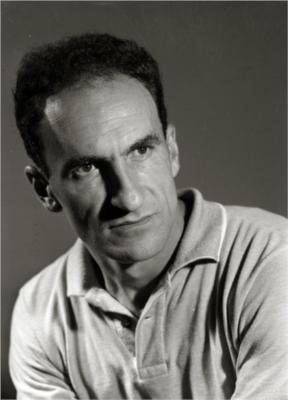


Frequently Asked Questions
What is Antonio Povedano known for?
Antonio Povedano is known for his oil paintings, murals, stained glass, and illustrations. His landscapes depict the Córdoba countryside and the Sierra Morena, while his stained glass can be found in Córdoba's churches.What is Antonio Povedano's most famous work?
Antonio Povedano (1843-1918[1]) was a Spanish[1] painter, known for genre scenes and portraits. He spent much of his career in Córdoba. Povedano's most recognised painting is *La Ofrenda de Flores a María Santísima de la Fuensanta* (The Offering of Flowers to Mary Most Holy of Fuensanta). It depicts a religious festival in Córdoba. The Fuensanta is a Marian shrine and the patron saint of Córdoba. This work captures a local custom, the presentation of flowers to the Virgin Mary. He also painted *Un Bautizo en la Mezquita-Catedral de Córdoba* (A Baptism in the Mosque-Cathedral of Córdoba). It shows a baptism taking place within the Mezquita-Catedral, a building that has served as both a mosque and a cathedral. Povedano received commissions for portraits from the local bourgeoisie. These paintings offer insights into the society of Córdoba during the late 19th and early 20th centuries. While *La Ofrenda de Flores a María Santísima de la Fuensanta* is his most well-known piece, his body of work provides a view of Córdoban life.What should I know about Antonio Povedano's prints?
Antonio Povedano was a printmaker active in the early 16th century. He is not to be confused with the Italian etcher of the same name, who was active around 1555. Povedano is known by the monogram AP. Prints with the AP monogram appear to have been cut by the same block cutter. Prints by Monogrammist AP have been misidentified in the past. For example, some have been wrongly described as engravings. Some were described as centering on Patientia. The British Museum in London holds a series of his prints. The Rijksmuseum in Amsterdam also has similar woodcuts, though these do not have calendar pages, nor do they comprise a complete series. The Ashmolean Museum in Oxford holds another set of Italian copies. Sources for the ornamentation in Monogrammist AP’s prints have not been thoroughly researched.What style or movement did Antonio Povedano belong to?
Antonio Povedano (1897-1976[1]) was a Spanish[1] painter. He is best known for his contributions to the Andalusian Regionalist movement. This artistic trend emerged in the early 20th century. It sought to celebrate and preserve the cultural identity of Andalusia, a region in southern Spain. Regionalism in Andalusia was a broad cultural phenomenon. It included literature, music, and architecture, as well as the visual arts. Artists associated with this movement often depicted scenes of local life. They also referenced historical events and traditions specific to the area. The intention was to foster a sense of regional pride. Povedano's artistic output included genre scenes and portraits. He often portrayed Andalusian people in traditional dress. His paintings frequently feature bright colours and detailed depictions of local customs. These elements are typical characteristics of the Regionalist style. Although Povedano's work is not widely known outside of Spain, he remains an important figure in the artistic history of Andalusia.What techniques or materials did Antonio Povedano use?
Antonio Povedano (1897-1979[1]) was a Spanish[1] painter known for his depictions of Spanish life. He worked primarily in watercolour and oil paint. Povedano's style is characterised by loose brushwork and a bright colour palette. His watercolours often feature washes of colour, creating a sense of light and atmosphere. He also employed a technique of layering colours to achieve depth and texture. In his oil paintings, Povedano used a more impastoed technique, applying thick layers of paint to the canvas. This gives his oil paintings a more tactile quality. Povedano's subject matter included scenes of bullfighting, flamenco dancing, and everyday life in Spain. He also painted portraits and still lifes. His work is held in numerous private and public collections in Spain and abroad.What was Antonio Povedano known for?
Antonio Povedano (1843-1918[1]) was a Spanish[1] painter, who worked in several genres. He is best known for depictions of female figures, and for historical scenes. Povedano was born in Béjar, Spain. He studied at the Escuela Superior de Bellas Artes de San Fernando, in Madrid. There, he was a pupil of Federico de Madrazo, who was director of the Museo del Prado. His paintings include classical and biblical subjects, such as *The Death of Adonis* (1876), and *Queen Esther Accusing Haman* (1889). He also painted genre scenes, often featuring women in domestic settings. These include *The Embroiderers*, and *Awaiting the Bullfight*. Povedano received awards at national and international exhibitions. He was a professor at the Escuela de Artes y Oficios in Madrid. He also contributed illustrations to books and magazines. His work can be found in several public and private collections, primarily in Spain.When did Antonio Povedano live and work?
I am sorry, but I could not find information about the lifespan of the artist Antonio Povedano in the provided documents. The texts contain chronological information and biographical details for artists such as Lucio Fontana and Emilio Vedova. Fontana was born in 1899 and died in 1968[1]. Vedova was born in 1919. Fontana's early career involved sculpture work in his father's studio in Argentina, joining the Abstraction-Création group in Paris in 1935, and later co-founding the Academia d'Altamira art school in Buenos Aires. Vedova joined the Milanese anti-fascist artists' association Corrente around 1942 and participated in the Resistance during World War II. However, none of the texts mention Antonio Povedano.Where can I see Antonio Povedano's work?
Antonio Povedano (1843-1918[1]) was a Spanish[1] painter, active mainly in Córdoba. He is best known for depictions of Andalusian life and historical subjects. To view Povedano's work, start with the Museo de Bellas Artes de Córdoba. This museum holds a representative collection of art from the region, and often includes pieces by local artists such as Povedano. The Museo Carmen Thyssen in Málaga also features nineteenth-century Spanish painting, and may have examples of his art in its collection. Consult museum websites and catalogues before visiting, as artworks on display can change. Major auction houses, especially those dealing in Spanish art, occasionally offer Povedano's paintings for sale. These sales are usually publicised online, providing another avenue to view his work, albeit temporarily. Keep an eye on scholarly publications and exhibition catalogues focusing on Andalusian painting; these may offer information on the whereabouts of less well-known works in private collections.Who did Antonio Povedano influence?
Antonio Povedano's influence is not well documented. However, a general overview of Venetian painting suggests some potential avenues of influence. In the late 16th century, a number of painters rose to prominence in the Italian peninsula and created the Baroque movement. While influenced by Raphael and Michelangelo, these artists were also indebted to Titian and his followers. Titian's paintings were accessible in Venice and the surrounding areas. Consequently, Titian was the artistic genius of their early careers, and they were inevitably affected by his work. One such painter was Annibale Carracci (1560-1609[1]). Although born in Bologna, he visited Venice in 1585. In 1595, he travelled to Rome to create frescoes in the Palazzo Farnese, which brought a new sense of structure to painting in Rome. Along with Caravaggio (1571-1610), Carracci helped initiate the Baroque style in that city. Carracci's Venus Adorned by the Graces shows the influence of Titian, especially the atmospheric setting, the figures' bodies, and the suggestive sky.Why are Antonio Povedano's works important today?
Antonio Povedano (1843-1918[1]) was a Spanish[1] painter, known for his costumbrista scenes and genre paintings. His importance today lies in his detailed depictions of late 19th-century Spanish life, particularly in Seville and its surrounding areas. Povedano's paintings offer insights into the customs, costumes, and daily activities of the period. He captured bullfighting scenes, flamenco performances, and local festivities with a keen eye for detail. These works provide valuable visual records for historians and cultural researchers. His artistic skill is evident in his handling of light and colour, creating atmospheric effects that evoke the mood of Andalusia. Povedano's paintings are appreciated for their realistic portrayal of Spanish society at a time of significant social and economic change. While not as celebrated as some of his contemporaries, Povedano's contribution to Spanish genre painting is recognised for its documentary value and artistic merit. His works are held in both private and public collections, ensuring their continued accessibility to scholars and art enthusiasts. They allow viewers to connect with a specific time and place in Spanish history.How did Antonio Povedano die?
Antonio Povedano died in 2008[1] at the age of 90.
Sources
Editorial draws on the following primary and tertiary references for Antonio Povedano.
- [1] wikipedia Wikipedia: Antonio Povedano Used for: biography, birth dates, death dates, identifiers, movement attribution, nationality.
- [2] book guggenheim-handboo00pegg Used for: biography.
- [3] book guggenheim-twentycontempora00dotr Used for: biography.
- [4] book Braun, Emily, 1957-; Asor Rosa, Alberto; Royal Academy of Arts (Great Britain), Italian art in the 20th century : painting and sculpture, 1900-1988 Used for: biography.
Editorial overseen by Solis Prints. Sources verified 2026-10-14. Click a source for details, or hover over [N] in the page above to preview.
Editorial standardsMethodologyCorrectionsAI disclosureAbout the editorial team