



Apelles
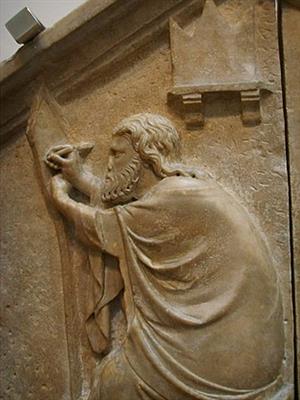
No painting by Apelles survives. Not one. Yet for two thousand years, his name has been the standard against which painters measure themselves. When Renaissance writers praised Botticelli, Dürer, or Raphael, they called them 'the new Apelles.' The compliment carried weight because Pliny the Elder, in his Natural History, had recorded Apelles as the greatest painter of the ancient world.
Biography
Apelles was court painter to both Philip II of Macedon and Alexander the Great. According to Pliny, Alexander decreed by public edict that no one should paint his portrait except Apelles, no one sculpt it except Lysippus, and no one engrave it except Pyrgoteles. The exclusivity was both tribute and control: Alexander understood that his image was a political instrument.
Pliny describes specific paintings: Aphrodite Anadyomene (Venus rising from the sea), created for the temple of Asclepius at Kos, and portraits of Alexander wielding a thunderbolt. None survived antiquity. What endured was the legend: Apelles as the painter whose line was so fine it could not be matched, whose judgement was so acute that Alexander deferred to it.
His dates are uncertain. He was active in the fourth century BCE. His influence, exercised entirely through literary description rather than surviving work, is unique in the history of art.
Notable Works
Tap to view larger.
Next stop
Browse the movements →
Every movement in the collection, from the Renaissance to Pop art.
Related Artists




Frequently Asked Questions
What is Apelles known for?
Apelles is known for his talent and close relationship with Alexander the Great. Renaissance artists emulated him by recreating his paintings, especially Calumny. He was considered the greatest painter of the ancient world.Who was Apelles?
Apelles was Alexander the Great's court painter and one of the most well-known artists of the classical era. Comparisons to him were common among Renaissance artists, who regarded Jan van Eyck, Botticelli, Mantegna, Dürer, and Raphael as the 'new Apelles'. He also served as court painter to Philip II of Macedon.What was Apelles's art style?
Renaissance artists who were compared to Apelles were noted for their skill in painting and their interest in classical style and subject matter. However, it is not possible to describe Apelles's style based on the information provided.
Sources
Editorial draws on the following primary and tertiary references for Apelles.
- [1] wikipedia Wikipedia: Apelles Used for: biography, birth dates, death dates, identifiers, movement attribution, nationality.
- [2] book guggenheim-masterp00solo Used for: biography.
- [3] book Masterpieces of western art : a history of art in 900 individual studies from the Gothic to the present day Used for: biography.
- [4] book Beckett, Wendy, Sister Wendy's odyssey : a journey of artistic discovery Used for: biography.
- [5] book Atkins, Christopher D. M., The Signature Style of Frans Hals: Painting, Subjectivity, and the Market in Early Modernity Used for: biography, stylistic analysis.
- [6] book , (TITLE OF THE THESIS)* Used for: biography, stylistic analysis.
Editorial overseen by Solis Prints. Sources verified 2026-09-22. Click a source for details, or hover over [N] in the page above to preview.
Editorial standardsMethodologyCorrectionsAI disclosureAbout the editorial team