



Carlo Marochetti
Carlo Marochetti was born in Turin in 1805[1] but raised in Paris, where his family had settled during the upheavals of the Napoleonic era. He trained at the École des Beaux-Arts under the sculptor François Joseph Bosio and the painter Antoine-Jean Gros, spent several years in Rome where he briefly worked in Thorvaldsen's studio, and returned to France to build a reputation on the back of large-scale bronze monuments.
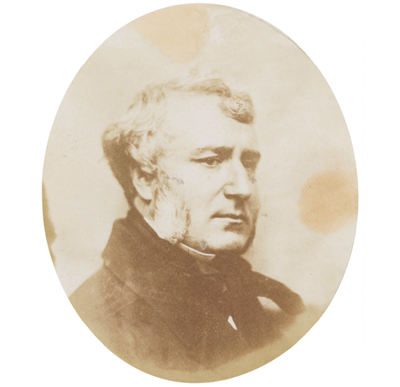
Biography
The work that made his name in France was the equestrian statue of Emmanuel Philibert of Savoy, which earned him a Sardinian baronetcy. He contributed a relief panel to the Arc de Triomphe and a marble altar group to La Madeleine, and was awarded the Légion d'Honneur in 1839[1]. When the July Monarchy fell in 1848 and Louis-Philippe went into exile in London, Marochetti followed, and the exiled French court introduced him to Queen Victoria and Prince Albert, patrons who would shape the rest of his career.
In Britain he set up a substantial studio and foundry at Onslow Square. His most celebrated work there is the equestrian bronze of Richard Coeur de Lion outside the Palace of Westminster (1860[1]), still one of the most prominent pieces of public sculpture in London. He also won the commission for the lions at the base of Nelson's Column, but those were judged poorly and replaced, in a humiliation that played out in the final months of his life; Edwin Landseer's lions were unveiled in 1867[1], the same year Marochetti died. Among his more intimate commissions were the recumbent marble effigies he made for the Frogmore mausoleum, the tomb of Victoria and Albert themselves. He was elected a full Royal Academician in 1866 and died in December 1867, aged 62.
Timeline
- 1805Born in Turin. His family settled in Paris during the Napoleonic era.
- 1839Awarded the Légion d'Honneur in France.
- 1848Moved to London following the fall of the July Monarchy.
- 1860Completed the equestrian bronze of Richard Coeur de Lion outside the Palace of Westminster in London.
- 1866Elected a full Royal Academician.
- 1867Edwin Landseer's lions were unveiled, replacing Marochetti's poorly judged lions at the base of Nelson's Column.
- 1867Died in December, aged 62.
Notable Works
Tap to view larger.
Next stop
Browse the movements →
Every movement in the collection, from the Renaissance to Pop art.
Related Artists


Frequently Asked Questions
What is Carlo Marochetti known for?
Carlo Marochetti is known for large-scale bronze monuments, particularly the equestrian bronze of Richard Coeur de Lion outside the Palace of Westminster. He also created marble effigies for the Frogmore mausoleum, the tomb of Victoria and Albert.What is Carlo Marochetti's most famous work?
Carlo Marochetti was an Italian[1] sculptor who worked extensively in Britain. While it is difficult to name a single "most famous" work, several pieces are particularly well known. One notable example is the equestrian statue of Richard the Lionheart, which stands outside the Palace of Westminster in London. This bronze sculpture, completed in 1860[1], depicts the king on horseback, sword raised, and is a prominent example of Victorian-era public sculpture. Marochetti also created the Crimean War Memorial in St James's Park, London, which commemorates the British soldiers who died in the conflict. Other significant works include the statues of Queen Victoria in Glasgow and Newcastle, as well as numerous portrait busts and funerary monuments. His work can be found in various locations throughout Britain and Europe, demonstrating his wide-ranging output and popularity during his lifetime.What style or movement did Carlo Marochetti belong to?
Carlo Marochetti (1805[1]-1867[1]) was active during the Neoclassical and Romantic periods; however, he is most associated with the style of Neoclassical sculpture. This movement drew inspiration from the art and culture of classical antiquity. Neoclassical sculpture, which gained prominence in the late 18th and 19th centuries, sought to revive the ideals of beauty, order, and harmony found in ancient Greek and Roman art. Characteristics of this style include an emphasis on clean lines, smooth surfaces, and idealised forms. Sculptors often depicted mythological or historical subjects, and aimed for a sense of restrained emotion and intellectual clarity. Marochetti's work, which includes portrait busts and public monuments, reflects these Neoclassical principles in its focus on classical themes, balanced compositions, and refined execution.What techniques or materials did Carlo Marochetti use?
Carlo Marochetti, an Italian[1]-born sculptor who worked in France and Britain, employed a variety of materials and methods in his practice. He is best known for his bronze statues, such as the equestrian statue of Richard the Lionheart (1860[1]) outside the Palace of Westminster. Marochetti trained in Rome, where he learned classical sculptural techniques. He often worked in marble, producing portrait busts and idealised figures. Examples include his marble bust of Camillo Benso, Count of Cavour (c. 1862). He also experimented with new casting methods for bronze sculpture. He patented a technique that allowed for larger, more complex bronze casts to be produced in fewer sections. This innovation was significant for the production of monumental public sculptures. Marochetti's use of this technique can be seen in his bronze statues of Queen Victoria and Prince Albert in Glasgow (1866). His work demonstrates a command of traditional sculptural materials, alongside an interest in technical innovation in bronze casting.What was Carlo Marochetti known for?
Carlo Marochetti (1805[1]-1867[1]) was an Italian[1]-born sculptor who worked in France and Britain. He is best known for public monuments and equestrian statues. Marochetti received early training in Turin, then moved to Paris. He exhibited at the Salon and received commissions from the French government. One important work was the equestrian statue of Emmanuel Philibert, Duke of Savoy (Turin, 1838[1]). He moved to London in the late 1840s, where he continued his career. His British commissions included statues of Queen Victoria, Richard Coeur de Lion (outside Parliament), and the Duke of Wellington. He also produced Crimean War memorials. Although he received many commissions and enjoyed royal patronage, Marochetti's work was sometimes criticised for its perceived lack of refinement. He was, nevertheless, a prolific and influential sculptor of his time, particularly noted for his large-scale public works.When did Carlo Marochetti live and work?
Carlo Marochetti (1805[1]-1867[1]) was an Italian[1]-French sculptor who worked primarily in Britain. He was born in Turin, Italy, on 14 January 1805[1]. He died in Passy, France, on 29 December 1867. Marochetti received his early training in Paris. He gained recognition for his sculptures, which often depicted historical or military figures. He moved to London in the 1830s, where he established a successful studio and received commissions from the British royal family and aristocracy. His British commissions included statues of Queen Victoria, equestrian statues of King Richard the Lionheart in front of Parliament, and the Duke of Wellington. He also created memorials and public works for locations across the British Empire. Although based in Britain for much of his career, Marochetti maintained connections with the continent. He worked on projects in France and Italy. His style blended classical influences with a romantic sensibility, making him a popular choice for grand public sculptures and portrait busts.Where can I see Carlo Marochetti's work?
Carlo Marochetti (1805[1]-1867[1]) was an Italian[1] sculptor who worked in Britain and France. To view his work, several locations may have pieces on display. In London, the Victoria & Albert Museum holds a few relevant works. The Wallace Collection has some sculpture, though it is not specified whether any are by Marochetti. Other museums in the United Kingdom with sculpture collections include the Brighton Museum & Art Gallery, Manchester Art Gallery, and the National Museums of Scotland in Edinburgh. Outside the UK, American museums such as the Los Angeles County Museum of Art (LACMA), the Metropolitan Museum of Art in New York, and the Minneapolis Institute of Arts may hold examples of his sculpture. The Royal Ontario Museum in Toronto also has sculpture holdings.Where was Carlo Marochetti from?
Carlo Marochetti was born in Turin, Italy, in 1805[1]. Although Italian[1] by birth, he spent significant portions of his career in both France and Britain. His father was Vincenzo Marochetti, who worked as a legal official. Marochetti's connections to France came through his education. He studied at the École des Beaux-Arts in Paris. He later received the Légion d'Honneur, a French order of merit. His ties to Britain developed later in his career. He created a number of public sculptures for British locations, including the equestrian statue of Richard the Lionheart outside the Palace of Westminster. Queen Victoria also commissioned work from him, such as the monument to her mother, the Duchess of Kent, at Frogmore. He died in France in 1867[1].Who did Carlo Marochetti influence?
Carlo Marochetti (1805[1]-1867[1]) was a Turin-born sculptor who worked in France and Britain. While it is difficult to identify specific artists directly influenced by Marochetti, his impact can be understood through his contributions to British sculpture and the dissemination of his artistic ideas. Marochetti's work on public monuments, such as the equestrian statue of Richard Coeur de Lion outside the Palace of Westminster, helped to shape Victorian-era tastes for grand, historical sculpture. His involvement in large-scale projects, like the Wellington Monument (erected 1856[1]) in Hampshire, exposed many assistant sculptors and craftsmen to his methods. These assistants likely absorbed elements of his style and technique, which they then carried into their own careers. His use of new technologies, such as the mechanical pointing device for replicating sculptures, also had an effect on sculptural practice. This device allowed for more efficient production and distribution of sculptures, influencing how sculpture was created and disseminated in the 19th century. Though not directly influencing specific artists, Marochetti's broader effect on British sculpture is evident in the adoption of his techniques and the continuation of the monumental style he helped popularise.Who influenced Carlo Marochetti?
Carlo Marochetti's artistic development occurred in a milieu influenced by several sculptors. Antonio Canova, with his emphasis on idealised forms and refined surfaces, had a considerable impact on the artists of the early 19th century. Sculptors like Chaudet and Bosio reflect Canova's influence. Also important was the classical aesthetic promoted by Antoine-Chrysostonie Quatremère de Quincy. Marochetti's career also coincided with a renewed interest in earlier French sculpture, particularly that of Jean Goujon. Some critics compared other contemporary sculptors, such as Antonin Moine, to Goujon. These comparisons suggest a broader appreciation for French sculpture and its potential to rival classical models. It is likely that Marochetti's work was shaped by these various, sometimes competing, artistic currents.Who was Carlo Marochetti?
Carlo Marochetti was a sculptor born in Turin in 1805[1], but he was raised in Paris. He trained at the École des Beaux-Arts and built a reputation on large-scale bronze monuments.Why are Carlo Marochetti's works important today?
Carlo Marochetti (1805[1]-1867[1]) was an Italian[1]-French sculptor who worked in Britain. He is significant for his contributions to British public sculpture during the Victorian era, particularly his equestrian statues and portrait busts. Marochetti's statue of Richard Coeur de Lion (1851[1]-1860[1]), outside the Palace of Westminster, is one of his most recognisable works. It demonstrates his skill in bronze casting and his ability to create dramatic, heroic compositions. This sculpture, along with his other public commissions, helped shape the visual identity of Victorian London. His portrait busts, such as those of Queen Victoria and other members of the British aristocracy, reveal his talent for capturing likeness and character in marble. These works offer insights into the social and political elite of the time. Marochetti's influence extended beyond his own creations. His studio served as a training ground for other sculptors, and he played a role in promoting the development of sculpture in Britain. Although his reputation declined somewhat after his death, recent scholarship has recognised his importance in the history of British sculpture. His works continue to be studied and appreciated for their artistic merit and historical value.
Sources
Editorial draws on the following primary and tertiary references for Carlo Marochetti.
- [1] wikipedia Wikipedia: Carlo Marochetti Used for: biography, birth dates, death dates, identifiers, movement attribution, nationality.
- [2] book Alison West, From Pigalle to Préault Used for: biography, stylistic analysis.
- [3] book Allison Lee Palmer, Historical Dictionary of Neoclassical Art and Architecture Used for: stylistic analysis.
- [4] book Palmer, Allison Lee, Historical Dictionary of Neoclassical Art and Architecture Used for: biography, stylistic analysis.
- [5] book Neoclassicism and romanticism : architecture, sculpture, painting, drawings, 1750-1848 Used for: biography.
- [6] book Irving Lavin;, Visible Spirit Used for: biography.
Editorial overseen by Solis Prints. Sources verified 2026-10-14. Click a source for details, or hover over [N] in the page above to preview.
Editorial standardsMethodologyCorrectionsAI disclosureAbout the editorial team