



Dora Maar
Born Henriette Theodora Markovitch in Paris in 1907[2], Dora Maar trained at the École des Beaux-Arts, the Académie Julian, and the School of Photography, where her instinct for the uncanny found a natural outlet in the darkroom. By the mid-1930s she was exhibiting alongside Man Ray and Salvador Dalí in the landmark Surrealist exhibitions held simultaneously in Paris, London, and New York, her photomontages and photograms placing her at the centre of the movement's most experimental phase.
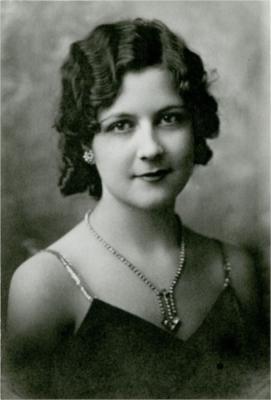
.jpg!Portrait.jpg)
Biography
Her photographs documenting the making of Picasso's Guernica in 1937[2] are among the most important art-historical documents of the twentieth century, tracking the composition through some forty-five photographs as Picasso revised it across weeks. The couple's relationship lasted from around 1935 to 1943, and while Picasso painted her repeatedly, Maar was clear-eyed about those images: 'All his portraits of me are lies. They're all Picassos.' Her own Portrait of Ubu (1936), a photograph of a foetal armadillo transformed into something between deity and nightmare, is among the period's strangest and most enduring images.
After the relationship with Picasso ended, Maar turned increasingly to painting, developing a figurative and later semi-abstract style shaped by her years in the Surrealist orbit. For decades she was discussed primarily as Picasso's muse, a framing that obscured the range and ambition of her practice. Major retrospectives at the Centre Pompidou and Tate Modern in 2019 helped re-establish her independent standing. She died in Paris in 1997[2].
Timeline
- 1907Born Henriette Theodora Markovitch in Paris.
- 1930Trained at the École des Beaux-Arts, the Académie Julian, and the School of Photography.
- 1935Exhibited alongside Man Ray and Salvador Dalí in Surrealist exhibitions in Paris, London, and New York.
- 1935Began a relationship with Picasso, which lasted until 1943.
- 1936Created "Portrait of Ubu", a photograph of a foetal armadillo.
- 1937Documented the making of Picasso's "Guernica" in photographs.
- 1943Ended her relationship with Picasso.
- 1997Died in Paris at 89.
Notable Works
Tap to view larger.
Next stop
Surrealism →
Explore the artists and ideas of Surrealism.
Related Artists




Frequently Asked Questions
What is Dora Maar known for?
Dora Maar is known for her photography, especially her photomontages and photograms within the Surrealist movement. She is also known for her photographs documenting the making of Picasso's Guernica in 1937[2].What is Dora Maar's most famous work?
Dora Maar is most widely known as Pablo Picasso's muse and lover, and for her photographic work within Surrealist circles in Paris. She met Picasso in the mid-1930s, and their relationship lasted until the mid-1940s. During this time, Picasso created many portraits of Maar, including several very similar paintings titled *Head of a Woman (Dora Maar)* executed in March 1939[2]. Museology sources suggest that Maar, who was of French[2] and Yugoslavian parentage, was introduced to Picasso by the poet Paul Éluard. Maar's dark hair and eyes, as well as her character and intelligence, were noted by observers. Some say that Picasso saw her at a Surrealist café, where she was playing a knife game. Maar's image appears in Picasso's work until 1945. Some scholars claim that Picasso lacked rational consciousness of his feelings, and that Maar's reactions to events served as a mirror for him.What should I know about Dora Maar's prints?
Dora Maar was a photographer associated with Surrealist circles in Paris by 1934[2]. She was also a painter; she exhibited paintings during the 1940s and 1950s. In 1936, she met Pablo Picasso, and she appears in his work until 1945. Picasso's 1938 etching *Seated Woman, Dora Maar (Buste de femme a la chaise)*, was used to illustrate André Breton's *Anthologie de l'humour noir* (1940). In photography, the term 'original print' refers to one made by the artist or under their supervision. A 'vintage print' is made around the time the negative was taken. A 'period print' is one made within 10 to 15 years after the shot. After that, it qualifies as an 'old print'. A 'modern print' is a recent photograph printed from the original negative. A 'facsimile' is a print made by re-photographing a print or by using the original negative; its print base and processing are, as much as possible, identical to those used for the reference print (generally, a vintage print).What style or movement did Dora Maar belong to?
Dora Maar is associated with Surrealism[2], a movement more defined by its methods than its visual style. Surrealist artists explored the unconscious mind, combining dream and reality to create a "surreality". André Breton's 1924[2] "Manifeste du Surréalisme" expressed this aim. Surrealism used recognisable, everyday objects in unfamiliar ways. Artists like Salvador Dalí, René Magritte, Max Ernst, and Joan Miró aimed to disrupt viewers' assumptions and reveal the unconscious. The movement is characterised by irrational metaphoric images. Surrealists juxtaposed realistic and fantastical elements, often drawing inspiration from nature. Magritte's apples and Dalí's lobster telephone exemplify this approach. The bowler hat, frequently seen in Magritte's work, is another emblem of the movement. It is often interpreted as representing bourgeois life, contrasting with the more fantastical elements.What techniques or materials did Dora Maar use?
Dora Maar is best known as a photographer associated with Surrealism[2]; however, she was also a painter and used a variety of techniques. Surrealist artists often experimented with automatism and unconventional methods. Frottage, a technique involving rubbing paper over textured surfaces to create images, was one such method. Écrémage, or skimming, involved manipulating oily substances on water to produce marbled effects. Fumage, introduced by Wolfgang Paalen, used candle or lamp smoke to create designs on paper. Grattage, developed by Max Ernst, involved scraping layers of paint to reveal textures beneath. Heatage, employed by David Hare and Raoul Ubac, distorted photographic negatives using heat. Photomontage, the art of arranging and gluing photographs or other illustrative material onto a surface, was another technique used by some Surrealists. These techniques often prioritised chance and the unconscious in the creative process.What was Dora Maar known for?
Dora Maar (1907[2]-1997[2]) was a photographer, painter, and poet, best known for her association with the Surrealist movement and her relationship with Pablo Picasso. In 1920s Paris, Maar established herself as a commercial photographer, working in fashion and advertising. She shared a studio with the set designer Pierre Kéfer, and their work often appeared in magazines. Maar's photography from this period demonstrates an interest in social issues, with images of people affected by the economic depression. Maar became involved with the Surrealist movement in the 1930s, exhibiting alongside artists such as Salvador Dalí and René Magritte. Surrealism[2] aimed to unlock the power of the unconscious mind by creating strange, dreamlike images. Maar's Surrealist photographs often combined unexpected objects and distorted perspectives. In 1936[2], Maar met Pablo Picasso and became his lover and muse. She documented the creation of his painting *Guernica* (1937), and he painted her many times, most famously in *Weeping Woman* (1937). Their relationship ended in the 1940s. After her relationship with Picasso ended, Maar moved away from photography and focused on painting.When did Dora Maar live and work?
Dora Maar was born in 1907[2] and died in 1997[2]. She was associated with Pablo Picasso, and lived and worked in France during the Second World War. In August 1939[2], as France announced general mobilisation, Maar travelled from Antibes with Picasso and Jaume Sabartés to Paris. They then travelled onward to Royan in September, where Picasso took a studio. In October 1941, Picasso's landlord from Royan visited him and Maar in Paris. They lunched together at Le Catalan restaurant. In March 1944, Maar participated in a reading of Picasso's play *Le Désir attrapé par la queue* (Desire Caught by the Tail) at Michel Leiris's apartment in Paris. Other participants included Albert Camus, Simone de Beauvoir, and Jean-Paul Sartre. Picasso sculpted *Head of Dora Maar* in 1941; in 1959, it was dedicated as a monument to Apollinaire in Paris.Where can I see Dora Maar's work?
Dora Maar's works can be viewed in several galleries and museums. In the United States, the Metropolitan Museum of Art and the Museum of Modern Art (both in New York) hold pieces by Maar. You can also find her work at the Cincinnati Art Museum, the Cleveland Museum of Art, and the Solomon R. Guggenheim Museum (New York). Outside of the United States, Maar's pieces are held at the Musée National d'Art Moderne, Centre Georges Pompidou (Paris). Other locations include the Aarhus Kunstmuseum (Denmark), and the Sonja Henie og Niels Onstads Stiftelser (Henie-Onstad Art Center) in Hovikodden, Norway. Note that museum holdings can change; contact the museum to confirm that works by Maar are on display.Where was Dora Maar from?
Dora Maar, born Dora Markovitch, was born in Tours, France, in 1909[2]. Her father was Yugoslavian, and her mother was French[2]. Maar spent her childhood in Argentina before coming back to France. Maar became involved with the Surrealist movement around 1934, producing photographs and photomontages. She met Pablo Picasso and became his mistress. She was also the subject of some of his paintings. Maar photographed the stages of Picasso's Guernica in 1937. Around 1945, Maar and Picasso separated. She then withdrew to Ménerbes, in southeastern France. She spent the last years of her life in solitude and prayer. Her portraits of women, such as Lise Deharme, Nusch Éluard, and Jacqueline Lamba, are particularly noteworthy. Maar died in Paris in 1997[2].Who did Dora Maar influence?
Dora Maar's influence can be seen in the work of later photographers who explored surrealism and special effects. These include Bill Brandt, Jerry Uelsmann, and Lucas Samaras, all of whom used techniques such as superimposition and composite images to create dreamlike and surreal photographs. Maar's work, alongside that of Man Ray and Claude Cahun, helped to open up new possibilities for photographic expression. These photographers pushed the boundaries of the medium, carrying it in directions never imagined by earlier practitioners. Some painters, such as David Hockney and Robert Rauschenberg, also combined photography and painting, further expanding the dialogue between different artistic media. Postmodern photographers, too, merged photography with text, media messages, and symbols, or made pictures about pictures, continuing the exploration of photography's potential for conveying complex ideas.Who was Dora Maar?
Dora Maar (1907[2]-1997[2]) was a photographer and painter, best known for her association with Pablo Picasso. Born in Paris as Henriette Theodora Markovitch, to a French[2] mother and Yugoslav architect father, she spent much of her early life in Argentina, before returning to Paris in the early 1930s. Maar entered Surrealist circles and worked as a photographer. Some accounts suggest Picasso met her in 1935[2], others in 1936, but by the autumn of 1936, they were together. She became Picasso's companion, while Marie-Thérèse Walter, the mother of his child, remained his mistress in private. Maar's dark hair, described as brown, and sharp features distinguished her from Walter. Picasso portrayed her with long red nails and a distinctive gaze. The summer of 1937 is sometimes called his "Dora period", as her image dominated his work. In March 1942, Picasso painted over a charcoal portrait of Maar by Jean Cocteau, creating his own *Portrait of Dora Maar*. Due to her relationship with Picasso, Maar increasingly focused on painting, exhibiting her work in the 1940s and 1950s. She appears in Picasso's paintings until 1945.Why are Dora Maar's works important today?
Dora Maar (1907[2]-1997[2]) was a photographer, painter, and poet, but is perhaps best known as Picasso's muse and lover. Interest in her work has grown since her death, as scholars examine her artistic output independently of her relationship with Picasso. As a photographer in Paris during the 1930s, Maar participated in Surrealist circles. She contributed photomontages to Surrealist journals. Her street photography captured everyday life with a sharp, socially conscious eye. Some critics consider her images to be 'surreal documentary'. Maar's commercial photography for advertising and fashion also displays her experimental approach. She explored the interplay of light, shadow, and unconventional compositions. Later in life, Maar returned to painting, creating abstract and semi-figurative works. Her diverse body of work is now recognised for its innovation and unique perspective. It provides insight into the artistic and political currents of her time.
Sources
Editorial draws on the following primary and tertiary references for Dora Maar.
- [1] wikidata Wikidata: Q236161 Used for: identifiers.
- [2] wikipedia Wikipedia: Dora Maar Used for: biography, birth dates, death dates, identifiers, movement attribution, nationality.
- [3] book guggenheim-futurismmodernfo00solo Used for: biography, stylistic analysis.
- [4] book guggenheim-guggen00barn Used for: stylistic analysis.
- [5] book guggenheim-picassow00nash Used for: biography.
- [6] book guggenheim-twopri00weis Used for: biography.
- [7] book Witham, Larry; , Picasso and the Chess Player Used for: biography, stylistic analysis.
Editorial overseen by Solis Prints. Sources verified 2026-09-16. Click a source for details, or hover over [N] in the page above to preview.
Editorial standardsMethodologyCorrectionsAI disclosureAbout the editorial team