



Emilio Grau Sala
Among the École de Paris painters who found refuge in France during the 1930s, Emilio Grau Sala carved out a distinctive niche as both a fine artist and one of the most sought-after literary illustrators of his generation. His commissions included editions of Gustave Flaubert's Madame Bovary, Marcel Proust's In Search of Lost Time, and Colette's four Claudine novels: assignments that placed his lyrical line work alongside some of the most celebrated French texts of the century.
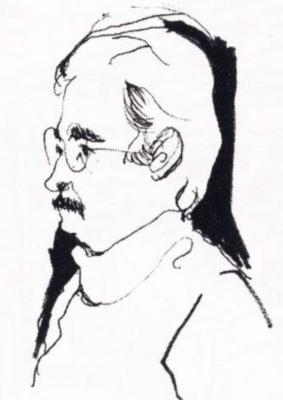
Biography
Born in Barcelona on 22 June 1911[1], Grau Sala was the son of illustrator Juan Grau Miró and studied at the Barcelona School of Fine Arts before largely teaching himself through practice and observation. He began exhibiting at the Badriñas Gallery in Barcelona from 1930[1], but the outbreak of the Spanish[1] Civil War prompted him and his wife, the painter Ángeles Santos Torroella, to leave for Paris, where he would spend the rest of his career.
In Paris, Grau Sala attached himself to the École de Paris and found his true artistic voice as a colourist. The influences of Pierre Bonnard, Raoul Dufy, and Marc Chagall are legible throughout his work: a pleasure in decorative light, gestural confidence, and a preference for subjects drawn from Parisian leisure culture. He painted horse races, café interiors, elegantly dressed women, and coastal seascapes with equal facility in oil, watercolour, and pastel. He was among the first recipients of the Carnegie Prize.
His paintings entered major collections across several continents, including the Musée d'Art Moderne in Paris and museums in Barcelona, Buenos Aires, Philadelphia, Honfleur, La Rochelle, and Tossa del Mar. Though less visible internationally than some of his École de Paris contemporaries, Grau Sala's combination of illustrated book work and luminous painting gives him a particular place in mid-century French visual culture.
Timeline
- 1911Born in Barcelona on 22 June. His father was the illustrator Juan Grau Miró.
- 1930Began exhibiting at the Badriñas Gallery in Barcelona at 19.
- 1930Studied at the Barcelona School of Fine Arts.
- 1936Left for Paris with his wife, the painter Ángeles Santos Torroella, due to the outbreak of the Spanish Civil War.
- 1936Attached himself to the École de Paris.
- 1936Found his artistic voice as a colourist, influenced by Pierre Bonnard, Raoul Dufy, and Marc Chagall.
- 1975Died in Paris, aged 64.
Notable Works
Tap to view larger.
Next stop
Browse the movements →
Every movement in the collection, from the Renaissance to Pop art.
Related Artists



Frequently Asked Questions
What is Emilio Grau Sala known for?
Emilio Grau Sala is known for his work as both a fine artist and a sought-after literary illustrator. His paintings are in major collections across several continents, including the Musée d'Art Moderne in Paris and museums in Barcelona, Buenos Aires, and Philadelphia.What is Emilio Grau Sala's most famous work?
Emilio Grau Sala is known for several significant works, but one stands out as his most celebrated: *Burial of the Count of Orgaz*. Painted between 1586 and 1588, this oil on canvas is located in the Church of Santo Tomé in Toledo. The commission came from Andrés Nuñez, the parish priest, to honour Gonzalo de Ruiz, the Count of Orgaz, a benefactor who died in 1323. The painting commemorates the miraculous moment when Saints Augustine and Stephen descended from Heaven to assist with the count's burial. This event was in recognition of the count's generosity towards the Augustinian Monastery of San Esteban. The painting is divided into two sections. The lower portion depicts the count's funeral, attended by various saints. The upper portion shows the count presenting himself in Heaven before Christ. The artwork conveys the message that charity and good deeds can lead to salvation. The painting marks a high point of late sixteenth-century art.What style or movement did Emilio Grau Sala belong to?
Emilio Grau Sala (1911[1]-1975[1]) was a Spanish[1] artist whose work is often associated with Post-Impressionism. This categorisation stems from his painterly style, choice of subject matter, and artistic influences. Grau Sala's paintings display a clear interest in capturing light and atmosphere, a characteristic inherited from the Impressionists. However, he moved beyond the purely optical concerns of Impressionism, incorporating a greater degree of personal expression and subjective interpretation in his work. His paintings often depict scenes of Parisian life: theatres, cafés, and portraits of fashionable women. These subjects align with the Post-Impressionist focus on modern urban existence. His colour palettes, while sometimes bright, often favour muted tones and subtle gradations, creating a melancholic mood. Grau Sala's artistic approach is characterised by loose brushwork and a concern with capturing fleeting moments, rather than precise detail. This differentiates him from academic realism and places him closer to the Post-Impressionist aesthetic. While Grau Sala did not formally belong to any specific Post-Impressionist group, his artistic sensibilities and stylistic choices align with the broader trends of that movement.What was Emilio Grau Sala known for?
Emilio Grau Sala (1911[1]-1975[1]) was a Catalan artist, best known for his paintings of Parisian life. He depicted scenes of theatres, casinos, circuses, and fashionable society. Born in Barcelona, Grau Sala initially studied at the School of Fine Arts in Barcelona. He later moved to Paris, which became a central theme in his art. His style shows influence from French Impressionism and Post-Impressionism, particularly the works of artists such as Degas and Toulouse-Lautrec. Grau Sala’s paintings often feature a distinctive colour palette, with an emphasis on capturing light and atmosphere. He developed a fluid brushstroke technique, which added to the sense of movement in his compositions. Grau Sala gained recognition during his lifetime, exhibiting his work in both Europe and the United States. Although he worked in other genres, his Parisian scenes remain his most recognisable and sought-after works. His images capture the mood of the city during the mid-20th century.When did Emilio Grau Sala live and work?
Emilio Grau Sala (1911[1]-1975[1]) was a Catalan artist, mainly working in painting. He was born in Barcelona, Spain. Grau Sala is known for his depictions of Parisian life, female figures, and interior scenes. Grau Sala's early artistic training occurred in Barcelona. Later, he moved to Paris, a centre for artistic innovation during the 20th century. Paris became a major source of inspiration for his work. He developed a style influenced by Impressionism and Post-Impressionism, but with his own personal interpretation. His paintings often feature a distinctive colour palette. They evoke a sense of atmosphere and mood. Grau Sala exhibited widely during his career. He gained recognition both in Spain and internationally. His work can be found in numerous public and private collections. Although he died relatively young, his artistic output was significant. He left behind a substantial body of work that continues to be admired.Where can I see Emilio Grau Sala's work?
Emilio Grau Sala's paintings are held in numerous public and private collections. Born in Barcelona, Spain, in 1911[1], Grau Sala spent much of his career in Paris, France, before his death in 1975[1]. His works appear in Spanish[1] museums, such as the Museo Nacional de Arte de Cataluña (MNAC) in Barcelona. The MNAC holds a substantial collection of Catalan art, encompassing pieces from the Romanesque period through to the mid-20th century. Grau Sala's inclusion in this collection places him within the context of important Catalan artists. Beyond Spain, Grau Sala's paintings have been exhibited internationally. Auction records and exhibition catalogues suggest that his work has been featured in galleries and museums across Europe and in the Americas. Collectors interested in viewing his work should consult museum databases and auction house listings to find current exhibition information. These resources will provide details on specific locations and dates for public viewings.Where was Emilio Grau Sala from?
Emilio Grau Sala was a Catalan artist from Spain. He was born in Barcelona on 22 June 1911[1]. His family encouraged his artistic interests from a young age. Grau Sala began his formal training at the Escola de Belles Arts in Barcelona. There, he developed his skills in drawing and painting. He was part of a generation of Catalan artists who embraced modernism while also drawing inspiration from the traditions of Spanish[1] art. Later in life, Grau Sala moved to Paris, a major centre for artists during the 20th century. He spent much of his career in France. The artistic environment of Paris influenced his style, and he exhibited his work in various galleries there. Grau Sala died in Barcelona on 13 July 1975[1]. Although he lived in France, he maintained close ties to his home city.Who did Emilio Grau Sala influence?
It is difficult to identify specific artists who were directly influenced by Emilio Grau Sala. However, some sources suggest possible connections and broader artistic movements that may relate to his work. One case study involves Nicaraguan painter Armando Morales. Morales won the Ernst Wolf Prize as Best Latin American Artist at the V Sao Paulo Bienal in Brazil in 1959[1]. His visual language was indebted to Robert Motherwell, Antoni Tapies, and Serge Poliakoff. His 1958 abstract painting *Guerrillo muerto I* (Dead Guerrilla I) shows a debt to Motherwell’s “Spanish[1] Elegy” series begun in 1948. In Cuba, Abstract Expressionism was viewed differently than in the Soviet Union. Artists associated with Los Once emigrated to Europe in the early 1960s and continued to produce a Cuban variant of Abstract Expressionism. Guido Llinas, who moved to France, produced *Por R. Motherwell* in 1992. Raul Martinez, a supporter of the Cuban Revolution, explained that abstract artists were supportive of the Revolution, so there was no negative identification with abstractionism.Why are Emilio Grau Sala's works important today?
Emilio Grau Sala (1911[1]-1975[1]) was a Catalan artist, who spent much of his career in Paris. His paintings are important for their contribution to the figurative tradition, particularly his depictions of Parisian life, female figures, and scenes of leisure. Grau Sala's artistic approach was influenced by Impressionism and Post-Impressionism, but he developed his own distinctive style characterised by fluid brushwork and a focus on capturing light and atmosphere. His works evoke a sense of elegance and nostalgia, reflecting the cultural milieu of his time. Grau Sala's paintings offer a glimpse into the social customs and aesthetics of mid-20th-century Europe. They provide valuable insights into the artistic trends and cultural values of that era. His art continues to be appreciated for its aesthetic qualities and its ability to capture the spirit of a bygone age.What was Emilio Grau Sala's art style?
Emilio Grau Sala's artistic style was influenced by Pierre Bonnard, Raoul Dufy, and Marc Chagall. His work displays a pleasure in decorative light, gestural confidence, and a preference for subjects drawn from Parisian leisure culture; he worked in oil, watercolour, and pastel.How did Emilio Grau Sala die?
Emilio Grau Sala died in 1975[1] at the age of 64.
Sources
Editorial draws on the following primary and tertiary references for Emilio Grau Sala.
- [1] wikipedia Wikipedia: Emilio Grau Sala Used for: biography, birth dates, death dates, identifiers, movement attribution, nationality.
- [2] book guggenheim-beforepicassoaft00swee Used for: biography.
- [3] book guggenheim-latinamericanpai00catl Used for: biography.
- [4] book guggenheim-twopri00weis Used for: biography.
- [5] book Camnitzer, Luis(Author), Joe R. and Teresa Lozano Long Series in Latin American and Latino Art and Culture : Conceptualism in Latin American Art : Didactics of Liberation Used for: stylistic analysis.
- [6] book Untitled Used for: biography, stylistic analysis.
Editorial overseen by Solis Prints. Sources verified 2026-09-30. Click a source for details, or hover over [N] in the page above to preview.
Editorial standardsMethodologyCorrectionsAI disclosureAbout the editorial team