



Emmerico Nunes
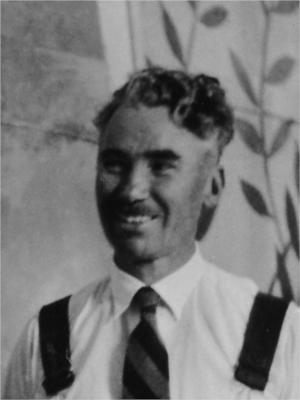
Emmerico Hartwich Nunes was born in Lisbon on 6 January 1888[1], the son of a Portuguese father and a German mother, an inheritance that sent him across two countries for most of his working life. He trained at the Lisbon School of Fine Arts under Ernesto Condeixa before leaving for Paris in 1906[1], where he spent five years absorbing the modernist currents reshaping European art.
Biography
In 1911[1] he moved to Munich, becoming a contributor to the celebrated satirical weekly *Meggendorfer Blätter*. When war broke out in 1914 he relocated again, this time to Zurich, remaining there through the Armistice. These years in German-speaking Europe fixed his identity as a caricaturist: precise, economical, and attuned to social irony. After his return to Portugal in 1918 he became a regular at *Fliegende Blätter*, one of Germany's oldest illustrated weeklies, while simultaneously supplying drawings to Spanish magazines including *Buen Humor* and *Mundo Gráfico*.
That cosmopolitan reach narrowed after 1936[1]. From 1937 to 1939 he worked alongside other decorators on Portugal's pavilions for the international exhibitions in Paris, New York, and San Francisco, and contributed to the decoration of the Portuguese World Exhibition in Lisbon in 1940, work that earned him the rank of Official of the Order of Christ.
Later life drew him south to Sines, on the Alentejo coast, where he died on 18 January 1968[1]. His career is a map of European cultural migration: a Portuguese artist who found his voice in German satire and his reputation in the illustrated press of four countries.
Timeline
- 1888Born in Lisbon on 6 January. His father was Portuguese and his mother was German.
- 1906Moved to Paris at 18 to study modernist art.
- 1911Moved to Munich and began contributing to *Meggendorfer Blätter*.
- 1914Relocated to Zurich due to the outbreak of war.
- 1918Returned to Portugal and became a regular contributor to *Fliegende Blätter*.
- 1936His cosmopolitan reach narrowed after this year.
- 1937Began working on Portugal's pavilions for international exhibitions in Paris, New York, and San Francisco.
- 1940Contributed to the decoration of the Portuguese World Exhibition in Lisbon.
- 1968Died in Sines on 18 January, at the age of 80.
Notable Works
Tap to view larger.
Next stop
Browse the movements →
Every movement in the collection, from the Renaissance to Pop art.
Related Artists
Frequently Asked Questions
What is Emmerico Nunes known for?
Emmerico Nunes is known for his work as a caricaturist. His style was precise and economical, and he was attuned to social irony, which he demonstrated in his contributions to satirical publications.What should I know about Emmerico Nunes's prints?
To appreciate Emmerico Nunes's prints, it is helpful to understand some basics about printmaking. Original prints are produced by hand, with the artist creating the artwork directly on a plate, woodblock, stone, or screen. Each print in the limited edition is considered an original, as opposed to a reproduction made by photochemical means. The practice of artists signing their prints became more common in the late nineteenth century; this helped to distinguish original graphics from reproductions and to confirm the artist's approval. Edition sizes are often limited, and prints are numbered (for example, 12/25) to control the number of works on the market and maintain quality. Various printmaking techniques exist, including woodcuts, engravings, etchings, lithographs, and serigraphs. More recently, giclée prints (inkjet fine art prints) and canvas transfers have gained popularity. The intent of the artist is key: an original print is a creative statement in its own right, not simply a copy of work in another medium.What style or movement did Emmerico Nunes belong to?
Emmerico Nunes belonged to the Baroque movement; its treatment of movement is important for architecture, sculpture, and painting. Baroque characteristics appeared in the 1620s. Before then, artists substituted coherence and correct proportions for the anarchy under Mannerism. Italian artists of the generation of Caravaggio, Annibale Carracci, and Maderna mainly carried the burden of solving this problem. Late 16th-century styles persisted in most other countries until the second quarter of the 17th century. Rubens, who lived in Italy from 1600 to 1608, developed the techniques of true baroque movement. After returning to Antwerp in December 1608, he discovered the principle of building compositions around a dynamic spiral line. This line is a line of force that attracts all forms. It is three-dimensional, starting at the bottom in the foreground, either at the centre or to one side, and soaring upwards and inwards in a spiral or zig-zagging diagonal. Its consequence is that it gives vitality to the whole picture, which is conceived in dynamic terms.When did Emmerico Nunes live and work?
Emmerico Nunes was a Portuguese cartographer. He was active from 1502 to 1528. Nunes is best known for his work for the Portuguese crown. He adapted the nautical charts to accommodate the compass. He also created globes. Nunes served King Manuel I and Emperor Charles V. He worked with the hydrographer Diogo Ribeiro. Nunes's maps are known for their accuracy. His work marks a transition in nautical science. He developed methods to determine latitude without direct observation of the sun. He also investigated the problem of determining longitude. Nunes's contributions were important to the Age of Discovery. His work helped Portugal become a major maritime power. His maps aided explorers in navigating the oceans. Nunes's legacy is as a pioneer of cartography and navigation.Where can I see Emmerico Nunes's work?
Emmerico Nunes's work has been featured in numerous exhibitions. In 1983, his art was part of group shows at the University of South Florida Art Gallery in Tampa; the Nigel Greenwood Gallery in London; Monique Knowlton, New York; Chiesa di San Samuele, Venice; the Solomon R. Guggenheim Museum, New York; Palazzina Mangani, Fiesole; Villa Medici, Rome; The Tate Gallery, London; Galerie Vera Munro, Hamburg; Galerie Boibrino, Stockholm; Rosenthal-Feierabendhaus, Selb, Germany; Galerie Beyeler, Basel; Blum Helman, New York; Sperone Westwater, New York; Galleria Anna d'Ascanio, Rome; Galerie Bruno Bischofberger, Zurich; Bonner Kunstverein, Bonn; Cabinet des Estampes, Musée d'Art et d'Histoire, Geneva; Centro d'Arte Contemporanea, Siracusa; Chantal Crousel, Paris; Galerie Hummel, Vienna; The International Running Center, New York; Kunsthaus Zurich; Galerie Legcr, Malmò; Museo Civico d'Arte Contemporanea, Gibellina; The New Gallery ot Contemporary Art, Cleveland; and Sakowitz, Houston. His work was also shown at Akira Ikeda Gallery, Nagoya; Sidney Janis Gallery, New York; Stockholm Art Fair; Stadtische Galerie im Lenbachhaus, Munich; Musée d'Art Contemporain, Montreal; and The Museum of Modern Art, New York.Where was Emmerico Nunes from?
Emmerico Nunes was from Portugal. By the sixteenth century, Portugal had claimed territories in Asia, Africa, and South America. In the 1950s, Portugal still governed almost all of these colonies, with the exception of Bombay and Brazil. Portugal remained officially neutral throughout the Second World War. It supported the Allies by providing a military base in the Azores and the Axis with vessels carrying provisions, depending on what was most convenient for the regime. This approach allowed Portugal to avoid attack from either side during the war. Lisbon, the capital, is mentioned as a conservative and controlled environment, especially when contrasted with the artistic milieu of London. Lisbon is also home to the Lisbon School of Fine Art and the National Society of Fine Arts.Who did Emmerico Nunes influence?
Emmerico Nunes's influence is difficult to trace directly. The Guggenheim's Emerging Artists series (1978-1986[1]) sought to move beyond national boundaries and identify common issues engaging young artists, such as appropriation, reductive form, political art, and figurative imagery. The series noted cross-cultural similarities in the work of artists from America, Britain, Italy, Australia, and France. Italian postwar art saw artists alluding to their roots in Futurism. Alberto Burri, Piero Dorazio, Lucio Fontana, and Emilio Vedova all referenced Futurist painters. Francesco Clemente's abstracted figurative art made an impression on a younger generation of artists, who were willing to allow the body an unmediated presence. The paradoxes in Clemente's work, such as the blurring of boundaries between interior and exterior, sustained interest and opened up possibilities for the future.Who influenced Emmerico Nunes?
It is difficult to determine the specific influences on Emmerico Nunes from the material provided. However, the texts mention a wide array of artists, writers, and thinkers associated with Futurism and other early 20th-century movements. Figures such as Umberto Boccioni, Carlo Carra, and F.T. Marinetti are repeatedly listed. These were central figures in the Futurist movement; their theories and artistic output may have had some impact on Nunes. Other artists mentioned, such as Pablo Picasso, Henri Matisse, and Medardo Rosso, represent a broader spectrum of modern art that could have played a role in his artistic development. Additionally, various writers, including Giovanni Papini and Ardengo Soffici, were part of the Futurist circle and may have shaped Nunes's intellectual environment. Philosophers like Friedrich Nietzsche are also mentioned in connection with Futurism.Who was Emmerico Nunes?
Emmerico Nunes (1888[1]-1968[1]) was a Portuguese artist, known primarily for his work as an illuminator and watercolourist. He spent much of his career creating designs for nautical charts and navigational instruments. Nunes trained at the Escola Naval (Naval School) in Lisbon. He became a hydrographic engineer, working for the Portuguese Hydrographic Office. His artistic skills were put to use in the creation of detailed and decorative maps. These charts were essential tools for Portuguese explorers and navigators. His work often incorporated elaborate compass roses, illustrations of ships, and depictions of sea creatures. These elements added both aesthetic appeal and practical information to the charts. Nunes's style blended scientific accuracy with artistic flair. His maps are examples of cartography as both a science and an art form. Today, his original charts are highly valued as historical artefacts and works of art. They provide insight into the history of Portuguese exploration and cartography during the 20th century.Why are Emmerico Nunes's works important today?
Emmerico Nunes (1888[1]-1968[1]) was a Portuguese artist, noted for his contributions to 20th-century Portuguese art. His importance lies in his distinctive style and his role in documenting Portuguese life and culture. Nunes's artistic output includes paintings, drawings, and illustrations. He is particularly known for his depictions of maritime subjects, fishing communities, and rural scenes. These works offer valuable insights into the social and economic realities of Portugal during his lifetime. His art captures the atmosphere of Portuguese coastal regions, preserving a record of traditional practices. His style blends elements of realism with a personal, expressive approach. Nunes's use of light and colour creates a sense of atmosphere. His compositions often feature strong lines and simplified forms. Today, Nunes's works are appreciated for their artistic qualities, and for their historical and cultural significance. They provide a window into Portugal's past, reminding viewers of the country's rich heritage. His art is held in several public and private collections.How did Emmerico Nunes die?
Emmerico Nunes died in 1968[1] at the age of 80.
Sources
Editorial draws on the following primary and tertiary references for Emmerico Nunes.
- [1] wikipedia Wikipedia: Emmerico Nunes Used for: biography, birth dates, death dates, identifiers, movement attribution, nationality.
- [2] book Giovanni Battista Piranesi; Sarah E Lawrence; Exhibition Piranesi as Designer (2007, Giovanni Battista Piranesi; Sarah E Lawrence; Exhibition Piranesi as Designer (2007 - 2008, New York, NY; Haarlem); Cooper-Hewitt Museum of Decorative Arts and Design (New York, N.Y.); Teylers Museum - Piranesi as designer ; [on the occasion of Used for: stylistic analysis.
- [3] book guggenheim-artoftomorrowfif1939gugg Used for: biography.
- [4] book guggenheim-twopri00weis Used for: biography.
- [5] book Braun, Emily, 1957-; Asor Rosa, Alberto; Royal Academy of Arts (Great Britain), Italian art in the 20th century : painting and sculpture, 1900-1988 Used for: biography.
- [6] book Nadler, Steven M., 1958-;Rembrandt Harmenszoon van Rijn, 1606-1669, Rembrandt's Jews Used for: biography.
- [7] book 1892-1968, Panofsky, Erwin,, Tomb sculpture: four lectures on its changing aspects from ancient Egypt to Bernini Used for: stylistic analysis.
Editorial overseen by Solis Prints. Sources verified 2026-09-30. Click a source for details, or hover over [N] in the page above to preview.
Editorial standardsMethodologyCorrectionsAI disclosureAbout the editorial team