



Enrico Donati
In 1942[1], André Breton walked into Enrico Donati's first solo exhibition at the New School for Social Research in New York and told him directly: you are a Surrealist, you are one of us. Donati had arrived from Milan three years earlier, barely speaking English, and this endorsement from the movement's presiding figure changed everything.

Biography
Born in Milan in 1909[1], Donati had studied philosophy and economics before turning to painting in Paris during the 1930s. In New York he became part of the émigré Surrealist circle that included Breton, Max Ernst, and Marcel Duchamp, absorbing their preoccupation with the unconscious while developing his own obsessions: destruction and rebirth, the ceaseless passage from life to death, the life of matter itself.
The Mandrake root legend of the 16th century offered him a governing metaphor. His canvases from the 1940s and 1950s move between the figurative and the gestural, layering earth pigments, sand, and encaustics into surfaces that read like geological strata or laboratory specimens. Water and fire recur as agents of transformation.
Donati taught at Yale for over two decades and continued painting into his nineties. He died in New York in 2008[1] at the age of ninety-eight, having outlasted almost every contemporary from those wartime salon gatherings in Breton's apartment.
Timeline
- 1909Born in Milan.
- 1930Began painting in Paris after studying philosophy and economics.
- 1939Moved from Milan to New York.
- 1940Became part of the émigré Surrealist circle in New York, including Breton, Max Ernst, and Marcel Duchamp.
- 1940Developed obsessions with destruction, rebirth, and the life of matter.
- 1940Began using the Mandrake root legend as a governing metaphor in his art.
- 1942Held his first solo exhibition at the New School for Social Research in New York.
- 1942André Breton declared Donati a Surrealist after seeing his exhibition.
- 2008Died in New York at 98.
Notable Works
Tap to view larger.
Next stop
Abstract Expressionism →
Explore the artists and ideas of Abstract Expressionism.
Related Artists


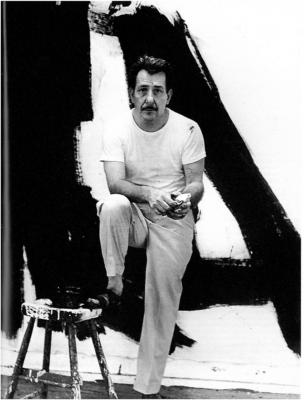

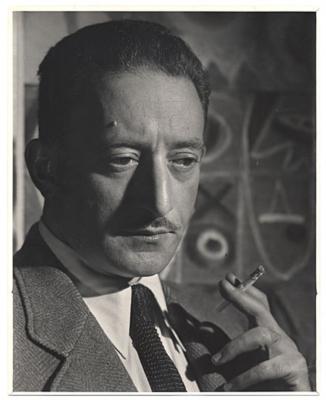
Frequently Asked Questions
What is Enrico Donati known for?
Enrico Donati is known for his paintings that explore themes of destruction, rebirth, and the life of matter. His works from the 1940s and 1950s often incorporate earth pigments, sand, and encaustics, creating textured surfaces reminiscent of geological formations.What is Enrico Donati's most famous work?
Determining Enrico Donati's single 'most famous' work is difficult, as fame is subjective and fluctuates. However, several of his works are well known and reside in prominent collections. During 1607-1609[1], Donati completed a number of significant paintings, including *San Girolamo scrivente* (1607), now located in Valletta, Museum of the Co-cathedral of St John; *Ritratto di Wignacourt con paggio* (1608), displayed at the Musée du Louvre, Paris; and *Decollazione del Battista* (1608), also in Valletta, Co-cathedral of St John, Oratory. Other notable works from this period include *Amorino dormiente* (1608), held at the Palazzo Pitti, Galleria Palatina, Florence; *Seppellimento di Santa Lucia* (1608), at the Museo di Palazzo Bellomo, Syracuse; and *Resurrezione di Lazzaro* (1609), which can be seen at the Museo Regionale, Messina. Earlier in his career, Donati painted *Fanciullo con canestro di frutta* (1593), currently in Rome's Galleria Borghese; and *Buona ventura* (1594), which is held in the Musei Capitolini, Pinacoteca, Rome.What should I know about Enrico Donati's prints?
When considering Enrico Donati's prints, bear in mind that fine-art prints fall into several categories. 'Original prints' are produced by hand by the artist as woodcuts, engravings, linocuts, mezzotints, etchings, lithographs or serigraphs. The artwork is created directly on the plate, woodblock, etching stone, or screen. Each print is considered an original because of this direct creation method. These are sold through specialised print galleries, frame shops, high-end decorating outlets and fine art galleries. Because original prints are sold in limited editions, they command higher prices than posters, which are not numbered. The number of prints pulled is limited by the number of impressions that can be made before the plate wears out. Some publishers impose their own limits on the number of impressions to increase a print’s value. These limits may be set as high as 700 to 1,000 impressions, but some prints are limited to just 250 to 500, making them highly prized by collectors. As colour-copier technology matures, inkjet fine art prints, also called giclées, are gaining popularity.What style or movement did Enrico Donati belong to?
Enrico Donati is associated with the New York School and Abstract Expressionism[1], movements that gained prominence after World War II. The term "New York School" broadly refers to the shift of the Western art world to New York City during the 1940s and continuing through the 1960s. Abstract Expressionism, which emerged around 1940[1] in New York, encompasses a range of post-war American painting. It marked the United States as a central point for avant-garde art. Also known as painterly abstraction and Action Painting, Abstract Expressionism is characterised by loose brushstrokes and gestural action. It involves the artist's unconscious outpouring or personal drama. Key figures linked to Abstract Expressionism include Jackson Pollock, Willem de Kooning, and Mark Rothko. Some critics suggest the style has roots in Surrealist theories, specifically the expression of the unconscious.What techniques or materials did Enrico Donati use?
Enrico Donati's artwork often combined collage, paint, and found objects. He explored surrealist themes using varied media. Donati began experimenting with mixed media in the 1940s. He frequently incorporated sand, glass, and metallic fragments into his paintings. These materials added texture and dimension to his compositions. Donati also employed decalcomania, a technique involving pressing paint between two surfaces to create unexpected patterns. His approach to collage was similarly inventive. Donati juxtaposed disparate images and materials, creating visual puns and unsettling juxtapositions. These collages often featured elements of text and typography. The artist also made use of oil paint and occasionally watercolour. His work can be seen as a dialogue between traditional painting and more unconventional methods. Donati's experimentation with materials contributed to the distinctive character of his surrealist vision.What was Enrico Donati known for?
Enrico Donati was an Italian[1]-American artist known for his Surrealist and abstract works. Born in Italy, he later moved to the United States. Donati's artistic journey began with Surrealism; he explored biomorphic forms and dreamlike imagery. His style evolved towards abstraction around 1940[1]. He experimented with textures, often incorporating sand and other materials into his paintings to create unique surfaces. In 1948, Donati co-founded a school in New York with other artists such as Robert Motherwell, Barnett Newman, and Mark Rothko. He also held various teaching positions in New York. Donati's work contributed to the development of Abstract Expressionism[1] in the United States. He died in New York in 1963.When did Enrico Donati live and work?
Enrico Donati was an Italian[1]-American Surrealist artist who lived from 1909[1] to 2008[1]. He was born in Milan, Italy, on 19 February 1909[1]. Donati initially studied at the University of Pavia, where he earned a doctorate in law in 1931. However, he soon abandoned law to pursue painting. In the mid-1930s, he moved to Paris. There, he encountered the Surrealist circle, including artists like André Breton and Yves Tanguy. These encounters proved formative for his artistic direction. In 1939, with the outbreak of World War II looming, Donati emigrated to the United States. He settled in New York City and continued to develop his Surrealist style. He exhibited alongside other European émigré artists, contributing to the growth of Surrealism in America. Throughout his career, Donati experimented with different media and techniques, including oil painting, collage, and mixed media. He is known for his abstract compositions and symbolic imagery. Donati died in New York City on 25 April 2008, at the age of 99.Where can I see Enrico Donati's work?
To view Enrico Donati's work, you might consider visiting several museums in Italy. The Fondazione Regionale Cristoforo Colombo, located in the Palazzo Ducale, Piazza Matteotti 9, 16123 Genova, could be a potential venue. Another option is the Museo del Bijou di Casalmaggiore, situated at Via A. Porzio 9, Casalmaggiore. Additionally, the Museo Richard-Ginori della Manifattura di Doccia, found at Viale Pratese 31, 50019 Sesto Fiorentino, may also display his pieces. These museums feature a range of decorative arts; therefore, it is advisable to check their current exhibitions or collections online or by telephone to confirm the presence of Donati's work before planning a visit. Their websites are www.fondazionecolombo.it, www.museodelbijou.it, and www.museodidoccia.it.Where was Enrico Donati from?
Enrico Donati was born in Italy. He spent his early years in Modena. This city, located in the Emilia-Romagna region, is known for its rich artistic and cultural heritage. Donati later moved to the United States. He arrived in New York City in 1934[1]. There, he became associated with the Surrealist movement. This relocation marked a significant change in his life and artistic direction. He lived in New York for the rest of his life. Although he spent much of his career in America, Donati retained strong ties to his Italian[1] background. His early experiences in Modena likely influenced his artistic sensibilities. His work often reflects a combination of European and American influences, blending Surrealist aesthetics with elements inspired by his Italian heritage.Who influenced Enrico Donati?
Enrico Donati appears to have been influenced by a range of artists and thinkers. Giotto di Bondone, the Florentine painter and architect, is one such figure. Giotto combined elements of Byzantine painting with the sculptural drama evident in the work of the Pisano family. He is known for introducing figures into an overall space and rendering it in a lifelike manner. Gestures are realistic and graceful. Tradition says he was Cimabue's student. Other possible influences include Leonardo da Vinci, Michelangelo, and Raphael. These Renaissance artists were major figures during the period and beyond. Their innovations in painting, sculpture, and architecture were widely studied and emulated. Donatello, the Florentine sculptor of the 15th century, may also have been an influence.Why are Enrico Donati's works important today?
Enrico Donati's importance lies in his connection to the artistic currents of his time, particularly his relationship to Lucio Fontana. Fontana's theories involved a new definition of sculpture, moving away from the idea of sculpture as a fixed point. Fontana's sculptures created a visual centre, capturing the attention of the viewer. Fontana's concepts can be seen in his bozzetti (sketches) for the doors of Milan Cathedral. These sculptures acted as a screen between the space of the viewer and a more mysterious space. Fontana's work has gained recognition for its historical and artistic importance, with increasing interest in his pieces. His theories and artwork have had a significant impact on the art world. Futurism also contributed to the development of new artistic ideas. Futurist manifestos affirmed certain principles that were received by other authors, even in other countries. The Futurist theatre, with its scenographic innovations, influenced theatrical productions abroad, especially in Russia.
Sources
Editorial draws on the following primary and tertiary references for Enrico Donati.
- [1] wikipedia Wikipedia: Enrico Donati Used for: biography, birth dates, death dates, identifiers, movement attribution, nationality.
- [2] book guggenheim-twopri00weis Used for: biography, stylistic analysis.
- [3] book Braun, Emily, 1957-; Asor Rosa, Alberto; Royal Academy of Arts (Great Britain), Italian art in the 20th century : painting and sculpture, 1900-1988 Used for: biography.
- [4] book Masterpieces of western art : a history of art in 900 individual studies from the Gothic to the present day Used for: biography.
Editorial overseen by Solis Prints. Sources verified 2026-10-14. Click a source for details, or hover over [N] in the page above to preview.
Editorial standardsMethodologyCorrectionsAI disclosureAbout the editorial team