



Ernst Fries
Fries grew up in a household where art was a daily reality. His father, Christian Adam Fries, was a wealthy banker and a collector of Dutch masters. This environment provided the young artist with immediate access to technical examples and the financial freedom to travel through Italy. Unlike many of his contemporaries who struggled for patronage, Fries focused on refining his topographical accuracy during his stay in Rome and Naples.

Biography
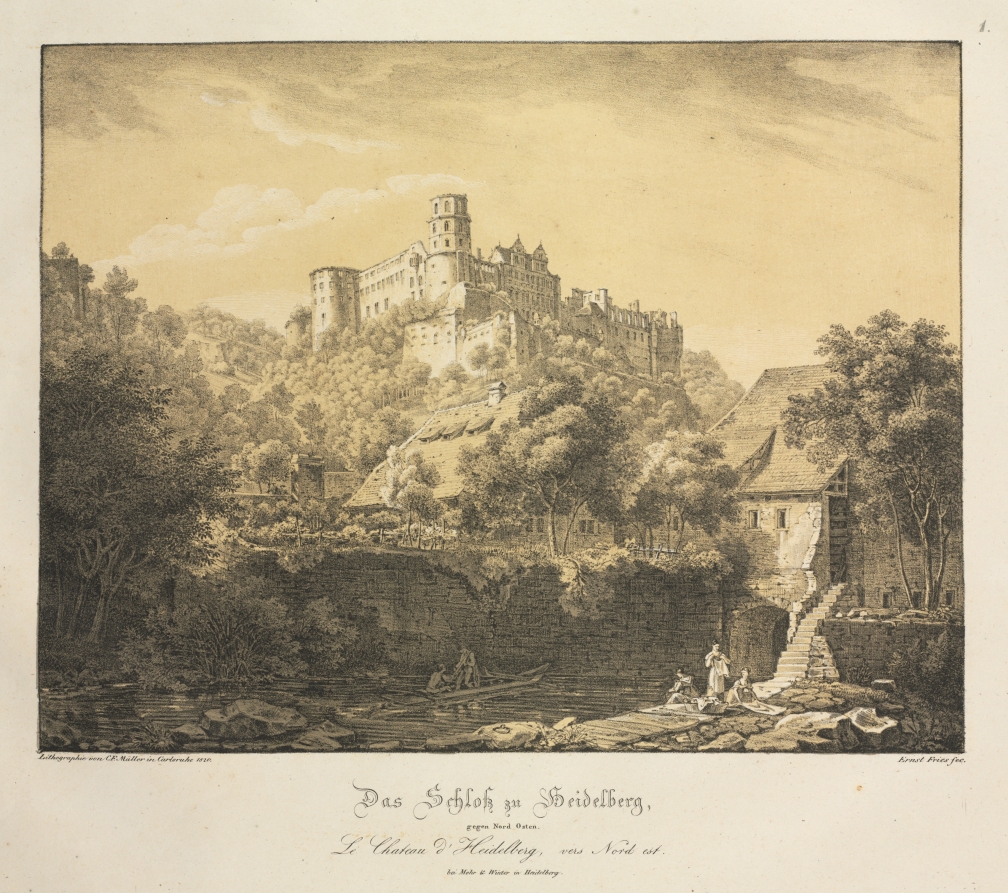
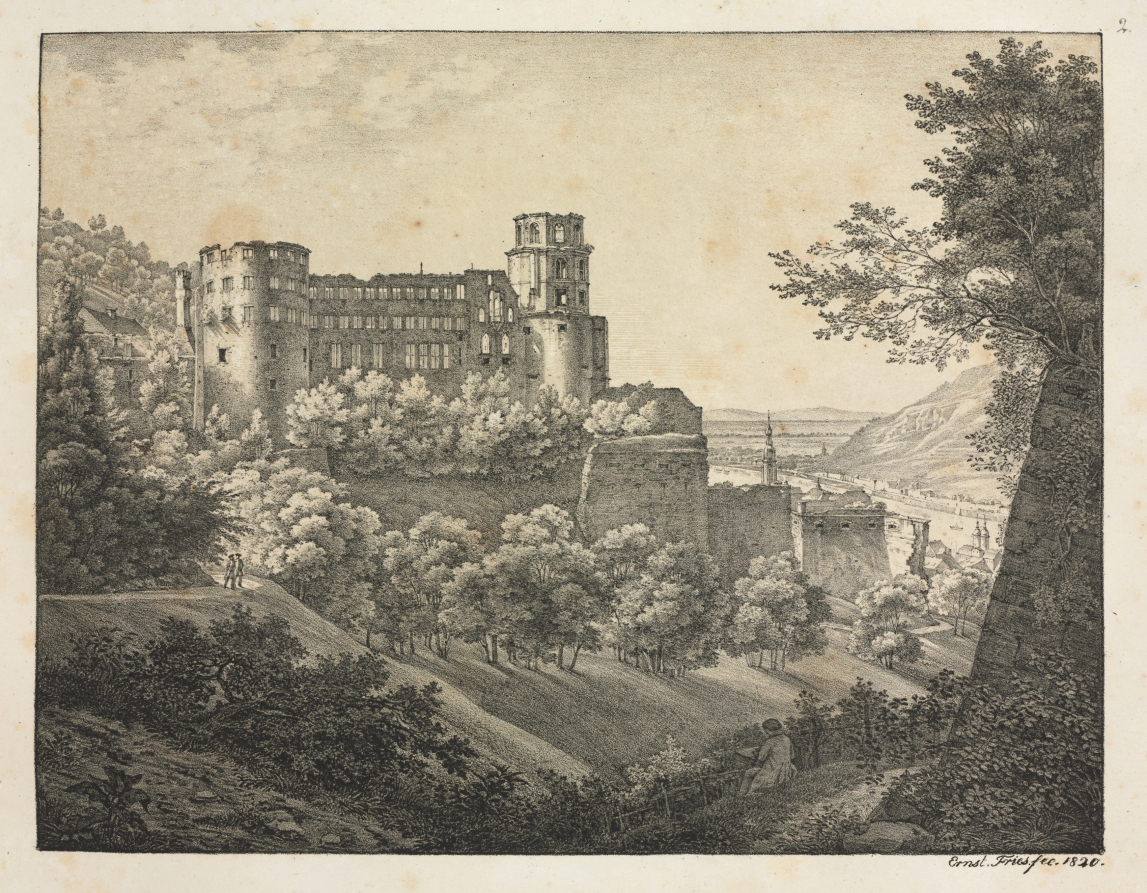
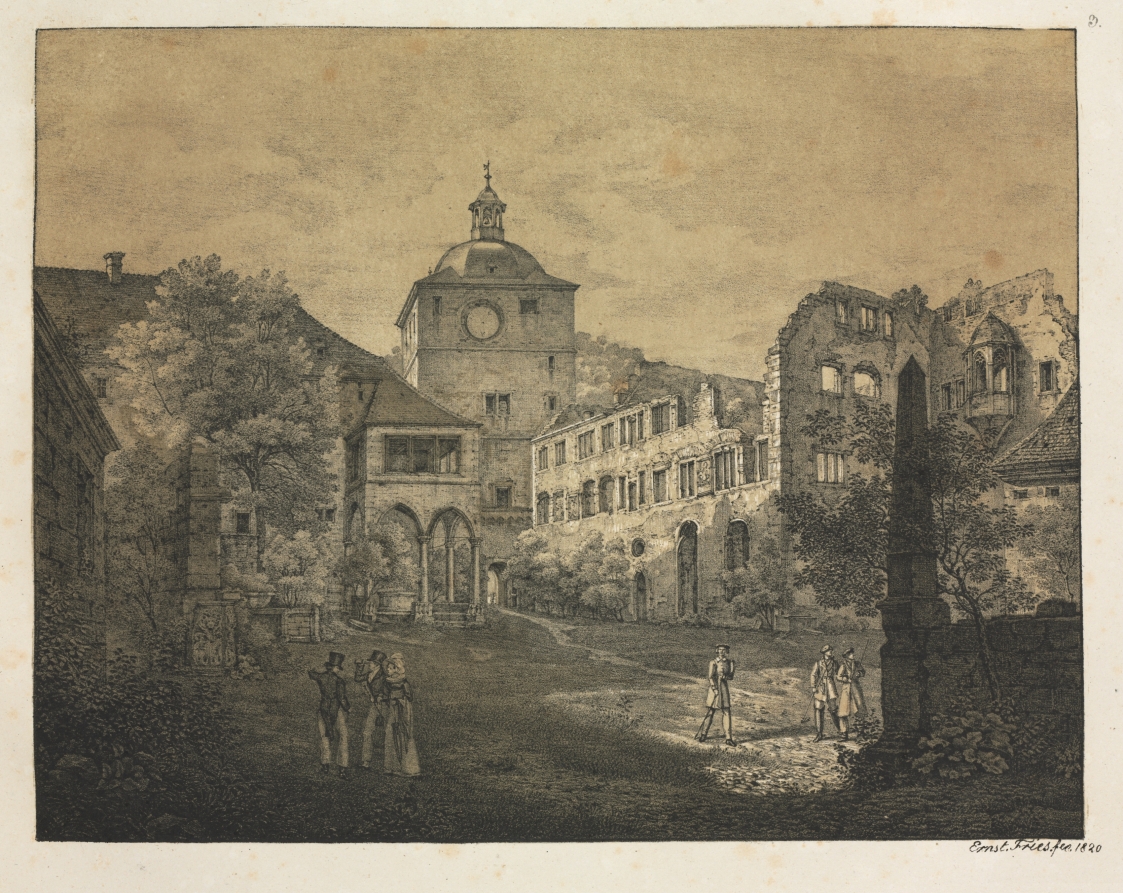
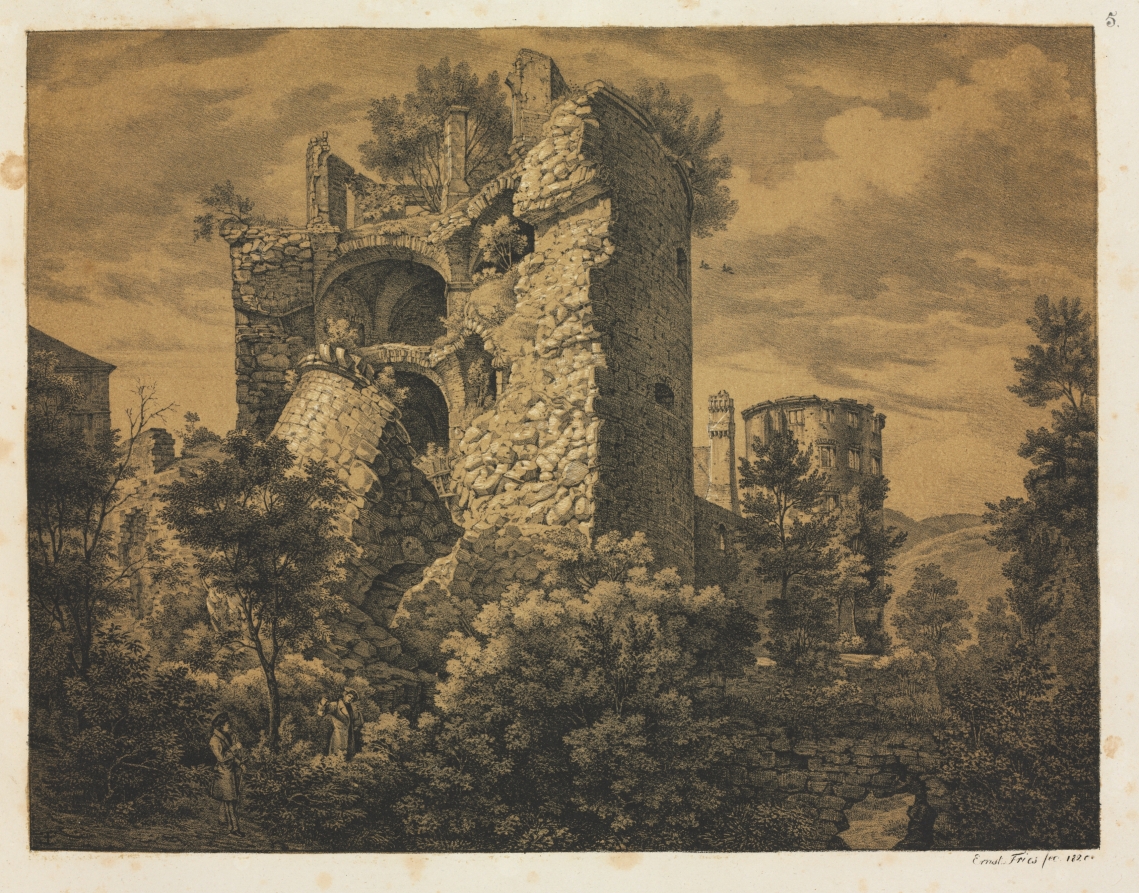
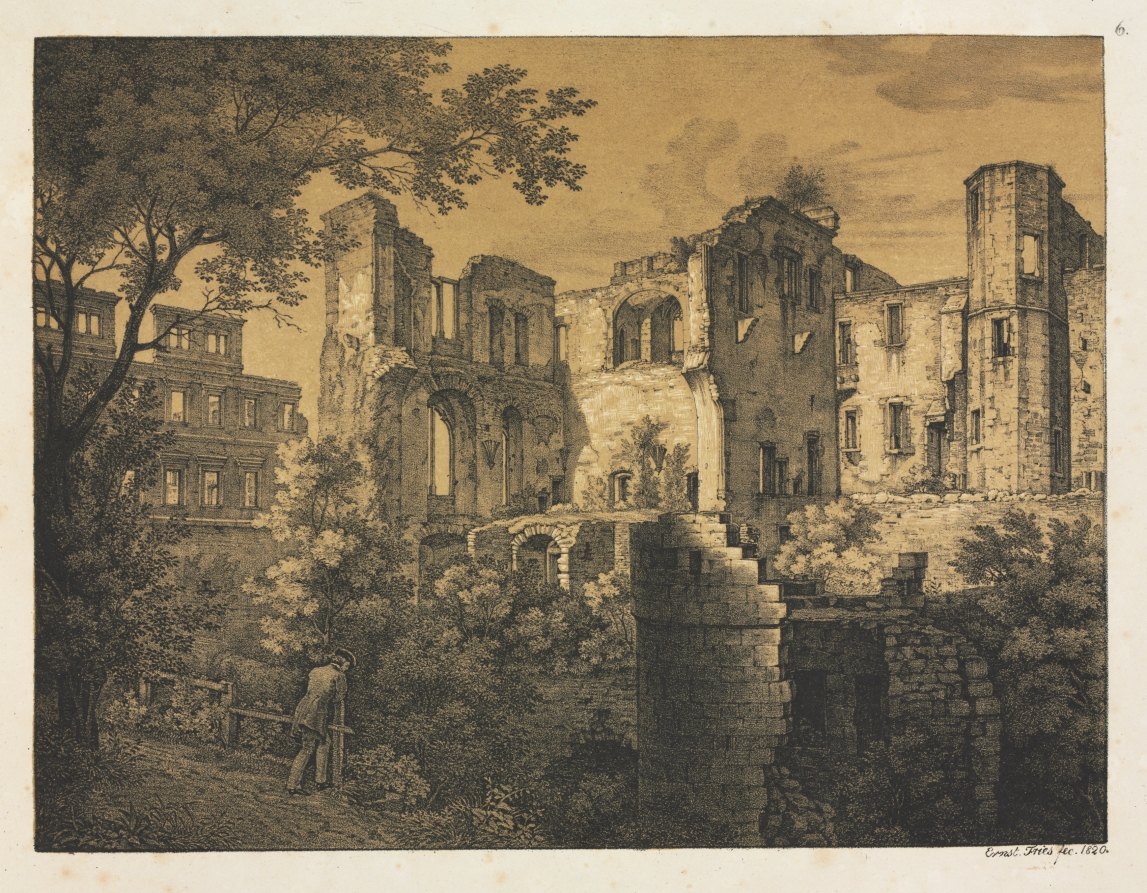
His work belongs to the German Romantic movement. He was a member of the circle of Heidelberg Romantics. Fries rejected the moody atmospheres common in the era. He preferred clear light and architectural precision. In his series, Six Views of Heidelberg Castle, he documented the ruins with a draughtsman's eye for detail. Pieces like Castle Terrace and Towards Northeast show his ability to balance natural surroundings with the structural geometry of stone walls. His lithographs helped define the visual identity of the castle for early travellers.
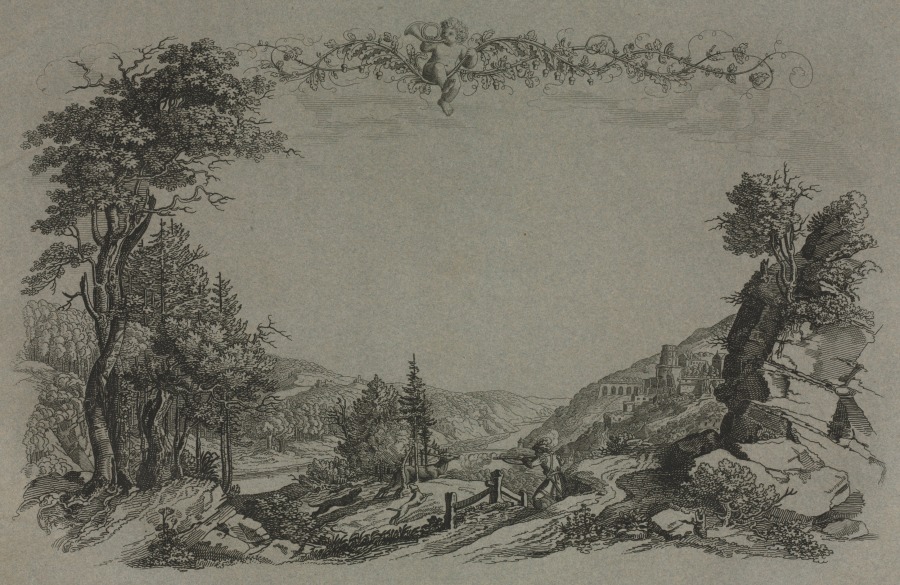
Modern collectors value the clarity and calmness of his compositions. His prints, such as Hunting Scene or the views of the Ruffi Mountains, offer a sense of order and historical documentation. The work avoids the sentimental clutter often found in nineteenth-century art. His use of space and light makes these pieces suitable for contemporary interiors. The technical skill in his lithography ensures that even small details of the Baden countryside remain sharp and legible.
Notable Works
Tap to view larger.
Next stop
Browse the movements →
Every movement in the collection, from the Renaissance to Pop art.
Frequently Asked Questions
When was Ernst Fries born?
Ernst Fries was born in 1801 and died in 1833.What is Ernst Fries known for?
Ernst Fries is known for ernst Fries was a German Romantic artist known for his precise lithographs of Heidelberg Castle and his clear, naturalistic depictions of the Italian and German countryside.


