

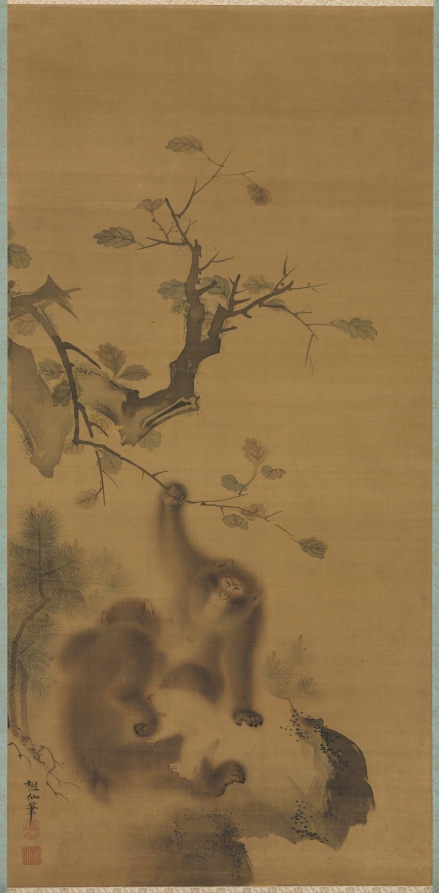
Mori Sosen
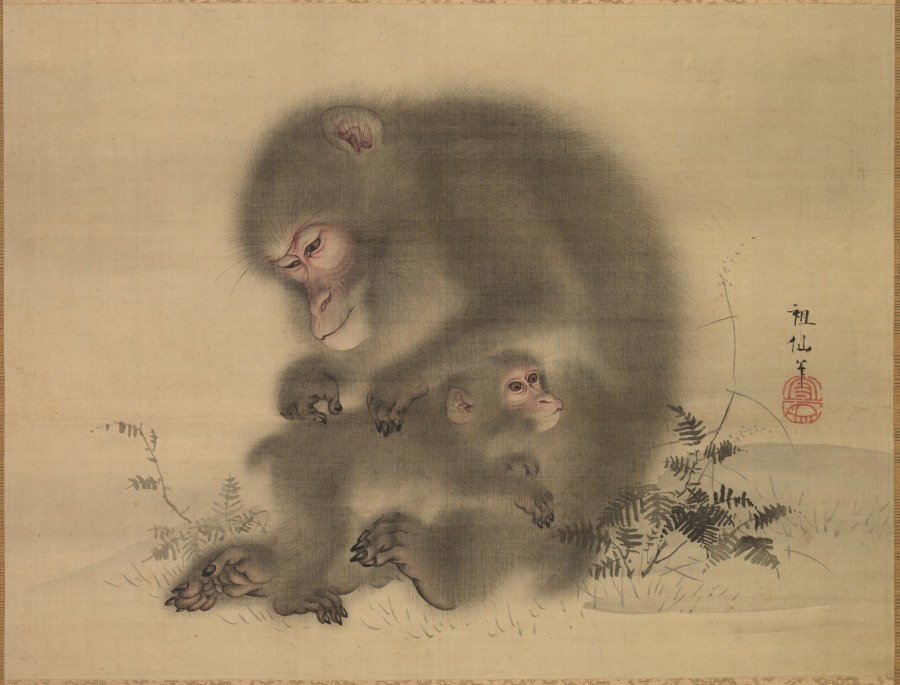
Mori Sosen was so dedicated to his subjects that he lived in the forests of Osaka for years to observe Japanese macaques in their natural habitat. He even changed the spelling of his name to include the character for monkey. While most artists of the Edo period relied on manual copies or stylised sketches, Sosen sought direct interaction with the animals. This physical immersion allowed him to capture the specific textures of fur and the social behaviours of the troops he followed.
Biography
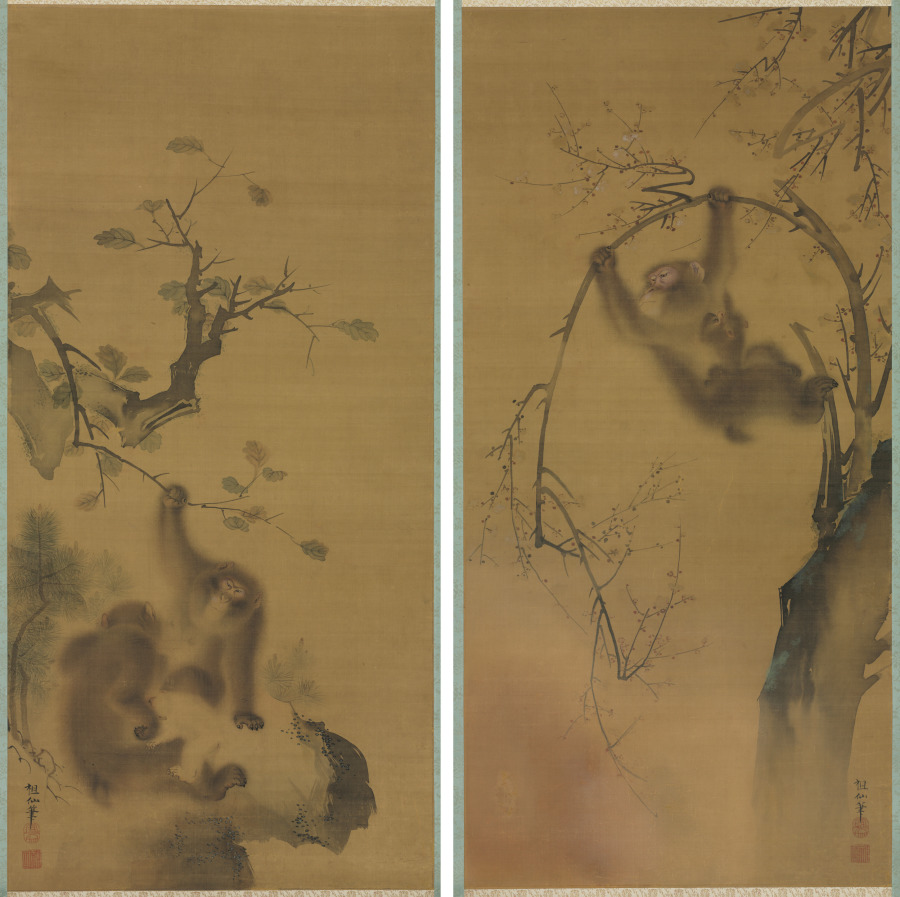
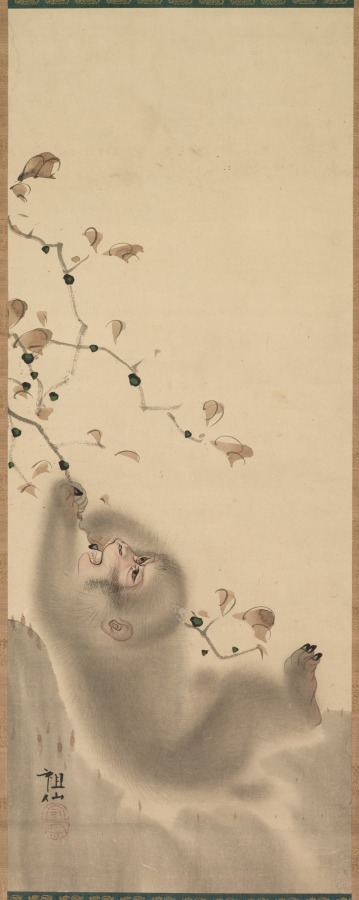
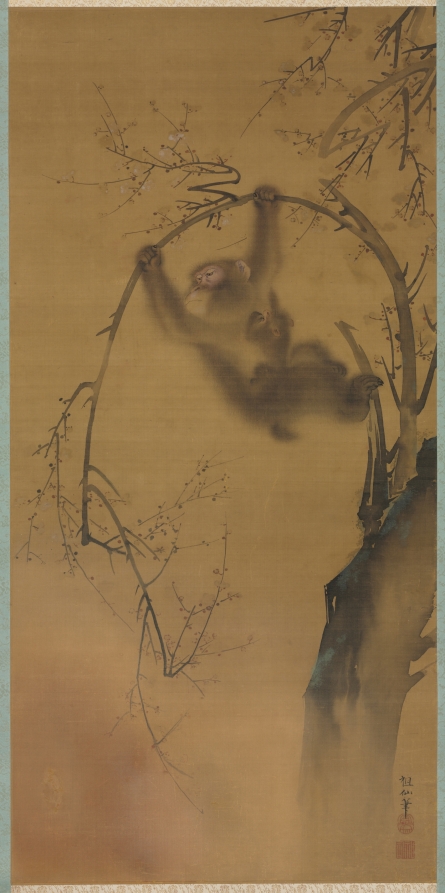
His technique combined the formal training of the Kano school with the naturalism of the Maruyama-Shijo movement. Sosen developed a method of painting fur using extremely fine brushes to build up layers of individual hairs. This approach created a soft, tactile quality that was unusual for the time. He avoided the stiff, symbolic representations common in earlier Japanese art. Instead, he focused on the expressive faces and lithe movements of his subjects. His work often features a single animal or a small family group against a minimal background.
Collectors today value Sosen for his ability to convey personality without relying on human sentimentality. His monkeys appear as individuals with distinct moods rather than mere decorative motifs. The neutral backgrounds and soft colour palettes of his work suit contemporary interiors. These prints provide a quiet connection to the natural world through a lens of scientific observation and technical skill. His compositions offer a sense of calm and focus that works well in modern living spaces.
Notable Works
Tap to view larger.
Next stop
Browse the movements →
Every movement in the collection, from the Renaissance to Pop art.
Mori Sosen prints
Hand-finished archival prints from Mori Sosen's body of work.


Take Mori Sosen home.
See all Mori Sosen prints →Frequently Asked Questions
What is Mori Sosen known for?
Mori Sosen is known for mori Sosen was an Edo-period master who lived among wild macaques to achieve a level of realism in animal painting that remains unsurpassed in Japanese art.