

Mushfiq
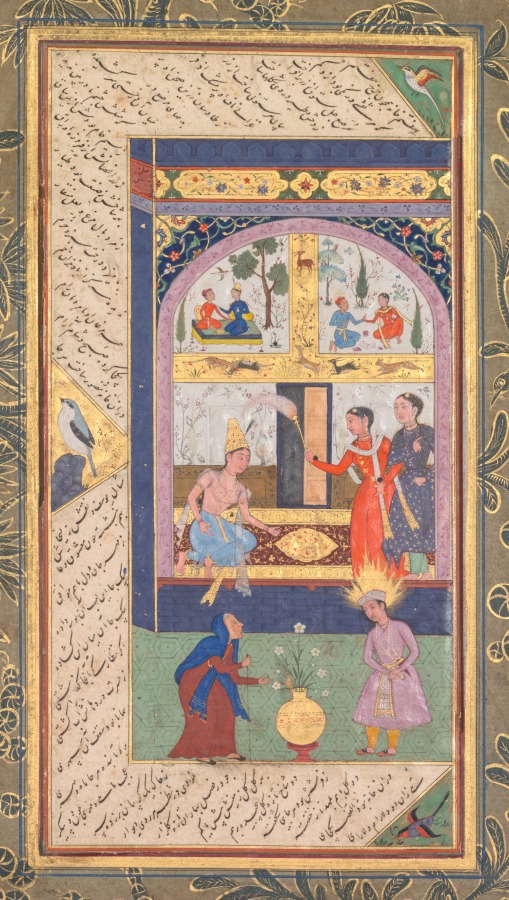
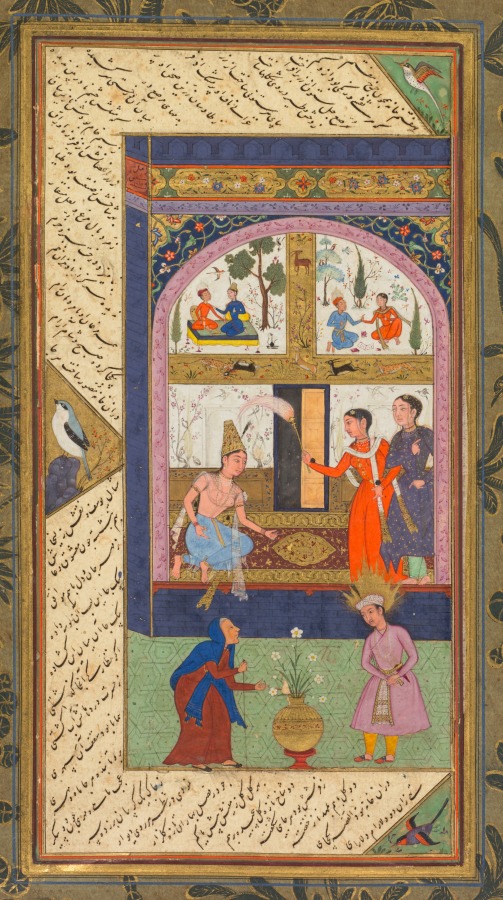
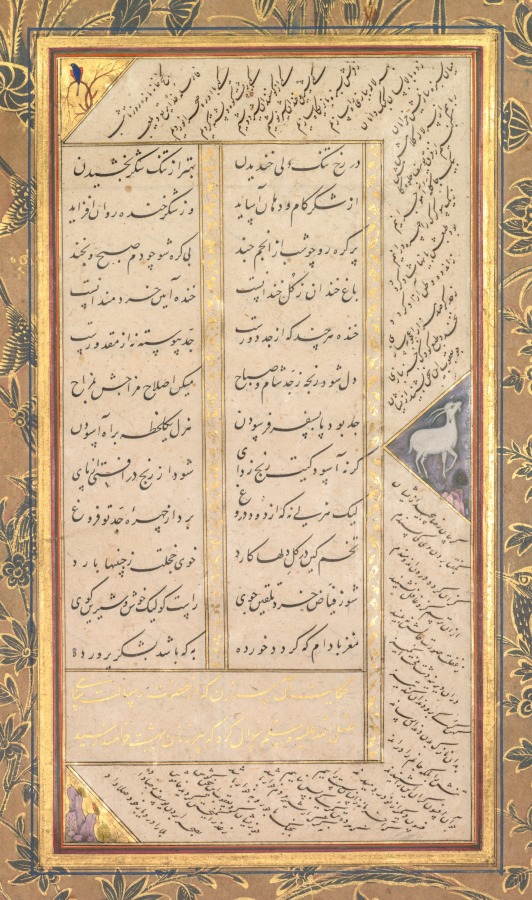
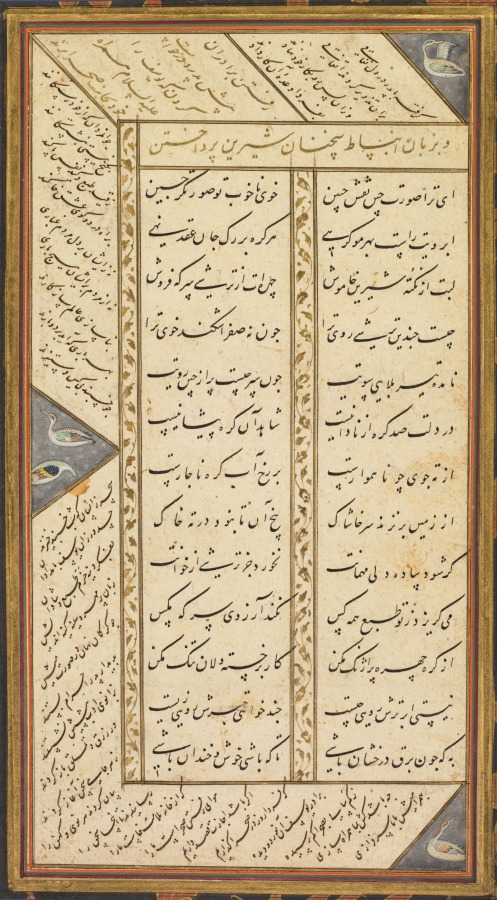
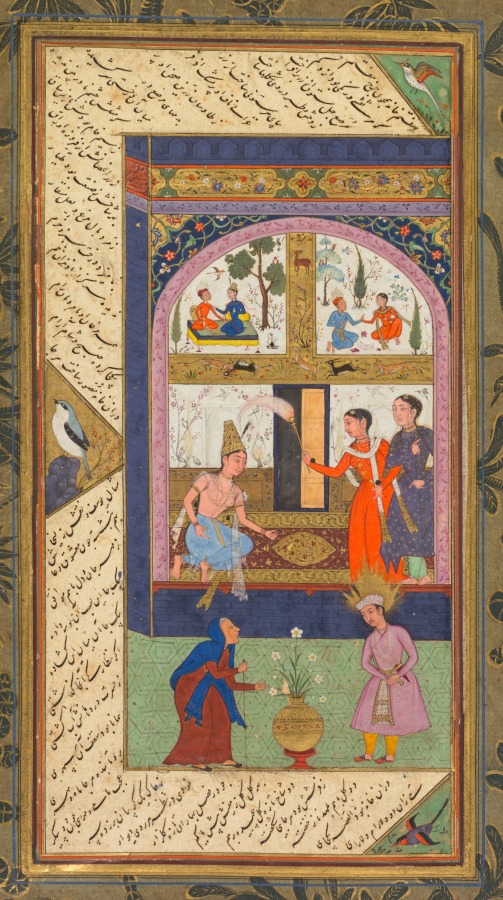
Mushfiq was a specialist in the Mughal imperial atelier who focused on the poetic works of Abd al-Rahman Jami. While many Mughal artists are known for large-scale historical chronicles, Mushfiq worked on the smaller, more personal format of the Panj Ganj (Five Treasures). His work on the Yusuf va Zulaykha manuscript shows a specific interest in the passage of time. He painted Zulaykha both as a young princess in her palace and as an elderly woman, a rare narrative doubling within a single folio.
Biography
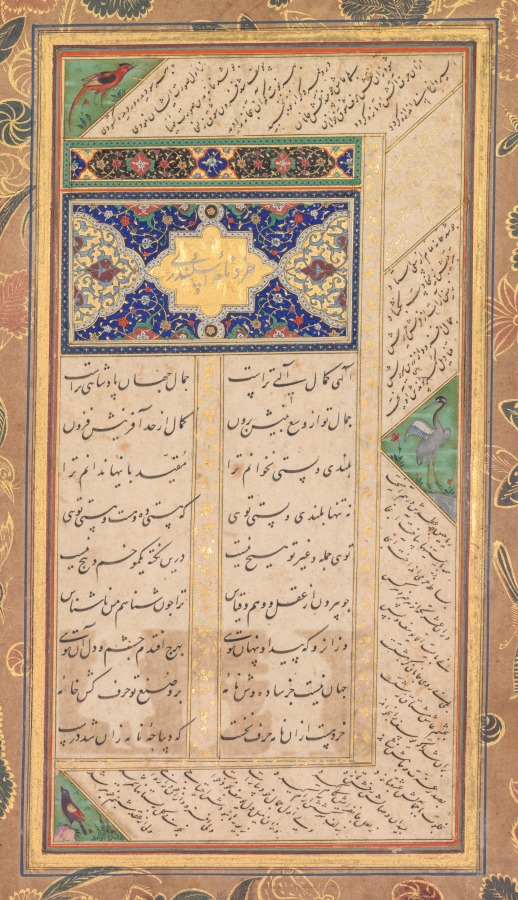
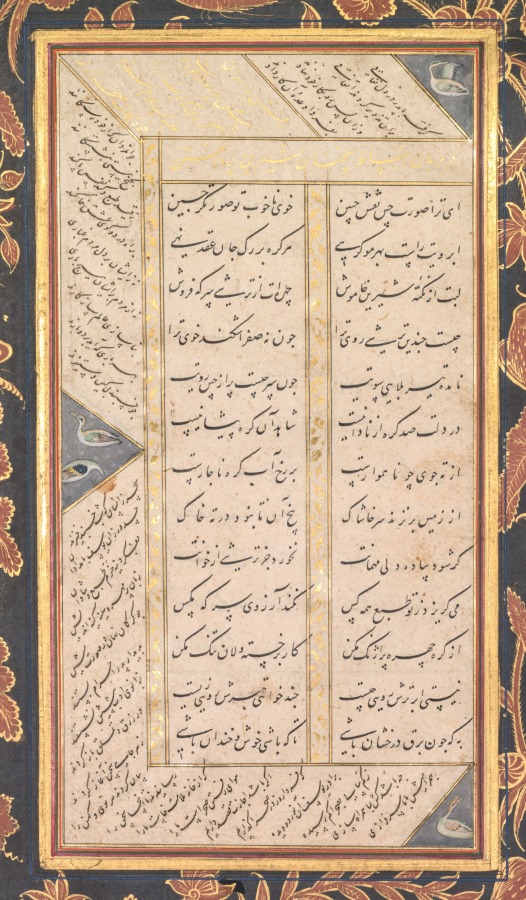
The artist followed the Persian masnavi tradition but adapted it for the Mughal court. His compositions for the Khirad-nama-i Iskandari and Subhat al-abrar use architectural frames to organise the text and image. Mushfiq used a specific palette of mineral pigments to create flat areas of colour. These tones contrast with the fine calligraphic scripts. His figures often appear in profile or three-quarter view, following the stylistic transition from Safavid Persian models to the naturalistic Mughal style.
Modern collectors value Mushfiq for the balance between narrative scenes and formal illumination. The pages from the Five Treasures offer a glimpse into the intellectual life of the Mughal Empire. These prints provide a sense of order through geometric borders and symmetrical layouts. They suit contemporary interiors by combining literary history with a disciplined aesthetic.
Notable Works
Tap to view larger.
Next stop
Browse the movements →
Every movement in the collection, from the Renaissance to Pop art.
Mushfiq prints
Hand-finished archival prints from Mushfiq's body of work.
 Zulaykha in her palace and as an old woman with Joseph - Mushfiq
From £28.00
Zulaykha in her palace and as an old woman with Joseph - Mushfiq
From £28.00
 Folio from the Five Treasures (Panj Ganj) of Jami (recto) - Mushfiq
From £28.00
Folio from the Five Treasures (Panj Ganj) of Jami (recto) - Mushfiq
From £28.00
 Folios A and B from the Five Treasures (Panj Ganj) of Jami - Mushfiq
From £28.00
Folios A and B from the Five Treasures (Panj Ganj) of Jami - Mushfiq
From £28.00
 Zulaykha in her palace and as an elderly woman with Joseph - Mushfiq
From £28.00
Zulaykha in her palace and as an elderly woman with Joseph - Mushfiq
From £28.00
 Page from the Panj Ganj - Mushfiq
From £28.00
Page from the Panj Ganj - Mushfiq
From £28.00
Related Artists
.png)


Take Mushfiq home.
See all Mushfiq prints →Frequently Asked Questions
What is Mushfiq known for?
Mushfiq is known for mushfiq was a Mughal imperial artist known for his detailed illustrations of Jami’s Five Treasures, blending Persian poetic tradition with the emerging Mughal style.