



Sven Lukin
The New York Times called Lukin "the father of the shaped canvas" in 1968. His painting-sculpture hybrids, made from canvas, Styrofoam and burlap on wood, bulge and protrude into the viewer's space in vivid colours adopted after a summer in Venice Beach. Then, at the height of his commercial success in 1972, he severed ties with Pace Gallery and withdrew from the art world entirely.
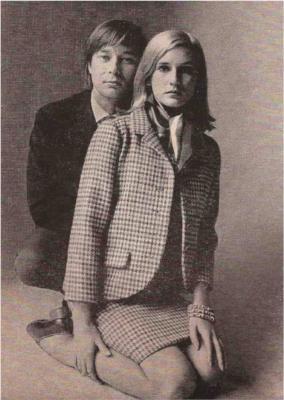
Biography
He was born in Riga, Latvia, in 1934 and spent his childhood under Nazi and then Soviet occupation. He emigrated to the United States in 1949, briefly studied architecture in Philadelphia (absorbing Louis Kahn's modernist curves), and moved to New York in 1958. He exhibited at Betty Parsons, Martha Jackson and the Guggenheim's landmark 1964 Shaped Canvas show.
His work was not seen publicly again until a 1978 LACMA retrospective. The withdrawal was deliberate, not a collapse; he simply stopped participating in the gallery system. His early work anticipated Minimalism's engagement with real space, but his refusal to continue exhibiting removed him from the narrative.
The withdrawal itself became part of his legacy: a shaped-canvas pioneer who shaped the conversation, then chose to leave it. He continued making art privately for decades after walking away from the commercial system.
Timeline
- 1934Born in Riga, Latvia, where he spent his childhood amid successive Nazi and Soviet occupations.
- 1949At 15, immigrated to the United States with his family, settling and completing high school before enrolling in the architecture programme at the University of Pennsylvania.
- 1958At 24, moved to New York to pursue art full-time, applying the modernist spatial thinking of architect Louis Kahn to three-dimensional paintings.
- 1964At 30, exhibited in "The Shaped Canvas" at the Solomon R. Guggenheim Museum in New York, cementing his reputation as a pioneer of painting-sculpture hybrids.
- 1968At 34, dubbed the "father of the shaped canvas" by the New York Times, with works held by MoMA, the Met, and the Smithsonian.
- 1972At 38, severed ties with the Pace Gallery and withdrew from the commercial art world at the height of his success.
- 2022Died aged 88 in New York. His boldly coloured, protruding canvases remain landmark works of 1960s American abstraction.
Notable Works
Tap to view larger.
Next stop
Abstract Expressionism →
Explore the artists and ideas of Abstract Expressionism.
Related Artists



Frequently Asked Questions
What is Sven Lukin known for?
Lukin is known as "the father of the shaped canvas". His painting-sculpture hybrids, constructed from canvas, Styrofoam, and burlap on wood, project into the viewer's space with striking colours.What should I know about Sven Lukin's prints?
Sven Lukin (1934-2019) was a Latvian-American abstract expressionist artist. He is known for his shaped canvases and prints. Lukin's prints often feature geometric forms and bold colours. He explored the relationships between shape, colour, and space in his work. His prints are often screenprints, also known as serigraphs. This printing method is well-suited to creating areas of flat, intense colour. His background in painting informed his printmaking. Lukin created prints that translate the concerns of his three-dimensional work into two dimensions. The prints share an interest in dynamic composition with his sculpture. They also explore similar themes of spatial tension. Lukin's prints have been exhibited in museums and galleries internationally. They are included in many public collections. His work offers a distinctive contribution to the history of abstract printmaking.What style or movement did Sven Lukin belong to?
Sven Lukin (1934-2014) was associated with post-painterly abstraction, a movement that emerged in the wake of abstract expressionism. This style moved away from the emotional intensity and gestural brushwork of the earlier movement. Instead, it favoured large areas of flat colour, precise lines, and a more detached, intellectual approach to art-making. Lukin's shaped canvases and use of industrial materials aligned him with this aesthetic. His works often featured bold geometric forms and a focus on the physical properties of the materials themselves. This approach can be seen as a reaction against the more subjective and expressive qualities of abstract expressionism. The post-painterly abstraction movement included artists such as Helen Frankenthaler, Morris Louis, and Kenneth Noland. These artists shared a concern with the formal elements of painting, such as colour, shape, and composition. They explored these elements in a systematic and experimental way, often creating works that were visually striking and intellectually engaging. Lukin's contribution to this movement lies in his innovative use of shaped canvases and his exploration of the relationship between painting and sculpture.What techniques or materials did Sven Lukin use?
Sven Lukin (1934-2014) was known for his innovative approach to materials and techniques. He moved beyond traditional painting, exploring dimensionality and texture in his constructions. Lukin's signature style involved building up layers of painted canvas, often shaped and cut, on plywood supports. These shaped canvases created relief-like surfaces, blurring the lines between painting and sculpture. He employed industrial materials, such as heavy-duty staples and thick plywood, in his work. These materials contributed to the substantial presence of his pieces. His pieces often featured bold, geometric shapes and a restricted colour palette. Lukin manipulated the canvas to create dynamic compositions with a strong sense of depth. The scale of his works varied, ranging from smaller, wall-mounted pieces to large, room-sized installations. While primarily associated with canvas constructions, Lukin also experimented with printmaking, creating screenprints that echoed the forms and colours of his three-dimensional work.What was Sven Lukin known for?
Sven Lukin (1934-2014) was a Latvian-American abstract expressionist artist. He is best known for his shaped-canvas paintings and prints. Born in Riga, Latvia, Lukin immigrated to the United States in 1950. He studied at the Tyler School of Art, Temple University, in Philadelphia. By the early 1960s, Lukin had begun to produce his signature three-dimensional canvases. These works departed from the traditional rectangular format. Instead, they employed geometric forms and bold colours. Lukin's shaped canvases extended into the viewer's space; this blurring of boundaries between painting and sculpture was a prominent feature of his output. He explored the interplay of form, colour, and shadow in these constructions. His work often incorporated hard-edge abstraction. Throughout his career, Lukin exhibited widely. His pieces are held in the collections of the Museum of Modern Art, the Whitney Museum of American Art, and the Guggenheim Museum, all in New York.When did Sven Lukin live and work?
Sven Lukin (1934-2016) was a Latvian-American artist known for his contributions to modern art. Born in Riga, Latvia, he later emigrated to the United States. Lukin's artistic career began in the late 1950s and continued until his death in 2016. He studied at the Tyler School of Art at Temple University in Philadelphia, earning a BFA in 1957 and an MFA in 1960. He taught at Cornell University from 1961 to 1967, and then at the University of Pennsylvania from 1967 to 1994. His works often involved shaped canvases and explored the interplay between painting and sculpture. Lukin's pieces are included in the collections of the Museum of Modern Art, the Whitney Museum of American Art, and the Guggenheim Museum, all in New York. He received a Guggenheim Fellowship in 1969.Where can I see Sven Lukin's work?
Sven Lukin (1934-2016) was a Latvian-American abstract expressionist. His works can be found in numerous public collections throughout the United States. The Museum of Modern Art (MoMA) in New York City holds several examples of Lukin's output. These include the woodcut print *Composition* (1956), acquired in 1957, and the screenprint *Forms Against Blue* (1968). The MoMA also owns his painted wood relief *Number 1, 1964*, purchased in 1965. Other institutions with Lukin's pieces include the Whitney Museum of American Art, also in New York. Further afield, the Art Institute of Chicago, the Philadelphia Museum of Art, and the National Gallery of Art in Washington, D.C., all possess examples of his constructions and prints. These collections provide opportunities to view the development of Lukin's style, from his earlier graphic work to his later shaped-canvas reliefs.Where was Sven Lukin from?
Sven Lukin was born in Riga, Latvia, on 4 May 1934. His family fled Latvia in 1944, during the Second World War. They lived in Germany as displaced persons until 1949. At that time, Lukin and his family emigrated to the United States. He studied at the Tyler School of Art, at Temple University in Philadelphia, from 1951 to 1956. There, he initially focused on painting, but soon began making wood constructions. Lukin is associated with the New York School, although he lived and worked in Connecticut for much of his career. He taught at the Cornell University College of Architecture, Art, and Planning from 1961 to 1962. He then taught at the University of Pennsylvania from 1962 to 1966. He moved to Connecticut in 1966, where he continued to produce art until his death in 2019.Who did Sven Lukin influence?
Sven Lukin's influence is most apparent in the generation of artists who followed his experiments with shaped canvas and dimensional painting. His work encouraged others to move beyond traditional painting formats. Lukin's constructions, with their bold geometry and use of industrial materials, prefigured aspects of the Light and Space movement on the American West Coast. While not directly associated with that group, his emphasis on form and the interaction of light and shadow resonates with the concerns of artists like Larry Bell and Robert Irwin. His teaching career at various institutions, including the University of California, Berkeley, also provided a direct conduit for his ideas. Many of his students absorbed his innovative approach to materials and spatial relationships. These students then carried those ideas into their own practices, further disseminating Lukin's aesthetic. The shaped canvas, once a radical departure, became a more accepted mode of artistic expression, in part because of Lukin's explorations.Who influenced Sven Lukin?
Information regarding Sven Lukin's influences is scarce. However, some context can be gleaned from the influences of his contemporaries. Many Russian avant-garde artists active in the early 20th century, such as Mikhail Matiushin, Kazimir Malevich, and Antoine Pevsner, were associated with groups such as Soiuz molodezhi (Union of Youth), Unovis, and Inkhuk. These groups held exhibitions, published books, and explored new approaches to art. Malevich, in particular, developed Suprematism, an abstract art movement. Constructivist artists such as Gustav Klucis and El Lissitzky explored the synthesis of art and technology. They taught at institutions such as the Vkhutemas in Moscow. These artists often sought to integrate art with architecture and design, creating works that reflected the modern industrial world.Who was Sven Lukin?
Sven Lukin was an artist known as "the father of the shaped canvas". Born in Riga, Latvia, in 1934, he emigrated to the United States in 1949 and became known for his painting-sculpture hybrids.Why are Sven Lukin's works important today?
Sven Lukin (1934-2019) was a Latvian-American artist known for his large-scale abstract constructions. These works often blurred the lines between painting and sculpture. Lukin's innovative approach to form and materials makes his work relevant to contemporary discussions about art and space. Lukin explored the possibilities of shaped canvases and three-dimensional forms. He challenged traditional notions of painting as a two-dimensional medium. His constructions, frequently made from painted plywood, extend into the viewer's space, creating a dynamic interplay between the artwork and its surroundings. This interest in spatial relationships connects Lukin's work to the concerns of installation art and environmental art. His works are included in the collections of the Museum of Modern Art, the Whitney Museum of American Art, and the Guggenheim Museum, all in New York. His inclusion in these collections demonstrates his contribution to the development of American abstract art in the latter half of the 20th century. Studying Lukin's career provides insights into the artistic experimentation of that period, particularly regarding the use of new materials and the redefinition of artistic boundaries.
Sources
Editorial draws on the following primary and tertiary references for Sven Lukin.
- [1] book guggenheim-grerussi00schi Used for: stylistic analysis.
- [2] book guggenheim-guggenheimintern1964allo Used for: biography.
- [3] book guggenheim-northernvisionss03solo Used for: biography.
- [4] book Masterpieces of western art : a history of art in 900 individual studies from the Gothic to the present day Used for: biography.
- [5] book J. E. Bowlt, Russian Art of the Avant Garde - Theory and Criticism 1902-1934 Used for: stylistic analysis.
- [6] book edited and translated by John E. Bowlt, Russian Art of the Avant-Garde_ Theory and Criticism 1902-1934 (The Documents of 20th-Century Art) (English and Russian Edition) Used for: stylistic analysis.
Editorial overseen by Solis Prints. Sources verified 2026-10-15. Click a source for details, or hover over [N] in the page above to preview.
Editorial standardsMethodologyCorrectionsAI disclosureAbout the editorial team