



About Albert Lynch
French · 1860–1950
- portrait
- genre painting
Belle Époque figure painter born in Prussia to a Peruvian father, who portrayed fashionable Parisian women in pastel and watercolour.
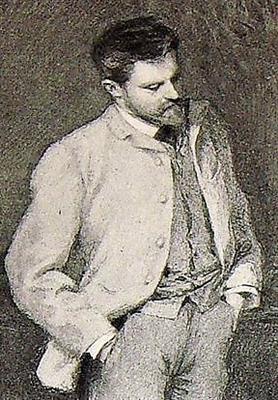
Museums3
Countries3
Most worksClark Art Institute, Williamstown · 1 works
Loading map…
Where to see Albert Lynch
Ranked by works you can see in person.
-
1 works
Clark Art Institute
Williamstown, United States
-
1 works
Manchester Art Gallery
Manchester, United Kingdom


-
1 works
Auckland Art Gallery Toi o Tāmaki
Auckland, New Zealand

Frequently Asked Questions
Where can I see Albert Lynch's work?
It is difficult to pinpoint exactly where one might view works by Albert Lynch, as his paintings often appear in private collections and at auction. However, some museums with collections of similar art from the same period include: the Metropolitan Museum of Art (New York); the Los Angeles County Museum of Art (LACMA); the Minneapolis Institute of Arts; the Royal Ontario Museum (Toronto); the Virginia Museum of Fine Arts (Richmond); the Wolfsonian at Florida International University (Miami Beach); Brighton Museum & Art Gallery (UK); Manchester Art Gallery (UK); the National Museums of Scotland, Royal Museum (Edinburgh); and the Victoria & Albert Museum (London). Checking the online collections catalogues of these museums, and others with holdings of late 19th- or early 20th-century French[1] art, may turn up works by Lynch in public collections.What should I know about Albert Lynch's prints?
Albert Lynch was a late 19th-century artist who worked in painting and drawing, and whose art was reproduced as prints. When considering prints of his work, it is helpful to understand the terminology around printmaking, as well as the ethics of print marketing. Since the late 19th century, sophisticated photomechanical techniques have allowed for high-quality reproductions of existing artworks. This has created a need to distinguish between an original print (made by the artist as a print) and a reproduction (copy of a work in another medium). Original prints are often sold in limited editions, where the number of prints is limited by the life of the plate. Some publishers also impose limits to increase the value of a print. All prints in a limited edition should be numbered (for example, 12/25, meaning print number 12 from an edition of 25). The artist typically signs and numbers the prints in pencil. Some artists also create a small number of artist's proofs, which are numbered separately (for example, 5/100 AP).Why are Albert Lynch's works important today?
Albert Lynch (1851-1933[1]) was a Peruvian artist who trained in Paris and became known for his elegant paintings of women. His works are of interest today for several reasons. They provide insight into the aesthetic preferences of the late 19th and early 20th centuries, especially regarding the representation of women in art. Lynch's paintings also reflect the influence of academic training and the Parisian art world on artists from other parts of the world. They show the circulation of artistic ideas and styles across national boundaries. Additionally, his works contribute to the study of portraiture and figure painting during this period, offering examples of the techniques and conventions employed by artists catering to a specific clientele. Finally, Lynch's art provides a glimpse into the social and cultural values of the Belle Époque, particularly its fascination with beauty, fashion, and leisure.What techniques or materials did Albert Lynch use?
The term "technique" in art refers to the manual and mechanical operations that act upon raw materials; these shape and mould the materials according to specific artistic intentions. It is a complex of processes, not just a method of execution. Understanding an artist's techniques requires knowledge of the materials used and how they behave. When analysing paintings, one must consider the type of paint (oil, watercolour, gouache, or acrylic) and the ground or support. The condition of the artwork is also a factor, as paintings can suffer damage from accidents, neglect or cleaning. Artists are not always restricted by their chosen medium. Choices are made that exist outside the constraints of materials. Examining the relationship between the qualities of the medium, the techniques used, and the aesthetic decisions made by the artist is essential to understanding art history.Who did Albert Lynch influence?
It is difficult to say precisely who Albert Lynch influenced directly. However, one can identify artists with similar subject matter or technique. Lynch's paintings often depicted fashionable women in domestic settings, a theme also explored by artists such as Pierre Auguste Renoir and Alfred Stevens. Like Lynch, they captured the elegance of contemporary life. Technically, Lynch's smooth, academic style shares similarities with other late 19th-century artists such as William-Adolphe Bouguereau and Jean-Léon Gérôme. These artists prioritised realism and technical skill. It is important to note that influence can be a complex thing. It is not always a direct relationship, and artists may be inspired by a variety of sources. Without more specific information, it is hard to name particular artists who were definitely affected by Lynch's work.Who influenced Albert Lynch?
It is difficult to say with certainty who influenced Albert Lynch, as sources do not directly address this question. However, we can look at some of his contemporaries and predecessors to gain insight. Lynch was active during a period of significant artistic change. The late 19th century saw the rise of Impressionism and Post-Impressionism, with artists such as Renoir, Seurat, and Bonnard challenging traditional academic styles. These artists, along with figures like Fragonard and Ingres, were admired by some later artists, for example William Baziotes. The artistic community of the time was one of collaboration and debate. Artists often met to discuss ideas and critique each other's work. This environment of shared creativity and critical exchange could have influenced Lynch's artistic development. The emphasis on flora, fauna, and figures also made the exhibits artistic.What is Albert Lynch's most famous work?
It is difficult to name one single work as Albert Lynch's most famous. He was a prolific artist, and his popularity varied during his career and after his death. Lynch was known for his elegant portraits of women, often depicted in scenes of leisure or domestic life. These paintings and drawings capture the Belle Époque aesthetic, and were popular with the upper classes. Lynch's works often appeared as illustrations in books and magazines, increasing his visibility. He gained recognition at the Salon de Paris, receiving medals in 1890[1] and 1892. His style, while not associated with any particular movement, appealed to a wide audience due to its grace and beauty. While there isn't one specific piece that overshadows all others, his collective body of work has secured his place in art history.What style or movement did Albert Lynch belong to?
Albert Lynch (1851-1933[1]) was a Peruvian artist who achieved recognition in Paris. He is best known for his elegant portraits of women, and his work is often associated with the Belle Époque. This period, roughly from the late 19th century to the start of World War One, saw an interest in romanticism and idealism in art. Lynch's style incorporates elements of academic art, which valued technical skill and classical themes. He also drew inspiration from Impressionism, particularly in his use of light and colour. Although not strictly an Impressionist, Lynch adopted some of their techniques, such as capturing the fleeting effects of light and atmosphere. His paintings often feature soft, diffused light and delicate pastel shades. Lynch's artistic approach blends academic precision with Impressionistic sensibilities, resulting in a distinctive style that appealed to the tastes of his time.
Sources
Where to See guide aggregates verified holdings of Albert Lynch's works across the following collections.
- [1] wikipedia Wikipedia: Albert Lynch Used for: biography.
- [2] book Post-impressionism : cross-currents in European painting Used for: biography.
- [3] book Post-impressionism : cross-currents in European painting Used for: biography.
Editorial overseen by Solis Prints. Sources verified 2026-09-16. Click a source for details, or hover over [N] in the page above to preview.
Editorial standardsMethodologyCorrectionsAI disclosureAbout the editorial team