



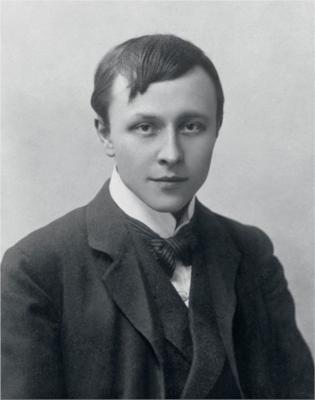
About Alfred Kubin
Museums3
Countries2
Largest reported holdingNational Gallery of Art, Washington D.C. · 7 recorded works
Loading map…
Where to see Alfred Kubin
Collection holdings are reported here; current display varies. Check with each museum before visiting.
-
7 recorded works
National Gallery of Art
Washington D.C., United States
-
1 recorded work
Lenbachhaus
Munich, Germany
Also here (6)


-
1 recorded work
Metropolitan Museum of Art
New York City, United States

Frequently Asked Questions
Where can I see Alfred Kubin's work?
Alfred Kubin's drawings, prints, and illustrated books can be found in numerous public collections, primarily in Europe. The Albertina in Vienna holds a large collection of Kubin's works, including drawings and prints. The Städtische Galerie im Lenbachhaus in Munich also has significant holdings, with a focus on his association with the Blaue Reiter group. Other German museums with notable Kubin collections include the Kunstmuseum Bonn and the Museum Kunst Palast in Düsseldorf. Kubin's work appears less frequently in collections outside of German-speaking countries; however, the Museum of Modern Art in New York holds some prints and drawings. These institutions offer opportunities to view Kubin's distinctive style and explore his contributions to early twentieth-century art. Major exhibitions dedicated to Kubin have been held at the Musée d'Orsay in Paris, further increasing public access to his oeuvre. Consulting museum websites and collection catalogues will provide details on specific holdings and exhibition schedules.What should I know about Alfred Kubin's prints?
Alfred Kubin produced a portfolio of facsimile prints after fifteen coloured pen drawings in 1903[1]. These sheets, published by Hans von Weber in Munich, each measure approximately 15 x 36 cm. Printmaking has a long history. It can be traced back to ancient Egypt and China, where seals and stamps were used. Wood blocks were used to print patterns on textiles long before the invention of paper. Paper became readily available in Europe at the end of the fourteenth century, and printmaking began to flourish. Woodcuts were used for book illustrations, religious icons, souvenirs and playing cards. Prints gradually came to be considered a major artistic medium during the later part of the nineteenth century. Artists began to sign their prints, differentiating original graphics from reproductions. They also limited the size of editions and numbered them. This allowed them to influence the price and prevent excessive printing.Why are Alfred Kubin's works important today?
Alfred Kubin's art retains importance because of its distinctive approach to psychological and symbolic themes. Born in Bohemia in 1877[1], Kubin is best known for his contributions to early expressionism and his dark, often unsettling imagery. His works frequently explore themes of anxiety, death, and the grotesque. Kubin's style, characterised by distorted forms and eerie atmospheres, reflects a preoccupation with the subconscious and the irrational. He employed a range of media, including pen and ink, watercolour, and lithography, to create his disquieting visions. Kubin's illustrations for authors like Edgar Allan Poe and Fyodor Dostoevsky demonstrate his ability to interpret and amplify the psychological dimensions of literature. His nightmarish depictions resonate with contemporary audiences interested in the exploration of inner turmoil and the darker aspects of the human condition. His influence can be seen in the work of later artists who engage with similar themes. Kubin's unique visual language continues to fascinate, securing his place in the history of modern art.What techniques or materials did Alfred Kubin use?
Alfred Kubin is best known for his work in pen and ink, often combined with wash techniques. He favoured a distinctive style that employed strong lines and stark contrasts to create unsettling and dreamlike imagery. Although he is primarily known as a draughtsman, Kubin also experimented with other media. He produced a number of works in watercolour and occasionally used oil paint, although these are less common. His prints, including lithographs and etchings, allowed for wider distribution of his visions. Kubin explored the possibilities of tonal variation and texture offered by these methods. His early work shows an interest in the possibilities of photography as a tool for image making. He collected photographs, and these served as inspiration for some of his drawings. Kubin's approach to art-making was driven by his imagination and inner visions, and his technical choices reflect this.Who did Alfred Kubin influence?
Alfred Kubin's work had an impact on several artists and movements. Wassily Kandinsky, a contemporary and fellow member of groups such as Phalanx and Der Blaue Reiter, was certainly influenced by Kubin's compressed surfaces and demonic imagery. Kubin's fusion of visual and poetic elements in his 1908[1] novel, *The Other Side*, also anticipated some aspects of Surrealism. Other artists associated with Expressionism, such as Egon Schiele and Oskar Kokoschka, also engaged with Kubin's ideas. Kubin's influence extended beyond the visual arts, with his writings and theories resonating among literary figures. Paul van Ostaijen, who introduced Futurist, Expressionist, and Cubist theories into Flanders, admired Kubin. Overall, Kubin's impact is most apparent within the Expressionist movement and among those who explored the relationship between visual art and literature during the early 20th century.Who influenced Alfred Kubin?
Alfred Kubin was interested in the writings of Meister Eckhart, the Kabbalah, and other gnostic texts. In a 5 May 1910[1] letter, Kubin thanked Kandinsky for some prints. Kubin wrote that Kandinsky had 'developed an entirely new possibility for art and stand[s] there unequaled and unique'. He also stated that he sensed in Kandinsky's work 'primary things of long ago which are wedded to mysterious vibrations of future spiritual possibilities'. Kubin stated that microscopic studies led him to colour experiments with free combinations of forms. He abandoned them because of the danger of ornament. He felt Kandinsky avoided this snag, and that Kandinsky's art remained illusionistic. Kubin also found inspiration in Rembrandt's drawings, especially their emotional force and psychological depth. He also admired Vincent van Gogh's drawings, particularly the analytical nature of his ink drawings.What style or movement did Alfred Kubin belong to?
Alfred Kubin (1877[1]-1959[1]) is usually associated with Expressionism, although his work has links to other movements. He explored themes of the macabre, the fantastic, and the subconscious. These interests align with Symbolism[1] and early Surrealism. Kubin's style is characterised by distorted forms, dreamlike imagery, and a sense of unease. He employed techniques such as distorted perspective and exaggerated figures to create unsettling effects. His palette often consisted of muted colours, reinforcing the dark mood of his compositions. Although Kubin was not formally part of Die Brücke or Der Blaue Reiter, two major Expressionist groups, he shared their interest in emotional expression and rejection of academic artistic conventions. His illustrations for authors like Edgar Allan Poe and E.T.A. Hoffmann show his affinity for dark Romanticism, a literary movement that influenced many Expressionist artists. Kubin's work also prefigures Surrealism, particularly in its exploration of dreamlike states and irrational imagery. His nightmarish visions and interest in the uncanny anticipate the concerns of later Surrealist artists.What was Alfred Kubin known for?
Alfred Kubin is associated with Symbolism[1], an artistic and literary movement that emerged in the late 19th century. Symbolism opposed naturalism, realism, and impressionism. Instead, it embraced the expression of ideas, symbols, and imaginative patterns. Symbolism reflected a broader literary and intellectual movement of the Post-Impressionism era. Symbolist teachers included Francisco Goya, William Blake, and Johann Heinrich Füssli. German Romanticism, including artists like Caspar David Friedrich, Philipp Otto Runge, and the Nazarenes, along with the English Pre-Raphaelite Brotherhood, also prefigured the Symbolists. In Germany, Symbolist-influenced artists were sometimes called "late romantics". These included Arnold Böcklin, Hans von Marées, Hans Thoma, and Franz Stuck. Other European symbolists include Fernand Khnopff in Belgium, Edvard Munch in Norway, Mikhail Vrubel in Russia, and Ferdinand Hodler in Switzerland. The decorative styles of Aubrey Beardsley, Gustav Klimt, Alfons Mucha, and Eugène Grasset also expressed this new style in graphics, posters and stained glass.
Sources
Where to See guide aggregates verified holdings of Alfred Kubin's works across the following collections.
- [1] wikipedia Wikipedia: Alfred Kubin Used for: biography.
- [2] book guggenheim-frantisekkupka00kupk Used for: biography.
- [3] book guggenheim-gustavklimtegons00mess Used for: biography.
- [4] book Gustav Klimt, Federico Zeri, Marco Dolcetta, Klimt, Gustav, Klimt_ Judith I (One Hundred Paintings Series) Used for: biography.
Editorial overseen by Solis Prints. Sources verified 2026-09-30. Click a source for details, or hover over [N] in the page above to preview.
Editorial standardsMethodologyCorrectionsAI disclosureAbout the editorial team