

About Allen Ruppersberg
American · 1944–present
Los Angeles conceptual artist who has worked with text, accumulation, and the boundary between art and everyday life since 1969.
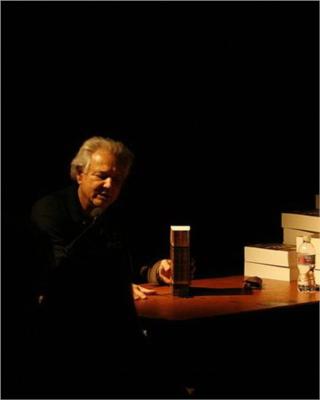
Museums3
Countries1
Largest reported holdingCleveland Museum of Art, Cleveland · 1 recorded work
Loading map…
Where to see Allen Ruppersberg
Collection holdings are reported here; current display varies. Check with each museum before visiting.
-
1 recorded work
Cleveland Museum of Art
Cleveland, United States
-
1 recorded work
Whitney Museum of American Art
New York City, United States


-
1 recorded work
Museum of Modern Art
New York City, United States

Frequently Asked Questions
Where can I see Allen Ruppersberg's work?
Allen Ruppersberg, born in Cleveland, Ohio, in 1944[1], has exhibited extensively since the late 1960s. His first solo exhibition was at the Eugenia Butler Gallery, Los Angeles, in January 1969. Other early solo shows include the Pasadena Art Museum (1970), Art and Project, Amsterdam (1971), and Pomona College Art Gallery, Pomona, California (1972). In 1973, he had exhibitions at Situation Gallery, London; Francoise Lambert, Milan; Stedelijk Museum, Amsterdam; Galerie Yvon Lambert, Paris; and the Information Gallery, University of California at Irvine. Group exhibitions featuring his work include "Live in Your Head/When Attitudes Become Form: Works-Concepts-Processes-Situations-Information" at the Kunsthalle, Bern (1969), and "557,087" at the Seattle Art Museum Pavilion (1969), which then travelled to the Vancouver Art Gallery as "955,000" (1970). Ruppersberg also participated in "Art in The Mind" at the Allen Memorial Art Museum, Oberlin College, Ohio (1970); the "1970 Annual Exhibition: Contemporary American[1] Sculpture" at the Whitney Museum of American Art, New York (1970-1971[1]); Documenta 5, Museum Fridericianum, Kassel, Germany (1972); and the Whitney Biennial of Contemporary Art (1975). The Los Angeles County Museum of Art (LACMA) and the Metropolitan Museum of Art in New York are possible locations to view Ruppersberg's art.What should I know about Allen Ruppersberg's prints?
Allen Ruppersberg, born in Cleveland in 1944[1], is an American[1] conceptual artist whose work often incorporates text and image. He attended the Chouinard Art Institute in Los Angeles, graduating in 1966. Ruppersberg's prints often take the form of artists' books and utilise photographs and text. His work, *The Footnote* (1976), comprises photographs and pencil on paper in three panels. *A Collection of Letters/ An Exhibition of Drawings* (1976) uses ink on paper. He has explored the combination of photographic images with text, and his works often adopt a scrapbook format. Ruppersberg's *25 Pieces* was published in 1971. His work has been exhibited extensively, including solo shows at the Pasadena Art Museum (1970) and the Stedelijk Museum, Amsterdam (1973). He has also participated in group exhibitions such as Documenta 5 in Kassel, Germany (1972), and the Whitney Biennial of Contemporary Art (1975).Why are Allen Ruppersberg's works important today?
Allen Ruppersberg is an American[1] conceptual artist whose work often combines text and image. He emerged in Los Angeles during the late 1960s, a period of experimentation in American art. His practice engages with popular culture, language, and the conventions of art itself. Ruppersberg's importance stems from his early adoption of conceptual strategies. He questioned traditional notions of authorship and originality. His use of everyday materials, such as postcards and printed ephemera, challenged the art world's focus on unique objects. By incorporating language directly into his pieces, he blurred the boundaries between visual and literary forms. An example of this is his 1974 work, *Al's Cafe*, which was a fully functioning café that he ran as an art project. Another notable work is *Where's Al?*, a series of posters that mimic missing-person notices, but feature the artist himself. These pieces demonstrate his interest in the intersection of art and life. Ruppersberg's influence can be seen in the work of subsequent generations of artists who explore similar themes. His approach remains relevant in a contemporary context saturated with images and information.What techniques or materials did Allen Ruppersberg use?
Allen Ruppersberg, born in Cleveland in 1944[1], uses varied techniques and materials in his art. He attended the Chouinard Art Institute in Los Angeles from 1962 to 1966. His work includes ink drawings on paper, such as *A Collection of Letters/ An Exhibition of Drawings* (1976). This piece is one of a series of twenty. Ruppersberg also combines photography and pencil on paper, as seen in *The Footnote* (1976), which comprises three panels. His exhibitions include solo shows at the Eugenia Butler Gallery in Los Angeles (1969), the Pasadena Art Museum (1970), and the Stedelijk Museum in Amsterdam (1973). He has also participated in group exhibitions such as *Live in Your Head/When Attitudes Become Form: Works-Concepts-Processes-Situations-Information* at the Kunsthalle, Bern (1969), and *Documenta 5* in Kassel, Germany (1972). These exhibitions demonstrate his engagement with conceptual art practices.Who did Allen Ruppersberg influence?
Allen Ruppersberg's work has influenced a number of artists interested in conceptualism and appropriation. His use of language, found objects, and everyday materials has been particularly significant for those exploring the boundaries between art and life. Artists such as Barbara Kruger, Jenny Holzer, and Richard Prince have all, to varying degrees, engaged with strategies that Ruppersberg explored early in his career. These include the incorporation of text into visual art, the re-use of existing imagery, and an interest in the aesthetics of popular culture. His mail art projects, such as sending altered postcards, also prefigured later developments in networked art practices. Ruppersberg's focus on narrative and storytelling has resonated with artists working in diverse media, from photography to performance. His work encourages a critical examination of the ways meaning is constructed and communicated through images and words. While it is difficult to measure direct influence, his impact can be seen in the work of many contemporary artists who question traditional notions of authorship and originality.Who influenced Allen Ruppersberg?
Allen Ruppersberg's artistic approach has connections to several sources. His work engages with aspects of Pop Art, particularly its interest in everyday objects and popular culture. Like Pop artists, Ruppersberg incorporates commercial imagery and commonplace items into his pieces. Ruppersberg also shares some conceptual concerns with the Pictures Generation artists. This group, active in the 1970s and 1980s, questioned originality and authorship through appropriation and reproduction. Ruppersberg's use of pre-existing texts and images aligns with this critical approach to art-making. His work also has links to the tradition of California Conceptualism. This movement, which emerged in the 1960s, emphasised ideas and language over traditional artistic skills. Ruppersberg's focus on language, narrative, and the dematerialisation of the art object connects him to this specific regional art history. His interest in books and printed matter further reflects this conceptual orientation.What is Allen Ruppersberg's most famous work?
It is difficult to name one single "most famous" work by Allen Ruppersberg, as his output is varied and encompasses different styles. However, he is perhaps best known for his conceptual pieces that incorporate language and found materials. One example is his series of "lecture" performances, in which he reads aloud from books or scripts. Another notable work is "26 Gasoline Stations" (1963), a book containing black and white photographs of petrol stations along Route 66. This project is considered an early example of the artist's interest in everyday subjects and his use of photography as a conceptual tool. Ruppersberg's work often explores themes of popular culture, memory, and the passage of time. His use of unconventional materials and his playful approach to language have made him an important figure in the development of conceptual art.What style or movement did Allen Ruppersberg belong to?
Allen Ruppersberg, born in Cleveland in 1944[1], is associated with Conceptual art. He attended the Chouinard Art Institute in Los Angeles, graduating in 1966. Ruppersberg's work gained attention in the late 1960s and 1970s. He had solo exhibitions at the Eugenia Butler Gallery in Los Angeles (1969), the Pasadena Art Museum (1970), and the Stedelijk Museum in Amsterdam (1973). He participated in group exhibitions such as "Live in Your Head/When Attitudes Become Form" at the Kunsthalle, Bern (1969), and Documenta 5 in Kassel (1972). His pieces often involve copying existing works and inserting his own statements, playing with the idea of originality and creation. One work is "A Collection of Letters/An Exhibition of Drawings" (1976). Another is "The Footnote" (1976), which combines photographs and pencil on paper. During the 1970s, art moved away from revolutionary stylistic changes seen in movements like Pop Art and Minimalism. Artists of that decade focused more on individual expression than group identity. Ruppersberg's detached, commentary-based approach aligns with this trend.
Sources
Where to See guide aggregates verified holdings of Allen Ruppersberg's works across the following collections.
- [1] wikipedia Wikipedia: Allen Ruppersberg Used for: biography.
- [2] book Jed Perl, Art in America 1945-1970 Used for: biography, stylistic analysis.
- [3] book guggenheim-nineartiststheod00solo Used for: biography, stylistic analysis.
- [4] book guggenheim-refigur00kren Used for: biography.
- [5] book guggenheim-transfsi00wald Used for: biography.
Editorial overseen by Solis Prints. Sources verified 2026-09-30. Click a source for details, or hover over [N] in the page above to preview.
Editorial standardsMethodologyCorrectionsAI disclosureAbout the editorial team